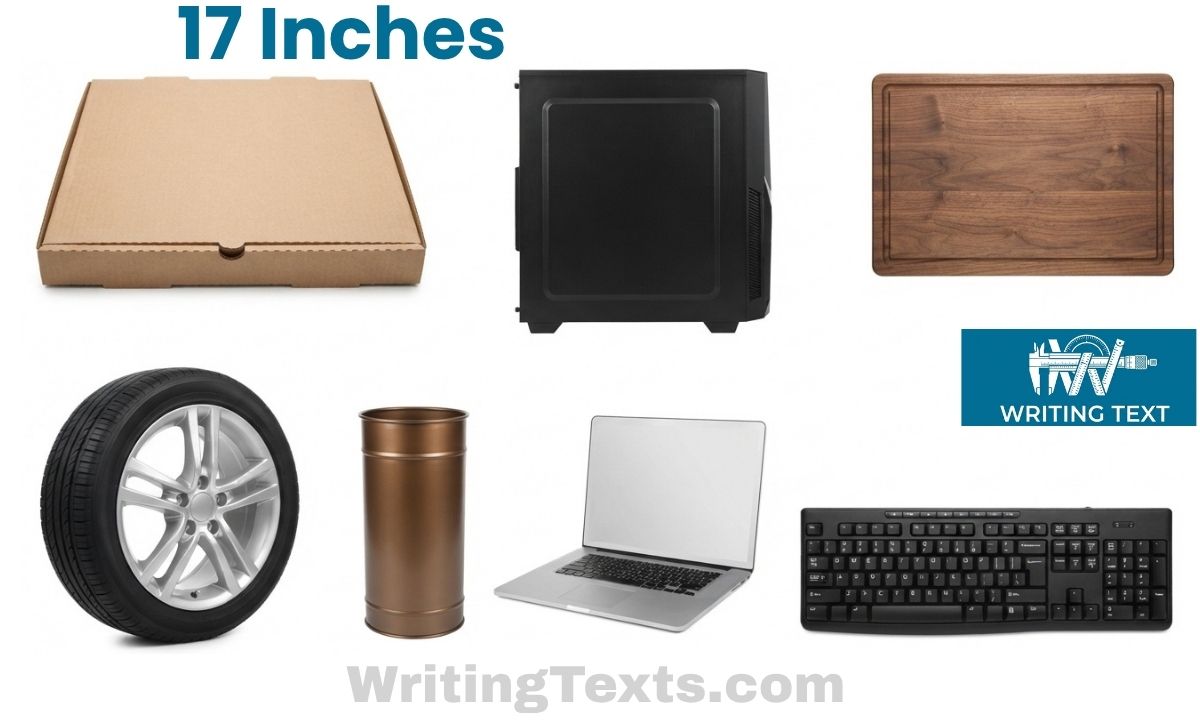
You’re ordering a cutting board online, checking if a laptop fits your bag, or trying to figure out whether a piece of furniture clears a doorframe — and the number 17 inches just isn’t clicking in your head. That gap between knowing a number and actually picturing it is real.
Understanding how long is 17 inches becomes effortless when you tie it to objects already living in your home, kitchen, or workspace. Every reference below is a physical anchor you can use right now.
How Long is 17 Inches?
17 inches measures 43.18 centimeters, roughly matching the width of a standard large pizza box or the diagonal screen size of a full-size laptop. It equals just over 1.4 feet, or a little under half a meter.
Quick Conversions Chart
| Unit | Value |
| Inches | 17 in |
| Centimeters | 43.18 cm |
| Millimeters | 431.8 mm |
| Feet | 1.417 ft |
| Yards | 0.472 yd |
| Meters | 0.4318 m |
14 Common Things That Are 17 Inches Long
| Object | Category | Portion Measured | Measurement Accuracy |
| Large Pizza Box | Food Packaging | Width | Approximate |
| Mid-Tower Computer Case | Electronics | Height | Approximate |
| Standard Cutting Board | Kitchen | Length | Approximate |
| Car Tire Rim | Automotive | Diameter | Approximate |
| Entryway Umbrella Bucket | Home Décor | Height | Approximate |
| 17-Inch Laptop Screen | Electronics | Diagonal | Approximate |
| Fingertip Towel | Linen | Width | Approximate |
| Standard Rolling Pin | Kitchen | Total Length | Approximate |
| Full-Size Desktop Keyboard | Electronics | Width | Approximate |
| Dining Chair Seat | Furniture | Height from Floor | Approximate |
| Magnetic Knife Strip | Kitchen | Length | Approximate |
| Dartboard | Sports | Diameter | Approximate |
| Standard Wall Clock | Home Décor | Diameter | Approximate |
| Large Tote Bag | Accessories | Width | Approximate |
Related: How Long is 18 Inches? 12 Common Things That Are 18 Inches Long
1. Large Pizza Box
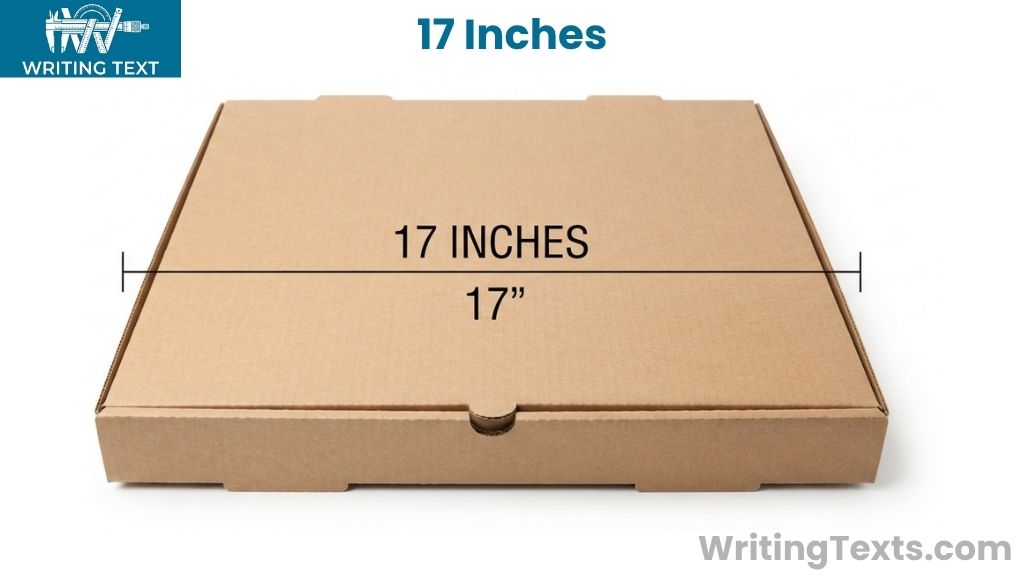
A large pizza box commonly measures around 17 inches across its width, matching the standard sizing used for 16-inch pizzas in most commercial pizzerias.
The width spans the full outer corrugated edge to edge on the box’s shorter side, not the diagonal. Corrugated cardboard pizza boxes are manufactured to this width so the pizza sits flat without shifting during delivery, with a small buffer preventing sauce splatter on the interior walls. Laid flat on a kitchen counter, the box covers roughly the same horizontal space as an open magazine spread.
2. Mid-Tower Computer Case
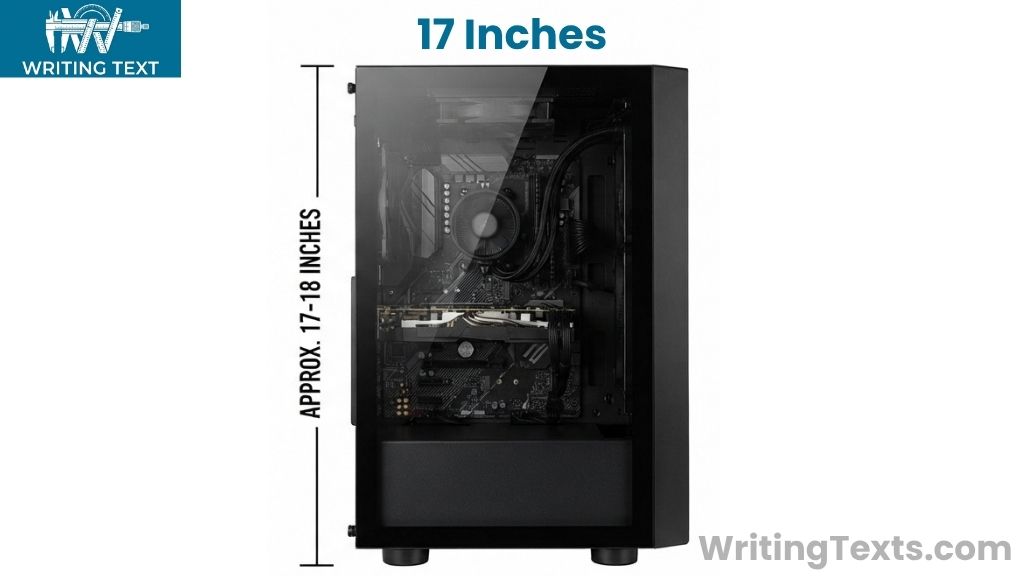
A mid-tower computer case typically stands around 17 to 18 inches tall, a dimension set by the internal clearance needed to house standard ATX motherboards.
The height is measured from the bottom rubber feet to the top panel of the chassis. ATX form-factor compliance requires a minimum interior vertical clearance of about 15 inches, which pushes the outer shell to approximately 17 inches once steel walls and top ventilation panels are factored in. A mid-tower sitting on a desk surface reaches roughly the same height as a household desktop printer stacked on top of a thick hardcover book.
3. Standard Cutting Board
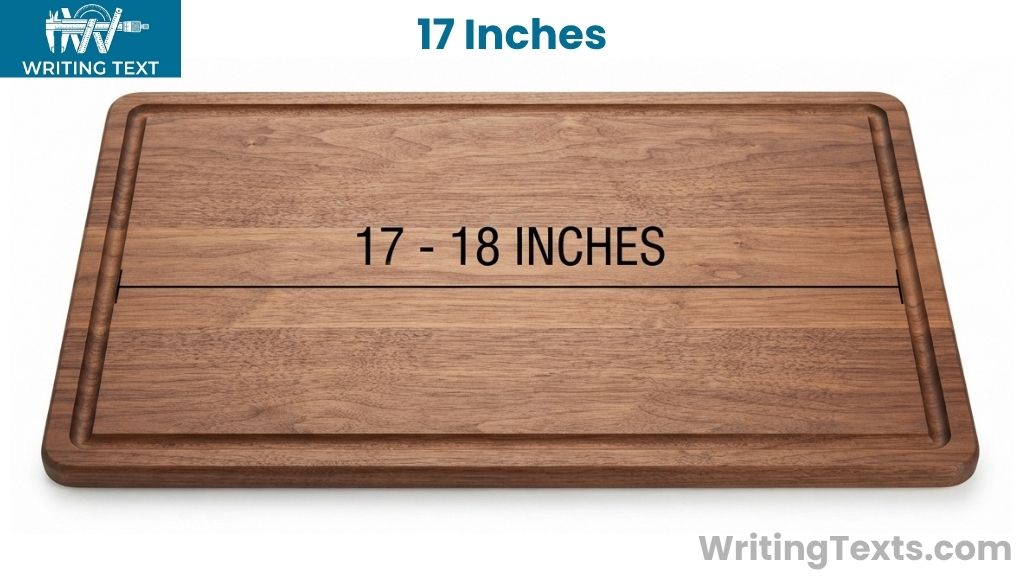
A standard cutting board commonly measures around 17 to 18 inches in length, the size most widely stocked across retail kitchen brands.
The length runs along the longest side of the board from one end edge to the other. This dimension accommodates the full cutting stroke needed for a 12-inch chef’s knife — the most common blade length in home kitchens — with clearance on both sides to prevent meat or vegetables from rolling off. A board this length spans almost the entire width of a standard 24-inch kitchen base cabinet when placed horizontally across it.
4. Car Tire Rim
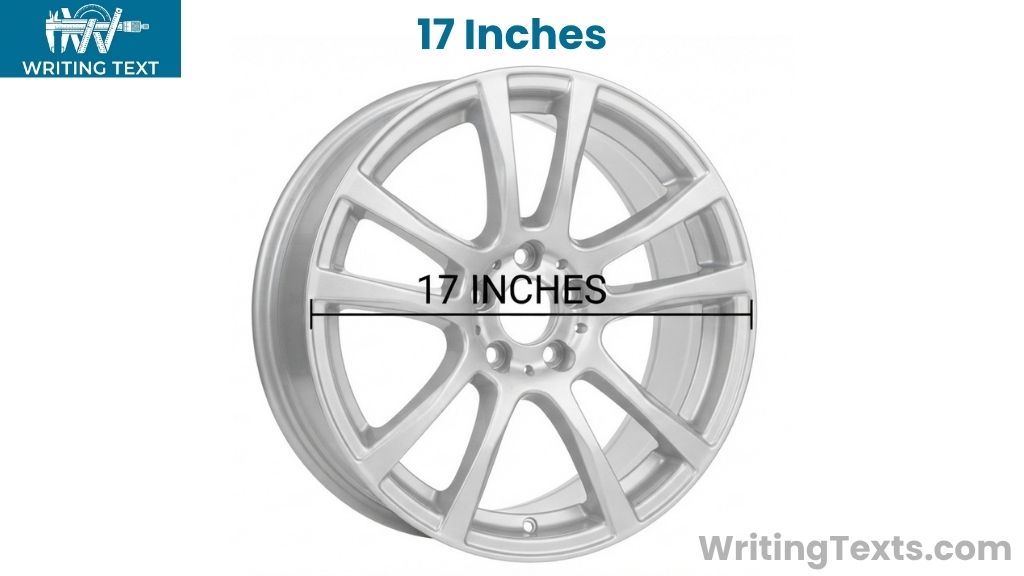
A 17-inch car tire rim measures commonly around 17 inches in diameter, one of the most popular wheel sizes on mid-size sedans, crossovers, and light trucks.
The diameter is measured straight across the center of the rim from bead seat to bead seat — the area where the tire mounts — not including any decorative lip or rim flange.
The 17-inch diameter became dominant in the passenger vehicle market because it balances ride comfort with handling response; smaller rims allow taller tire sidewalls that absorb road shock, while 17 inches sits at a sweet spot between a sporty profile and a comfortable ride. Placed upright on a flat surface, the rim reaches about mid-thigh height on an average adult.
5. Entryway Umbrella Storage Bucket
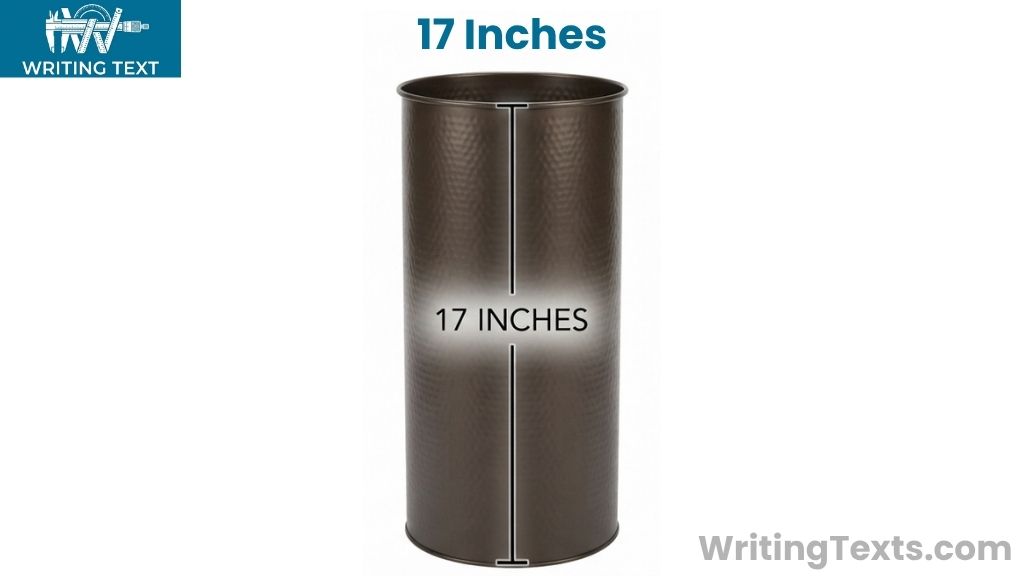
Entryway umbrella storage buckets are standardly manufactured near 17 inches in height to accommodate full-size folding and standard-length umbrellas in an upright position.
The height runs from the base of the bucket to its top rim. Standard adult umbrellas with a folded canopy range from 14 to 16 inches, so manufacturers target a bucket height around 17 inches to allow umbrellas to stand without tipping while still being reachable without bending deeply. A bucket this height placed beside a front door sits at roughly the same level as a standard door lever handle, which is typically positioned between 34 and 48 inches from the floor.
6. 17-Inch Laptop Screen
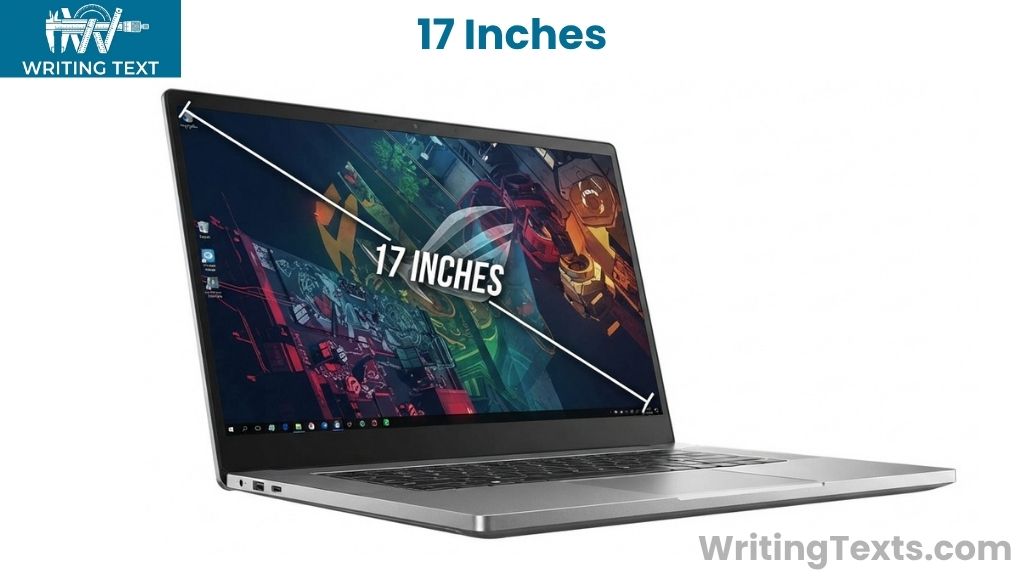
A 17-inch laptop screen measures commonly around 17 inches along its diagonal, from one corner of the display panel to the opposite corner.
This diagonal spans the active display area only — the physical bezel surrounding the screen adds extra width and height to the overall lid dimensions.
Laptop manufacturers use diagonal measurement as the screen size standard because it conveys the full viewing area in a single number, a practice standardized across the consumer electronics industry.
The actual physical width of a 17-inch display in a 16:9 aspect ratio sits around 14.8 inches, which explains why the laptop chassis itself measures noticeably wider than 17 inches.
Related: How Long is 16 Inches? 15 Common Things That Are 16 Inches Long
7. Fingertip Towel
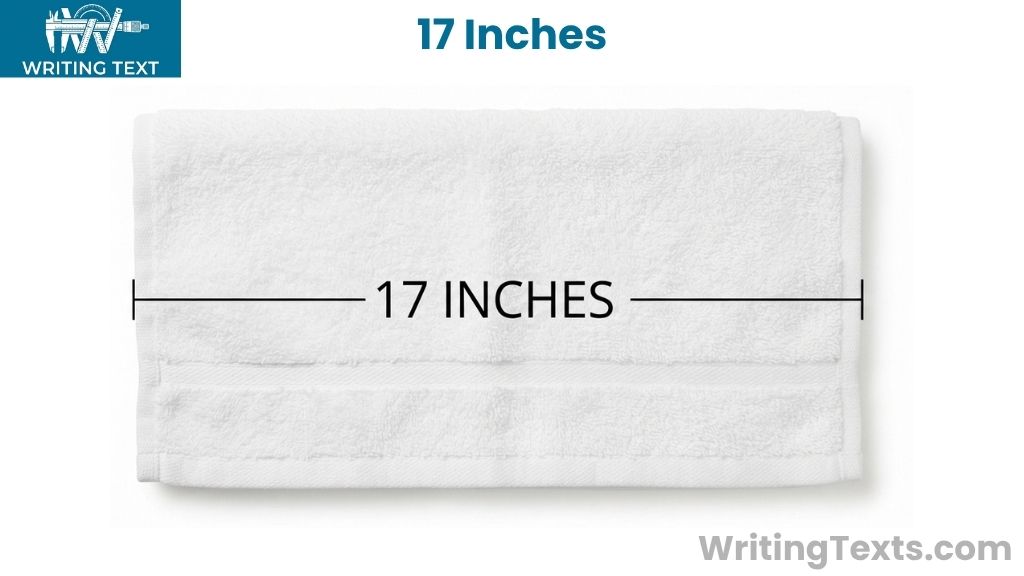
A fingertip towel commonly measures around 17 inches in width, the standardized sizing used across the American linen and hospitality industries.
The width spans the towel’s shorter edge, measured hem to hem when laid flat. The 11-by-17-inch dimension is the most frequently cited standard for fingertip towels, originally sized for bathroom vanities where a full hand towel would be too wide to display neatly on a narrow towel ring. This 17-inch width falls just short of the span of an adult’s outstretched hand from pinky tip to thumb tip, which averages around 8 to 9 inches, meaning the towel is roughly twice that span across.
8. Standard Rolling Pin
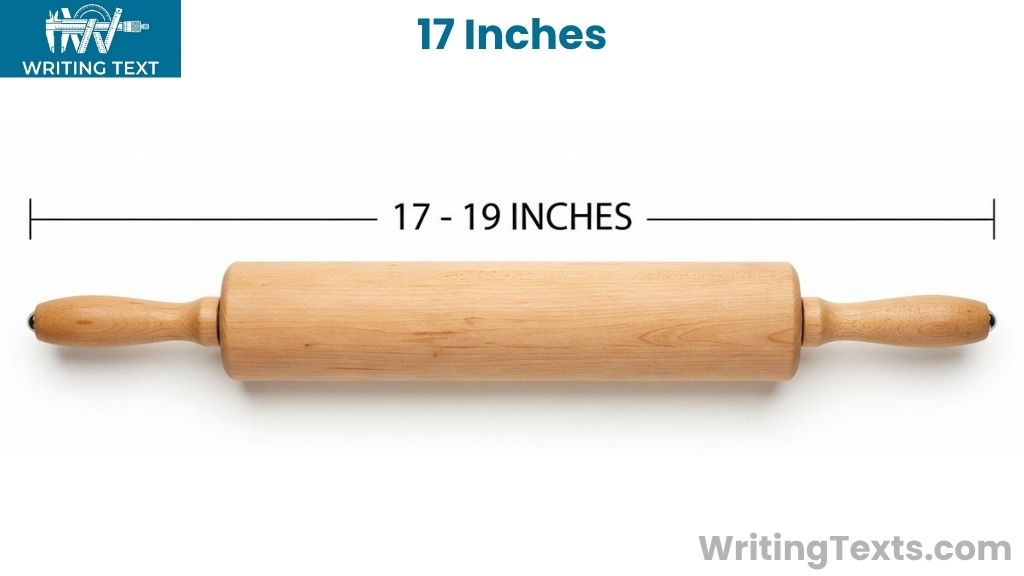
A standard rolling pin typically measures around 17 to 19 inches in total length, covering the full span from one handle tip to the other.
The total length includes both wooden or silicone handles plus the central roller barrel. Professional bakers’ French-style pins run slightly shorter since they lack handles, but the classic American-style dowel pin with handles targets 17 to 19 inches so both hands grip the handles with the elbows at a natural, low-effort working angle.
When resting on a kitchen counter, a rolling pin of this length crosses a standard 24-inch counter from the backsplash area to about two-thirds of the way to the counter’s front edge.
9. Full-Size Desktop Keyboard
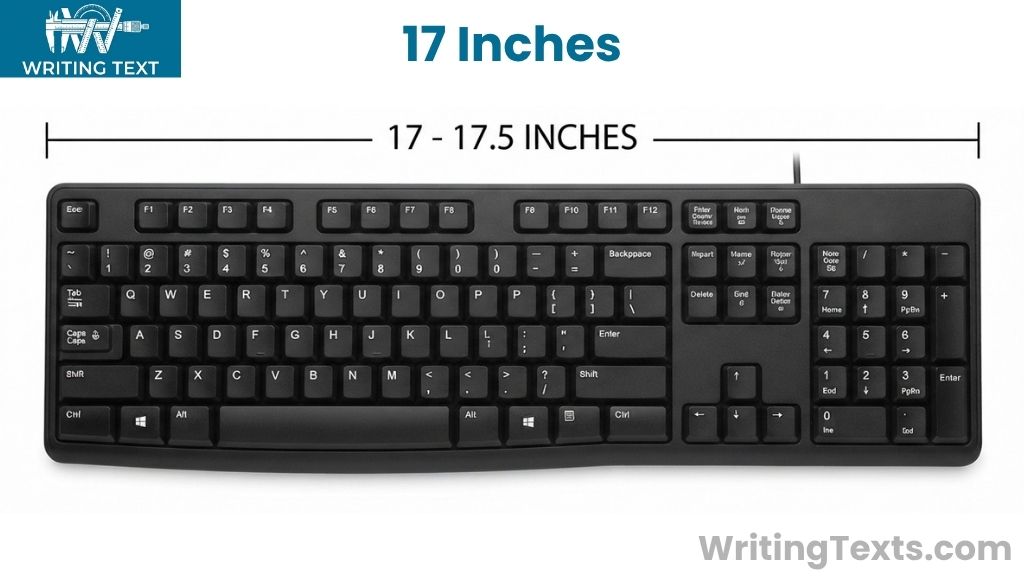
A full-size desktop keyboard typically measures around 17 to 17.5 inches in width, encompassing the main key cluster, function row, and integrated numeric keypad.
Width is measured from the left outer edge of the Escape key to the right outer edge of the numeric keypad’s Enter key. The numeric keypad is the component that pushes full-size keyboards past compact and tenkeyless designs, which run closer to 14 inches wide. A keyboard of this width, positioned on a standard 24-inch office desk, leaves only about 3 to 3.5 inches of desk space clear on each side.
10. Dining Chair Seat Height
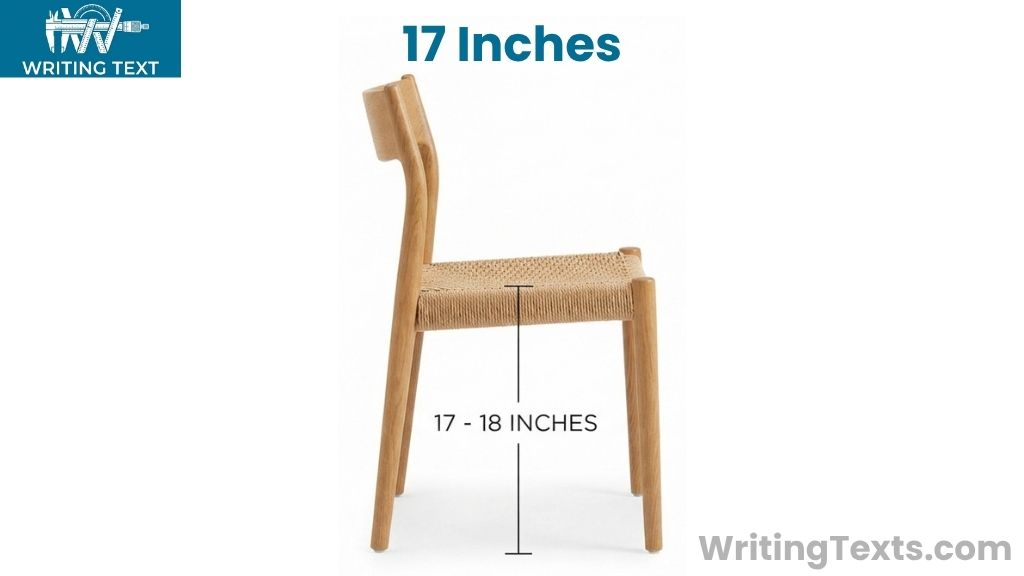
A dining chair seat height is standardly manufactured near 17 to 18 inches from the floor to the top surface of the seat cushion or seat pan.
This measurement is taken vertically from the floor to the highest point of the sitting surface at the front edge of the seat. The 17-to-18-inch range is set to align properly with standard dining tables, which are typically 29 to 30 inches tall, leaving a comfortable 11-to-13-inch clearance gap for thighs. This seat height places most adults’ knees at roughly a 90-degree angle when seated, a position supported by ergonomic seating guidelines used across commercial furniture manufacturing.
Related: How Long is 15 Inches? 14 Common Things That Are 15 Inches Long
11. Magnetic Knife Strip
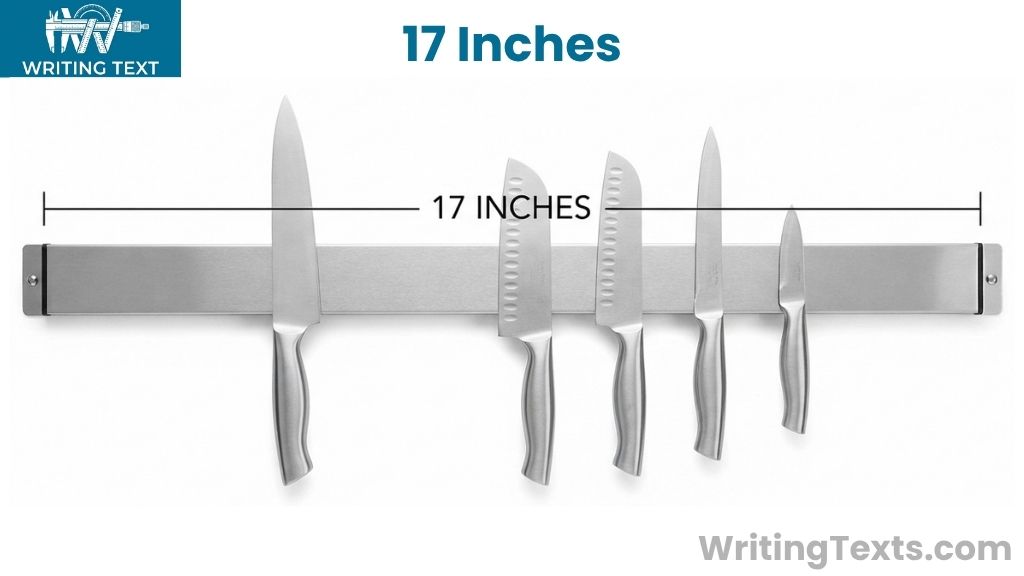
A magnetic knife strip commonly measures around 17 inches in length, a size that fits neatly within the space between standard kitchen wall studs.
The length runs along the strip’s longest horizontal axis, from one mounting bracket to the other. North American residential walls place studs 16 inches apart on center, and a 17-inch strip is engineered to bridge exactly one stud bay while allowing screws to anchor into the studs on either side for a secure mount. This strip length holds approximately six to eight kitchen knives side by side, depending on blade width.
12. Dartboard
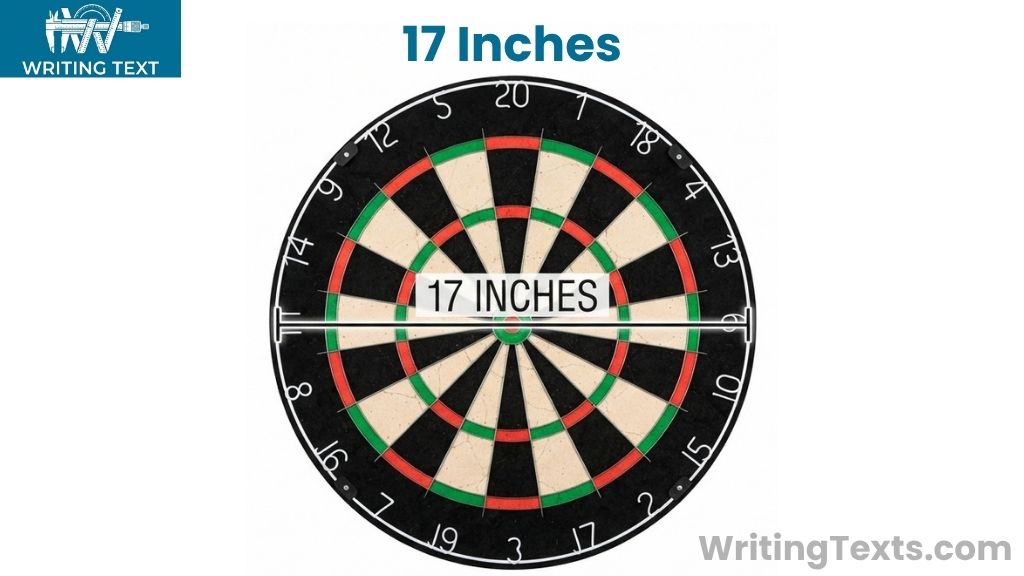
A dartboard diameter is standardly manufactured near 17.75 inches, but the overall board housing commonly measures closer to 17 inches in practical retail diameter for recreational models.
The regulation playfield diameter is set by the British Darts Organisation at 451 millimeters (approximately 17.75 inches), covering the outermost scoring wire. Recreational and home-use boards are frequently produced slightly under this at approximately 17 inches to reduce wall footprint while maintaining playable scoring zones.
The board hung at regulation height — bullseye at 5 feet 8 inches from the floor — sits at eye level for most adults of average height.
13. Standard Wall Clock
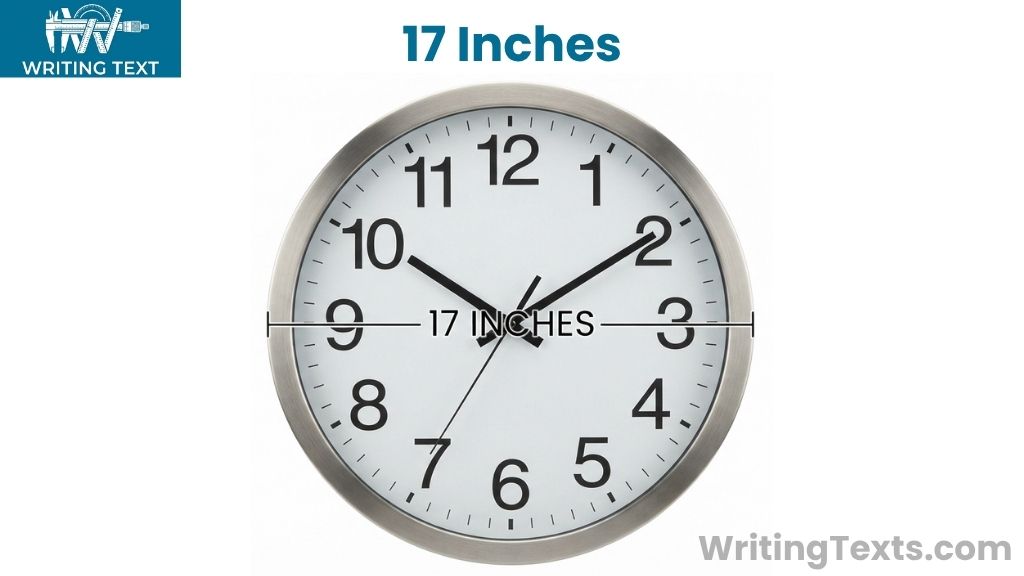
A standard wall clock commonly measures around 12 inches in diameter for typical models, but large decorative wall clocks are standardly manufactured near 17 inches across.
The 17-inch diameter covers the full face from the outermost edge of the clock case or frame, not just the dial. Large-format clocks at this size are designed for spaces where a 12-inch clock would appear undersized — open-plan living rooms, dining rooms, or commercial lobbies — and are commonly mass-produced at 17 inches because it hits a visual balance point without requiring oversized wall anchors. A 17-inch clock face placed flat occupies roughly the same area as a standard sheet of printer paper held at its widest orientation.
14. Large Tote Bag
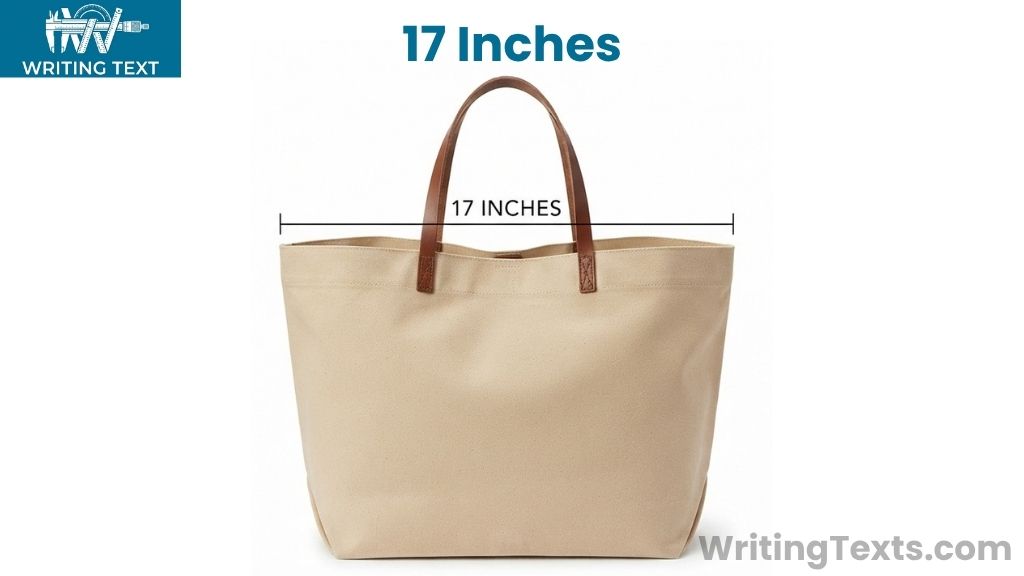
A large tote bag typically measures around 17 inches in width across the top opening, the size most commonly produced for everyday carry, beach, and market use.
Width is measured from the left side seam to the right side seam at the bag’s widest point, usually at the top opening where the handles attach.
The 17-inch width became a retail standard for large totes because it accommodates a standard 13-inch laptop, a full-size water bottle, and a small wallet side by side without the bag bowing outward. Held at arm’s length, a tote this wide stretches from roughly the wrist to just past the elbow on an average adult arm.
How to Estimate 17 Inches Without Tools
Two reliable zero-cost methods work well for approximating 17 inches using things permanently on your body. The first uses your forearm: measured from the inside of the elbow crease to the tip of the middle finger, an adult forearm averages between 15 and 18 inches depending on height, with the average landing near 17 inches for adults of medium build.
This method has a natural variance of plus or minus 2 inches depending on individual arm length, so it works best as a rough field check rather than a precise measurement.
The second method uses standard US letter-size paper, which measures exactly 11 by 8.5 inches. Laying one sheet lengthwise and adding approximately half a sheet’s length (about 5.5 inches) alongside it gives a combined reference of roughly 16.5 inches — close enough for visual estimation.
Paper is globally standardized, making it a more consistent reference than body measurements across different people. Neither method replaces a tape measure for precision work, but both are accurate enough for quick spatial comparisons.
17 Inches Compared to Similar Sizes
| Measurement | Size in Feet | Size in CM | Scale Comparison |
| 13 inches | 1.08 ft | 33.02 cm | Standard 13-inch laptop screen diagonal |
| 15 inches | 1.25 ft | 38.1 cm | Common mid-size laptop screen diagonal |
| 17 inches | 1.42 ft | 43.18 cm | Large pizza box width / 17-inch laptop screen |
| 19 inches | 1.58 ft | 48.26 cm | Small computer monitor diagonal |
| 21 inches | 1.75 ft | 53.34 cm | Entry-level desktop monitor diagonal |
| 34 inches | 2.83 ft | 86.36 cm | Double 17 inches — ultrawide monitor width |
FAQs About 17 Inches
What is 17 inches in cm?
17 inches equals 43.18 centimeters, calculated by multiplying 17 by the standard conversion factor of 2.54.
How long is 17 inches in feet?
17 inches equals approximately 1.42 feet, or 1 foot and 5 inches.
Is a 17-inch laptop actually 17 inches wide?
No. The 17-inch measurement refers to the screen diagonal, not the physical width. The chassis is typically 15 to 16 inches wide due to the surrounding bezel.
How many millimeters is 17 inches?
17 inches equals 431.8 millimeters.
What common household object is closest to 17 inches?
A standard cutting board or a large pizza box width are among the most consistent everyday references, both commonly manufactured near 17 inches.
Is 17 inches close to half a meter?
Not quite. Half a meter is 19.69 inches, so 17 inches falls about 2.7 inches — roughly 6.86 cm — short of the half-meter mark.
Can I use my arm to measure 17 inches?
An adult forearm from elbow crease to middle fingertip averages near 17 inches, but individual variation means this should only be used for rough estimation, not precision measuring.
A dartboard diameter and a full-size desktop keyboard width both hover at the 17-inch mark, making them two of the most accessible physical references for this size in everyday spaces. The next time the question of how long is 17 inches comes up, either object gives you an immediate, tangible answer without reaching for a ruler.
Discover More Measurement Articles:

I’m Karan Singh. I write about measurements, dimensions, and everyday size comparisons. I focus on making numbers easy to understand — no confusing terms, just clear and simple explanations. I use real-life examples so anyone can picture the size in their head. My goal is to help people find quick, accurate answers without any guesswork.