You’re trying to picture 8 inches and the number just floats there, meaning nothing. Maybe you’re checking if a drawer is deep enough, cutting something to size, or ordering a pan online. Quick Answer: 8 inches equals exactly 0.67 feet and 20.32 centimeters. Once you connect that number to objects you touch every day, it clicks instantly — and stays.
How Long is 8 Inches? Quick Conversions Chart
| Unit | Value |
| Inches | 8 in |
| Feet | 0.67 ft |
| Centimeters | 20.32 cm |
| Millimeters | 203.2 mm |
| Meters | 0.2032 m |
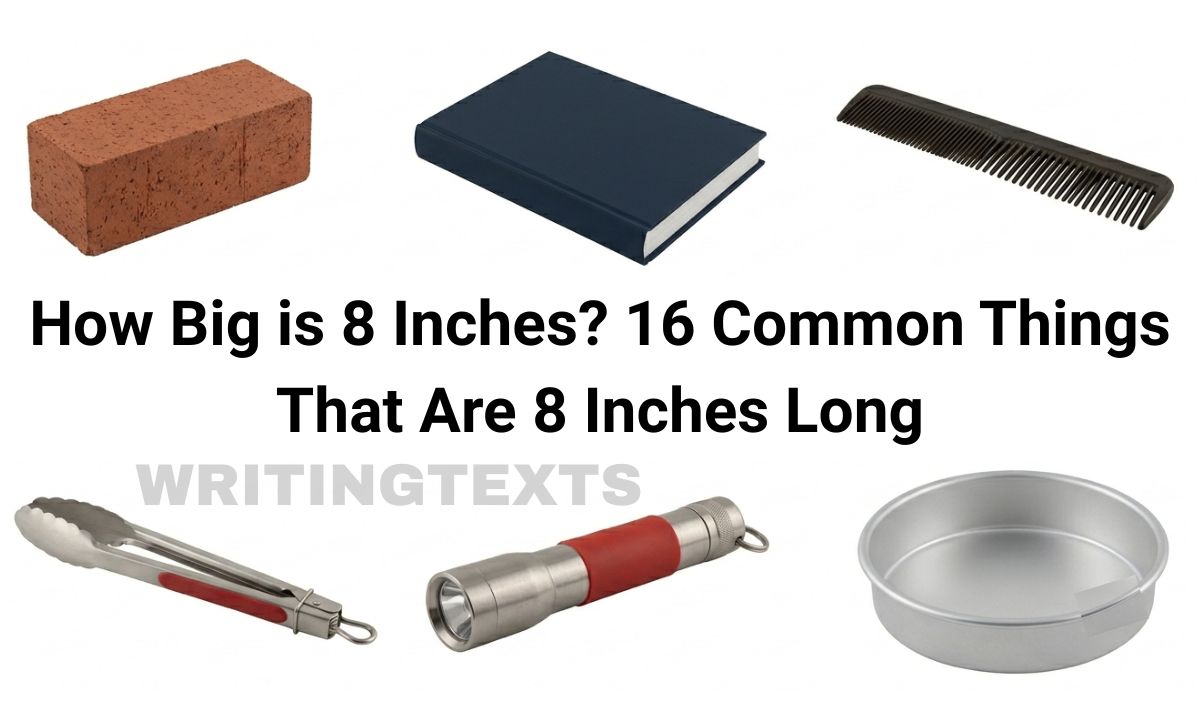
16 Everyday Things That Are 8 Inches Long
| No. | Object | Dimension | Exact or Approximate |
| 1 | Large Banana | Length (outer curve) | Approximate |
| 2 | Standard Brick | Length | Exact |
| 3 | Standard Drinking Straw | Length | Approximate |
| 4 | Tablet Screen (iPad Mini-style) | Diagonal screen | Approximate |
| 5 | Eight Paperclips Lined Up | End-to-end chain length | Approximate |
| 6 | Standard Office Scissors | Total length | Exact |
| 7 | Trade Paperback Book | Height | Approximate |
| 8 | Common Hair Comb | Overall length | Approximate |
| 9 | Small Kitchen Tongs | Overall length | Approximate |
| 10 | Medium Everyday Flashlight | Overall length | Approximate |
| 11 | Small Frying Pan | Rim diameter | Exact |
| 12 | Round Cake Pan | Inner diameter | Exact |
| 13 | Computer Mouse Pad | Width (short side) | Exact |
| 14 | Adjustable Wrench | Overall length | Exact |
| 15 | Compact Hacksaw Blade | Pin-to-pin cutting length | Approximate |
| 16 | Original 8-Inch Floppy Disk | Width × Height | Exact |
1. Large Banana
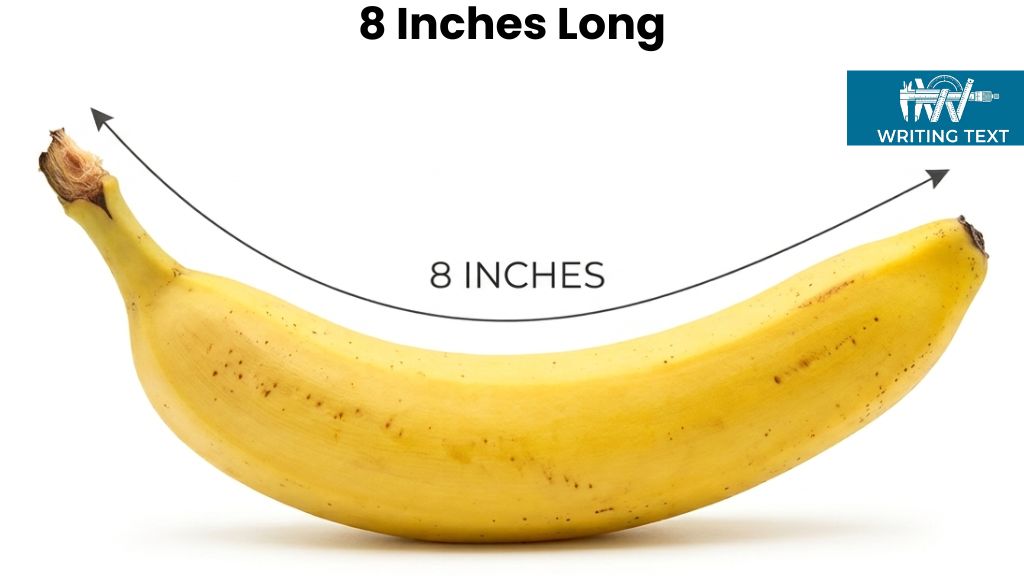
Pick up a large banana at any grocery store and you’re likely holding something right around 8 inches along its outer curve. That size isn’t random. Agricultural selective breeding gradually pushed banana varieties toward this length because it sits at a biological sweet spot — enough fruit yield per bunch, but not so heavy that the stalk snaps under the weight.
When a baking recipe calls for “one large banana” and you don’t have a kitchen scale nearby, this mental image works as a soft size guide. It won’t replace a scale, but it keeps your proportions close enough.
Related: 13 Daily-Use Things That Measure 5 Inches Long
2. Standard Brick
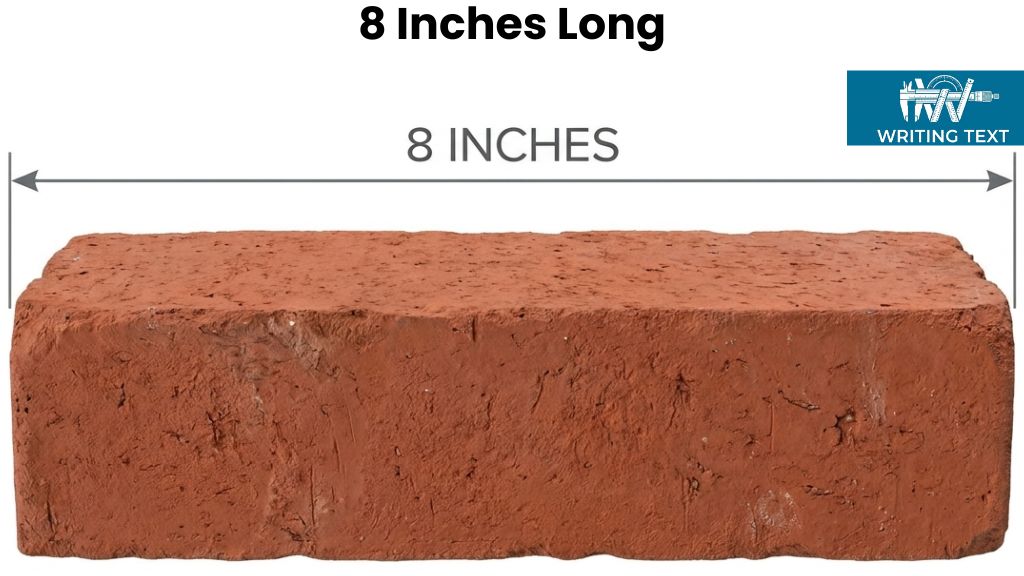
A standard brick measures exactly 8 inches in length, and that number was chosen with precision. The American Society for Testing and Materials locked in this dimension so that two bricks laid side by side with a standard 3/8-inch mortar joint would equal the length of exactly one brick. That relationship is what lets masons build interlocking load-bearing walls without constantly doing mental math on the site.
If you ever walk past a brick wall and wonder how many courses of brick are in a section, this single measurement is the whole calculation. It’s one of the rare cases where the object’s size was engineered entirely around the humans building with it.
3. Standard Drinking Straw
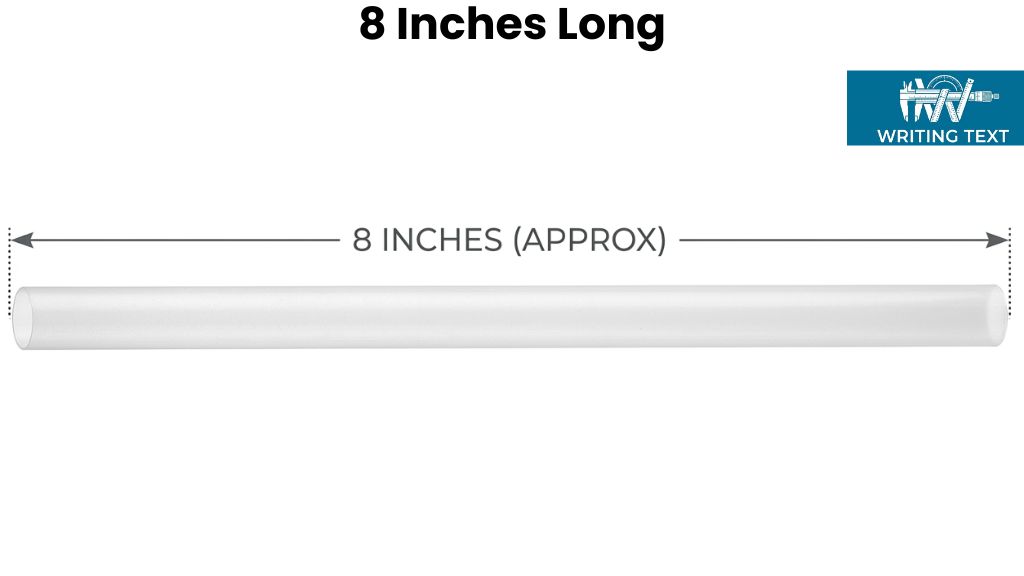
Pull a drinking straw out of its paper wrapper at any fast-food counter and you’ve got roughly 8 inches of hollow plastic in your hand. Manufacturers land on this range — typically 7.75 to 8.25 inches — so the straw sits comfortably inside a 16 to 22-ounce cup without disappearing under the lid or poking so far above it that it becomes awkward.
This is a surprisingly useful mental anchor. If you’re picking up a new travel tumbler and wondering whether standard replacement straws will work, knowing the typical straw length tells you immediately whether you need to look for a longer option.
4. Tablet Screen (iPad Mini-Style)
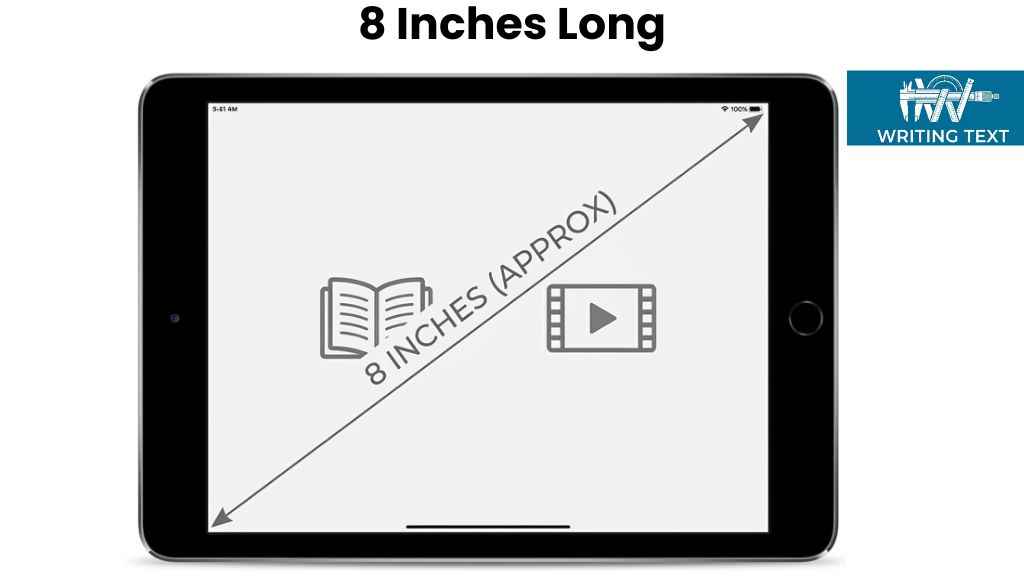
The iPad Mini and similar small-format tablets land right around 7.9 to 8.3 inches measured corner to corner across the screen. Consumer electronics designers spent years testing screen sizes before settling here. Small enough to hold in one hand without your palm aching. Big enough to read text or watch a video without leaning in.
That diagonal measurement is why “8-inch tablet” became its own product category. If you’re deciding whether a compact tablet fits inside a bag’s side pouch, picturing a screen slightly taller than a large banana gives you a solid size check.
Read More: How Tall Is 54 Inches? 14 Things That Are 54 Inches Long
5. Eight Paperclips Lined Up End to End
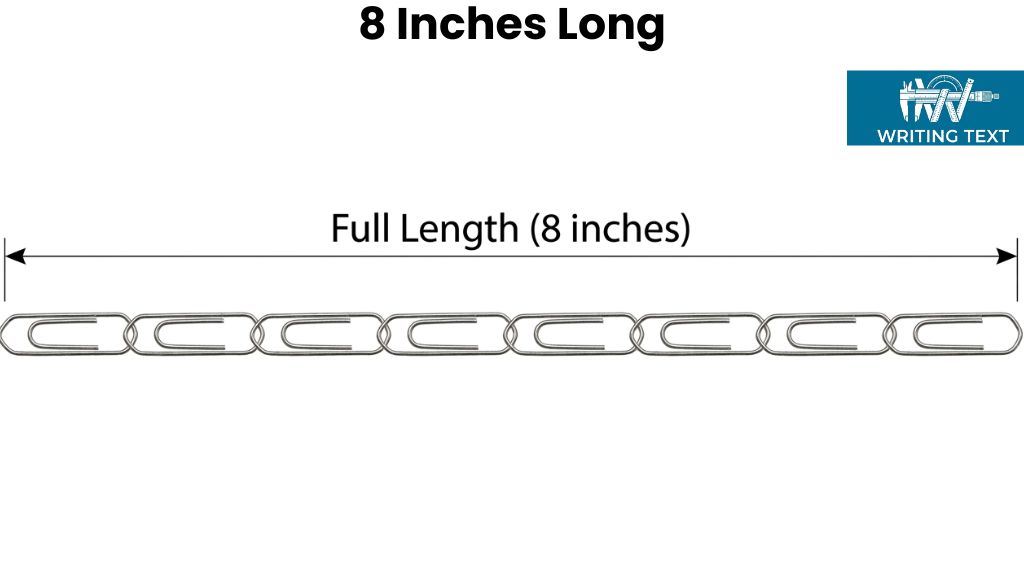
A single No. 1 paperclip measures exactly 1 inch. Line eight of them tip to tip and you’ve built yourself a near-perfect 8-inch ruler from office supplies. The 1-inch clip standard exists for a mechanical reason — that length generates enough spring tension to grip 10 to 15 sheets of paper without slipping off or permanently bending the wire.
When no measuring tape is close by, this chain method is remarkably accurate. It takes about 30 seconds to assemble and gives you a makeshift reference that most people can reliably build right at their desk.
6. Standard 8-Inch Office Scissors
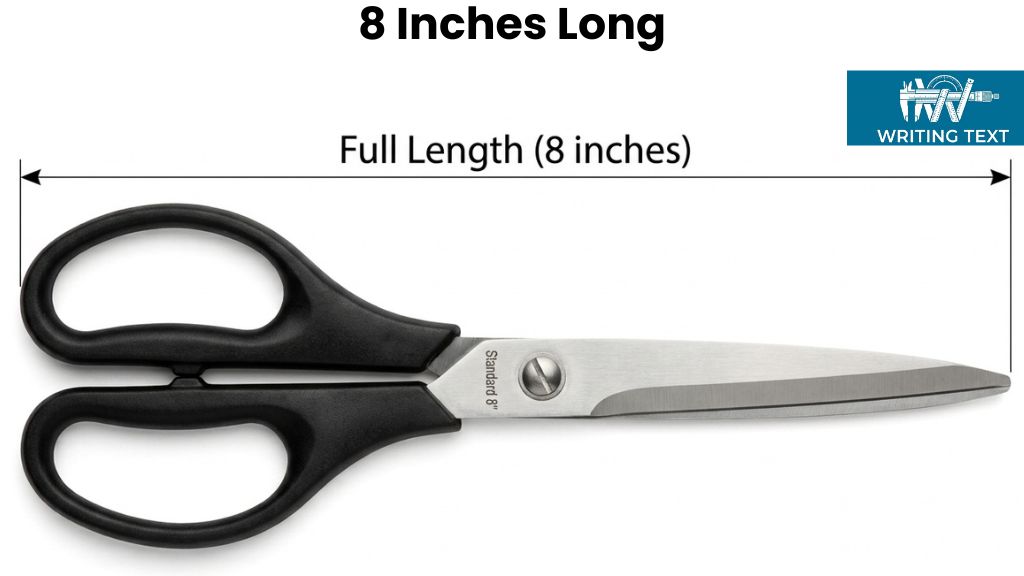
From the tip of the blades to the back of the handle loops, a pair of everyday office scissors measures exactly 8 inches. That length is calculated around adult hand mechanics — long enough to cut cleanly through paper without multiple choppy strokes, compact enough in the finger loops to keep control precise.
Most people have picked up a pair of scissors hundreds of times. That muscle memory makes this one of the best personal benchmarks you have for 8 inches. You already know intuitively how this object feels in your hand.
7. Trade Paperback Book (Height)
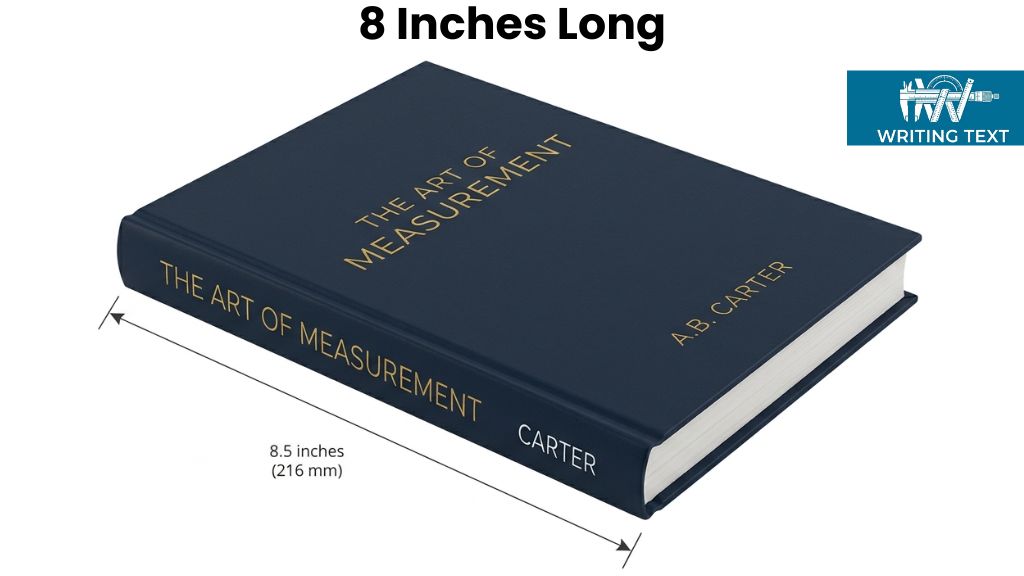
Walk into any bookstore and the tall, premium softcover novels — the ones publishers call trade paperbacks — stand about 8.5 inches tall. That height is set by industrial printing press economics. It maximizes how efficiently each sheet of paper feeds through a press while keeping the final book narrow enough to hold open with one hand.
Knowing this is practical when you’re buying a bookshelf or a shelf organizer insert. A space that comfortably fits a trade paperback is a space that fits most adult books without any awkward overhang.
8. Common Hair Comb
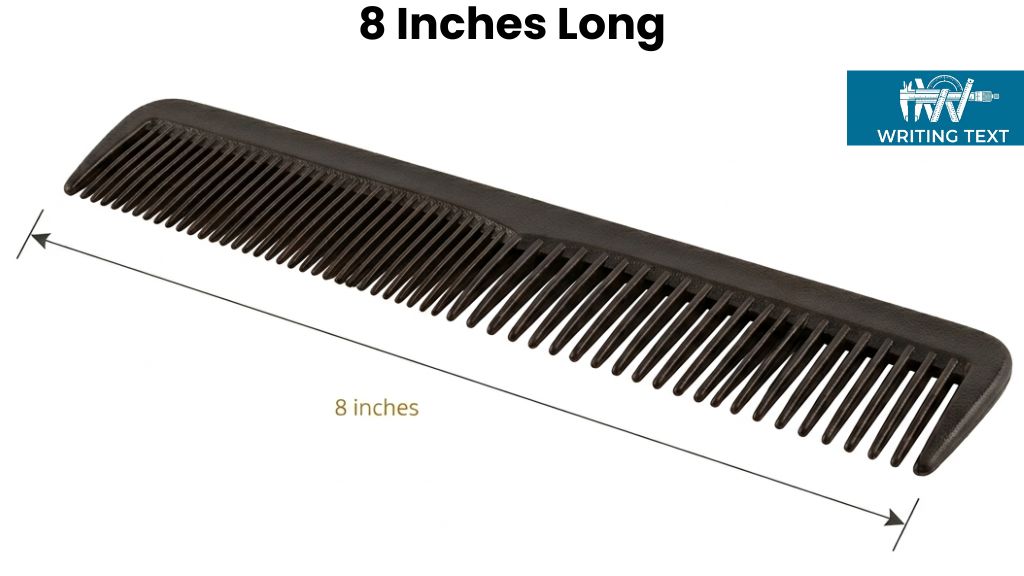
A standard hair comb runs commonly around 8 inches from end to end. That length is calibrated to sweep across a full adult scalp in one clean pass. Shorter and you’d need multiple passes. Longer and it becomes awkward to carry in a pocket or tuck into a travel bag.
Because people use combs right in front of a mirror, close to their own face, most adults have an unusually accurate mental picture of its true length. That makes it a reliable personal size reference — one calibrated right next to something you see every day.
9. Small Kitchen Tongs
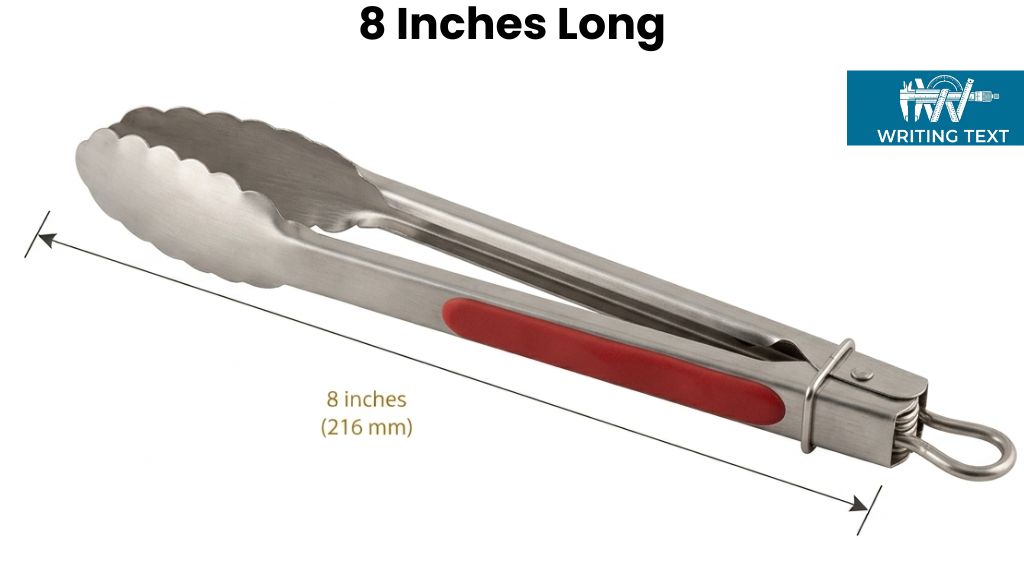
The short utility kitchen tongs sold for everyday home cooking typically measure around 8 inches in total length. This size isn’t arbitrary. The handle needs to keep your fingers a safe distance from hot oil or a stove flame, and the jaw needs enough leverage to grip something dense like a chicken breast or a roasted potato without slipping.
For practical use, 8-inch tongs also fit flat inside most standard kitchen drawer organizer trays. Longer serving tongs often don’t. That size difference is worth knowing before you buy a second pair.
Related: 10 Daily-Use Things That Measure 100 Inches Long – 2026
10. Medium Everyday Flashlight
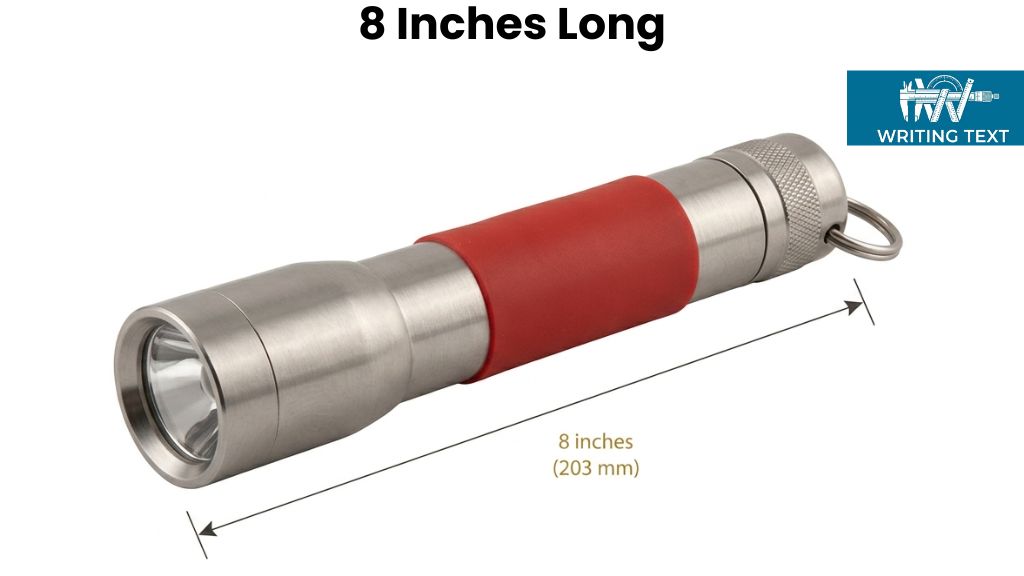
The classic household flashlight — the kind that runs on AA or C batteries and lives in a kitchen drawer or a glove compartment — typically falls between 7.5 and 8 inches long. That casing length is determined by the battery stack inside. The tube has to be long enough to fit the cells end to end, thick enough to grip with a closed fist, and balanced enough not to feel front-heavy when you’re holding it during a power outage.
It’s one of those emergency objects people forget about until they need it urgently, which makes it a useful mental benchmark. If a storage space fits your home flashlight, it fits something around 8 inches.
11. Small Frying Pan (8-Inch Skillet)
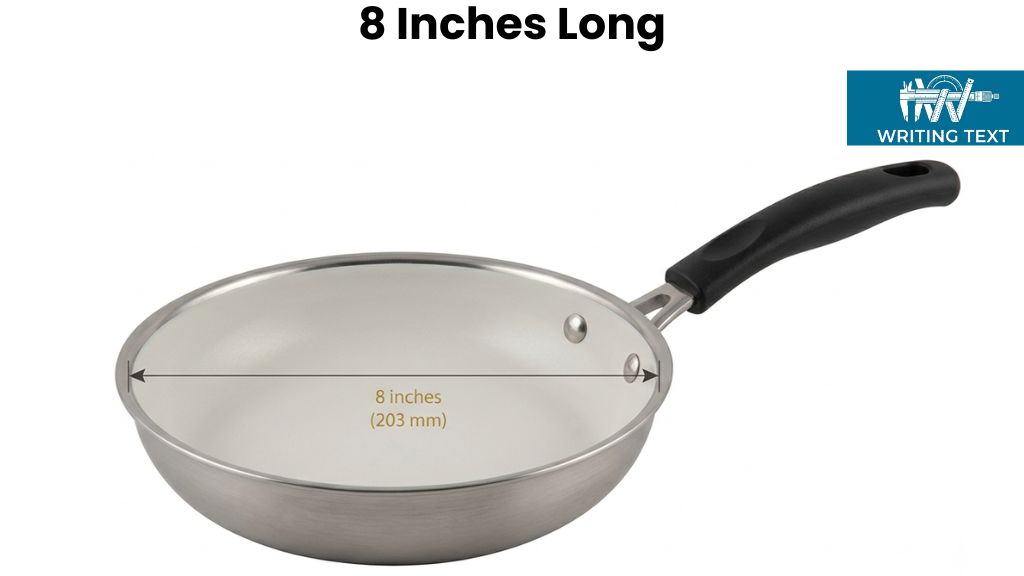
An 8-inch skillet is measured across its top rim — and that rim diameter matches the surface area of a standard small stovetop burner almost exactly. That’s intentional. When the pan covers the burner cleanly, heat spreads evenly across the cooking surface instead of escaping around the edges or overcrowding in the center.
For single-serving cooking — two eggs, a small chicken breast, one portion of vegetables — this pan is the right tool. It’s also the size most people already own as their smallest pan, which makes it an easy visual anchor for 8 inches.
12. Round 8-Inch Cake Pan
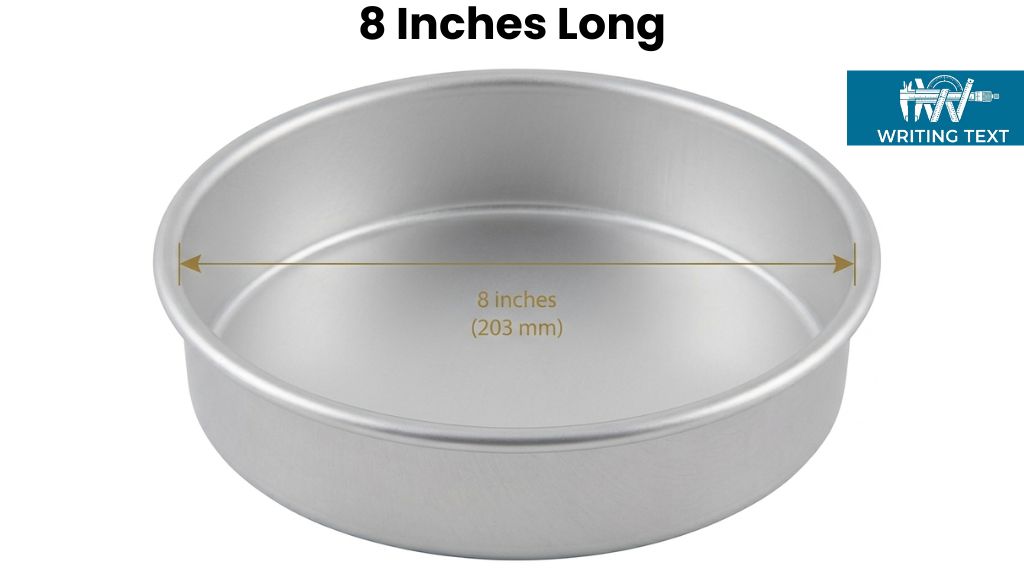
The 8-inch cake pan is measured across the inner rim, and it became a baking standard alongside the 9-inch version for a precise reason. The volume at this diameter allows a standard boxed cake batter to cook through to the center before the outer edges begin to overbake. Too wide and the center stays liquid too long. Too narrow and the cake domes and cracks.
If you’ve ever seen a classic two-layer birthday cake, each layer was almost certainly baked in an 8-inch or 9-inch pan. That familiar visual — the round layer cake — gives you a strong sense of this measurement.
13. Standard Computer Mouse Pad (Width)
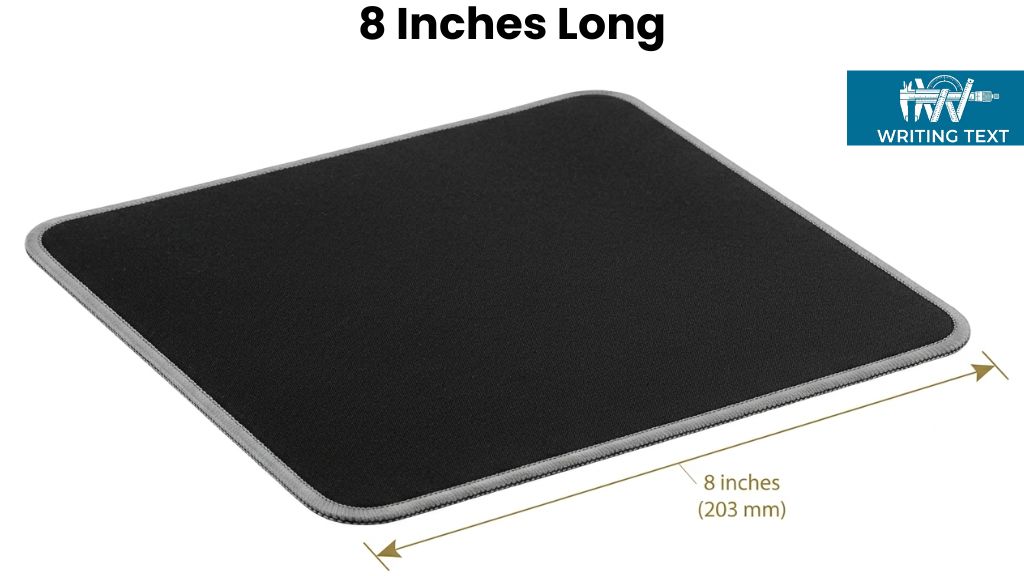
A standard mouse pad measures exactly 8 inches across its short side, and 9.25 inches along its long side. The 8-inch width was calculated around one specific physical reality: the average distance a human wrist needs to sweep a cursor from the left edge to the right edge of a standard desktop monitor without lifting the mouse off the surface.
When you’re planning a desk setup and wondering how much flat space you actually need beside your keyboard, a mouse pad’s footprint is the answer. It also makes the short side a clean ruler substitute for anything sitting on your desk.
14. 8-Inch Adjustable Wrench
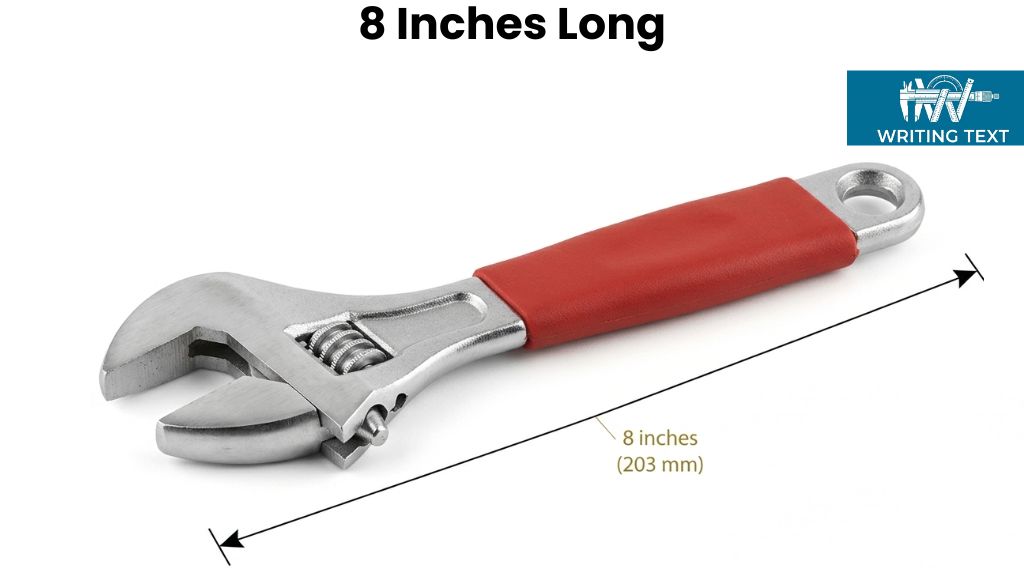
The 8-inch adjustable wrench is one of the most common hand tool sizes sold worldwide, and the length was chosen for a specific mechanical reason. An 8-inch handle generates enough torque for an average adult to break loose stubborn household bolts without needing a longer cheater pipe or risking rounding off a nut.
For anyone building a first apartment tool kit, this is the size most hardware stores recommend as the all-purpose starter wrench. It’s compact enough for a glove box emergency set, but capable enough for most household repairs.
15. Compact Hacksaw Blade
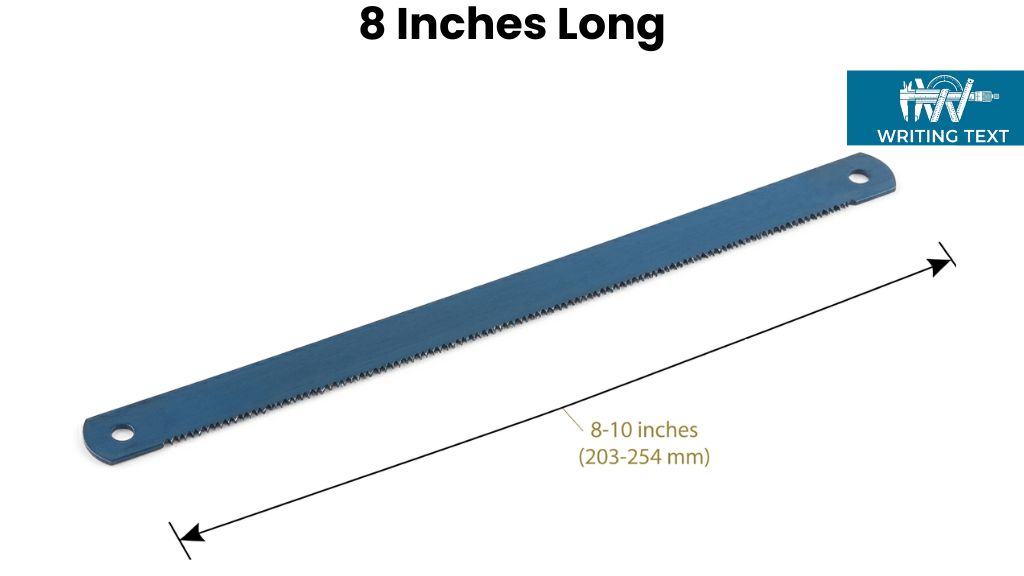
Small hacksaw blades for compact frames typically run 8 to 10 inches from pin to pin — the cutting length, not counting the frame itself. That shorter blade length keeps the thin, flexible steel under enough tension that it doesn’t twist or buckle when you push forward hard against metal pipe. A longer unsupported blade would flex sideways and lose its cutting line.
This size is worth knowing when you’re buying replacement blades at a hardware store. Blades aren’t universal — the pin spacing has to match your saw frame, and the shorter compact variants are distinctly different from the standard 12-inch blades sold for full-size frames.
16. The Original 8-Inch Floppy Disk
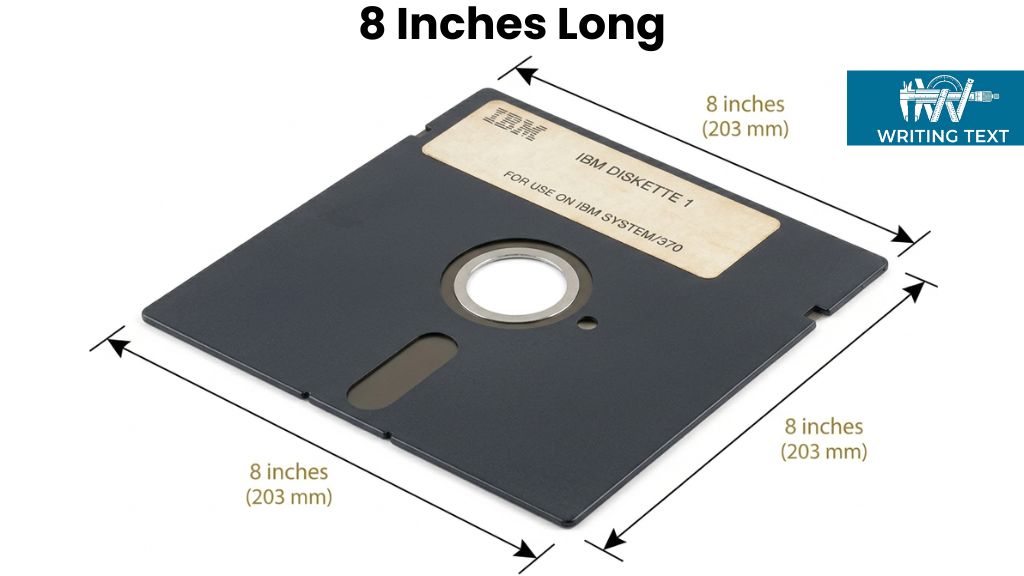
The original floppy disk, introduced commercially by IBM in 1971, measured exactly 8 inches square — both width and height. Most people assume the size came from storage technology. It didn’t. IBM engineers deliberately chose dimensions that matched standard office filing cabinet folders. That let early businesses file magnetic data disks right alongside paper documents in existing cabinets, making the transition to computers feel completely invisible to office staff.
That square shape eventually gave us the small save icon still used in software today — even though almost nobody under 30 has ever physically held one. It’s a fascinating case where an 8-inch object quietly shaped modern visual language.
Related: 13 Daily-Use Things That Measure 102 Inches Long – 2026
How to Visualize 8 Inches Measurement Without a Ruler
Your hand is the fastest tool you have. Spread your fingers wide and measure from the tip of your thumb to the tip of your pinky — for most adults, that span falls between 8 and 9 inches. It varies slightly from person to person, but once you check your own hand against a ruler once, you carry that reference everywhere for life.
A second method uses standard paper. A sheet of US Letter paper is 11 inches tall. Fold about 2.75 inches under — roughly a quarter of the page — and the remaining visible portion is close to 8 inches. It’s not as precise as a ruler, but for checking whether something roughly fits a space, it works reliably.
Both methods are quicker than searching for a tape measure and accurate enough for most real decisions — cutting a piece of trim, checking a shelf gap, or eyeballing whether a new purchase will clear a tight space.
8 Inches Long Compared to Similar Sizes
| Measurement | In Centimeters | Compared to 8 Inches |
| 5 inches | 12.70 cm | 3 inches shorter |
| 6 inches | 15.24 cm | 2 inches shorter |
| 8 inches | 20.32 cm | ← Target size |
| 9 inches | 22.86 cm | 1 inch longer |
| 10 inches | 25.40 cm | 2 inches longer |
| 16 inches | 40.64 cm | Double the length |
FAQs About How Long is 8 Inches
What is 8 inches in centimeters?
8 inches equals 20.32 centimeters. Multiply any inch value by 2.54 to get centimeters. In millimeters, 8 inches is 203.2 mm.
Is 8 inches bigger than a standard piece of paper?
Not quite. A US Letter sheet is 8.5 inches wide and 11 inches tall. So 8 inches is just half an inch shorter than the paper’s narrow side — close, but not quite there.
What common household item is about 8 inches long?
Plenty of things you already own. A standard brick is exactly 8 inches. So is an 8-inch skillet, a pair of office scissors, and a large banana comes in right around there too.
How can I measure 8 inches without a ruler?
Line up eight standard paperclips end to end — each is 1 inch, so eight equals 8 inches exactly. Or spread your hand wide and measure thumb tip to pinky tip. Most adult hands fall right around 8 to 9 inches.
How long is 8 inches of hair?
It reaches roughly from the ear down past the chin, or from the nape of the neck to around mid-shoulder blade. Most people consider this medium length — just enough to pull into a small ponytail.
Final Takeaway
A standard brick, a pair of scissors, a skillet sitting on your stove — all of them are quietly 8 inches, every single day. The next time you hold a drinking straw or grip a flashlight, you’re already touching this measurement. Once the number connects to something real in your hand, it stops feeling abstract entirely.

I’m Karan Singh. I write about measurements, dimensions, and everyday size comparisons. I focus on making numbers easy to understand — no confusing terms, just clear and simple explanations. I use real-life examples so anyone can picture the size in their head. My goal is to help people find quick, accurate answers without any guesswork.