You’re standing in a furniture store, phone in hand, staring at a sofa tag that reads “102 inches.” You already measured your living room wall. You wrote the number down. But now, with the tape measure back home, you’re doing math in your head and coming up blank.
Or maybe you bought a trampoline online, it arrived in a giant box, and now you’re in the backyard wondering if it’ll fit between the garden bed and the fence.
102 inches is one of those measurements that sounds large but stays fuzzy until you tie it to something real. This article is here to fix that — not with math, but with things you’ve already seen.
How Long Is 102 Inches, Exactly?
Before the objects, the plain facts:
| Unit | Value |
| Inches | 102 inches |
| Feet and inches | 8 feet 6 inches |
| Feet (decimal) | 8.5 feet |
| Centimeters | 259 cm |
| Millimeters | 2,590 mm |
Eight and a half feet. That’s the number to hold in your head. It’s taller than almost every door frame you’ve walked through, and longer than most people lying flat. Now let’s make it real.
The 13 Things That Make 102 Inches Click
| Object | Dimension |
| Classic Longboard Surfboard | 102 inches (nose to tail) |
| Standard Alcove Bathtub (Wall Reference) | ~102 inches along a large bathroom wall |
| Mid-Century Home Ceiling Height | 102 inches (8 ft 6 in) |
| Short Solo / Child’s Kayak | ~102 inches long |
| Pack Canoe / Kid’s Solo Canoe | 102 inches (8 ft 6 in) |
| Catalina 22 Sailboat Beam | 102 inches (max legal trailer width) |
| Two Plywood Sheets Side by Side | ~102 inches across |
| Large 3-Seat “Grand” Sofa | ~102 inches (armrest to armrest) |
| Extra-Long Picnic Table | 102 inches (tabletop length) |
| Professional Ping Pong Table | ~102 inches (main playing surface) |
| Full-Size Backyard Trampoline | 102 inches (total frame diameter) |
| Full-Size Soccer Goal | ~102 inches (total structural height) |
| Professional Trestle Dining Table | 102 inches (length) |
More Post: 15 Daily Use Things That Measure 6 Inches Long – 2026
1. A Classic Longboard Surfboard
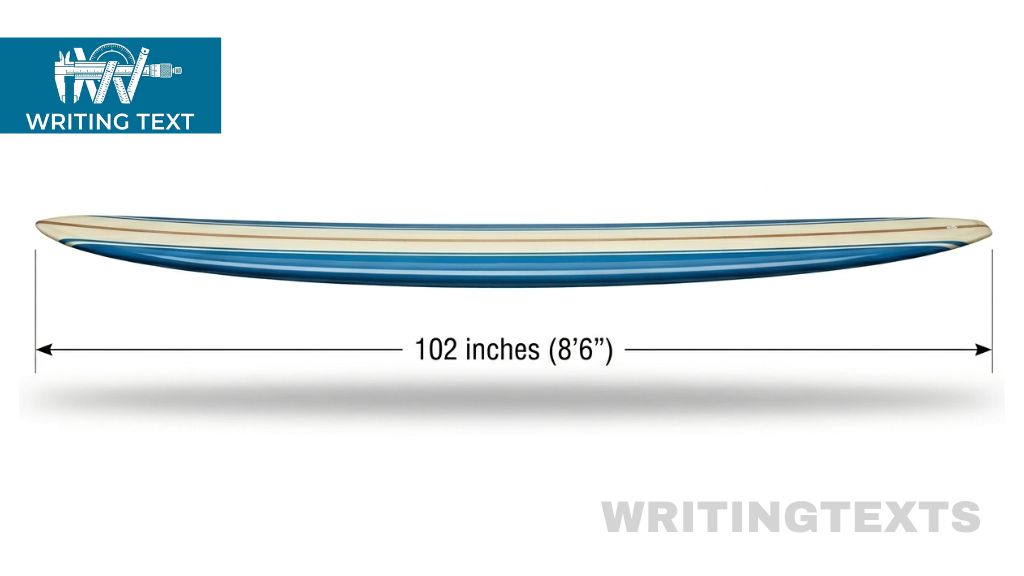
A standard longboard surfboard — the kind you see stacked outside surf shops or riding slow coastal waves — measures exactly 102 inches from nose to tail at the 8’6″ size. This isn’t a coincidence. That length is built for stability and smooth paddling. The board needs to be long enough to float an adult well above the waterline.
What this tells you practically: most SUVs and minivans offer about 96 inches of interior length with rear seats folded. A 102-inch longboard won’t fit inside. You need roof racks and a proper tie-down setup before you even leave the driveway.
2. A Standard Alcove Bathtub (Used as a Wall Reference)
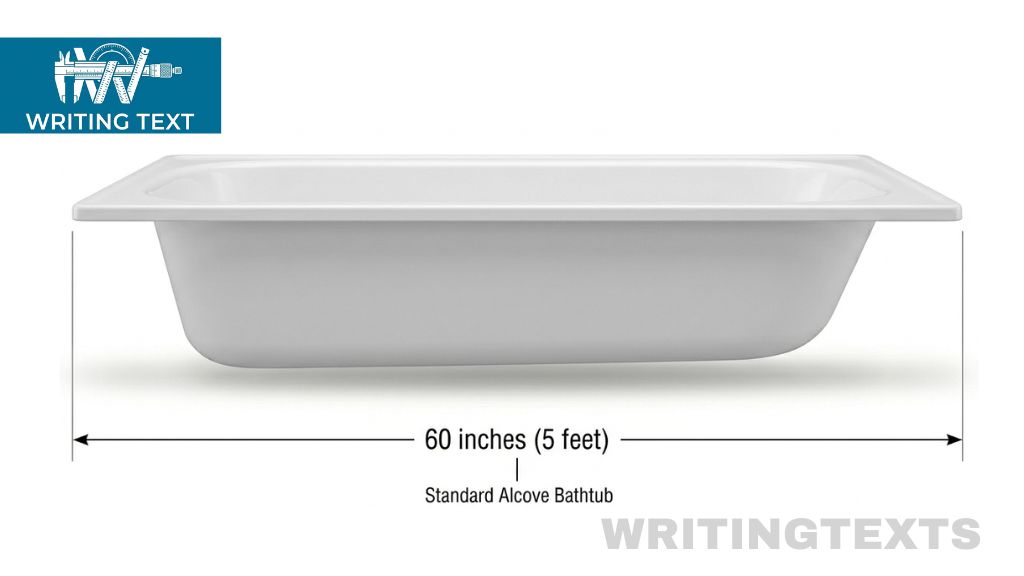
A single standard alcove tub runs 60 inches. Two placed end to end reach 120 inches. So 102 inches sits comfortably between those two — about six inches shorter than two full tubs combined.
Why does this help? If you’re trying to figure out whether a long countertop, a storage bench, or a sofa will run along the main bathroom wall, this gives you an honest picture. Most large bathroom walls measure between 96 and 120 inches. A 102-inch object takes up most of that wall — more than people expect.
3. Ceiling Height in Mid-Century Homes and Basements
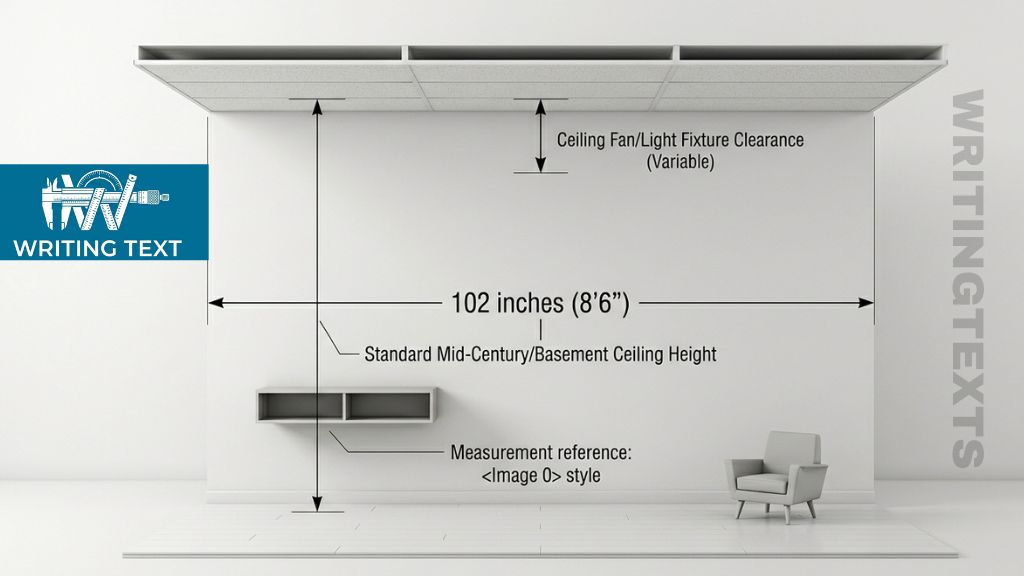
Not every home has modern 8-foot or 9-foot ceilings. A significant number of mid-century houses and finished basements were built with ceilings at exactly 102 inches — that 8’6″ middle ground between the two modern standards.
This matters when you’re shopping for tall furniture. A bookshelf listed at 84 inches fits fine. But an 96-inch armoire or a tall indoor fig tree that grows to 8.5 feet? You need to confirm your ceiling height before buying. A ceiling fan or hanging light fixture drops that clearance even further.
4. A Short Solo or Child’s Kayak
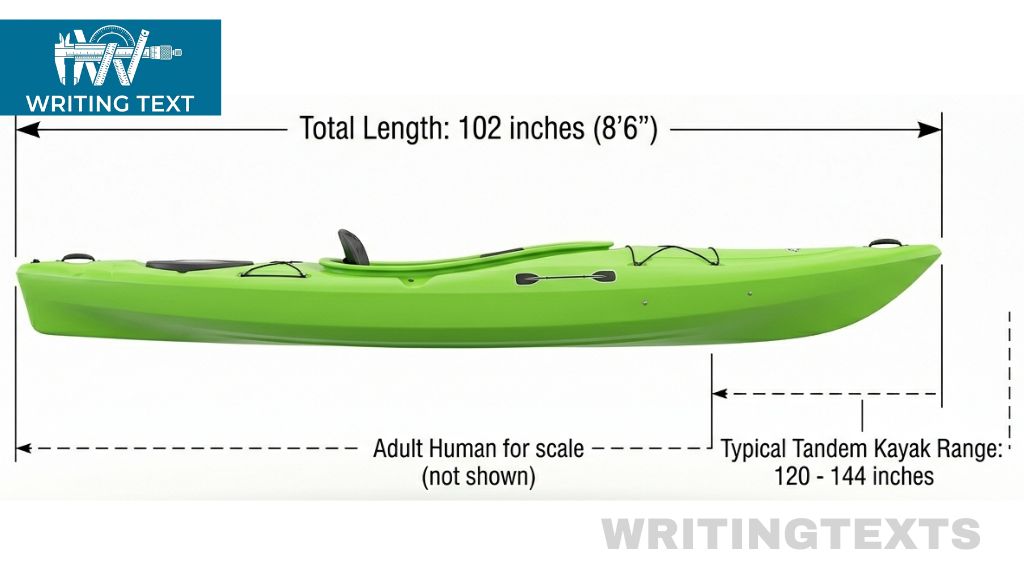
Most tandem recreational kayaks run between 120 and 144 inches. But a shorter solo kayak — the kind built for kids or for calm flatwater paddling — commonly lands right around 102 inches. It’s longer than a typical adult lying down, but compact enough to feel manageable.
For storage, this length matters a lot. A 102-inch kayak fits along a standard garage wall with room to spare. It also fits on most roof racks without worrying about overhang restrictions — which start to matter once you’re past 108 inches on many rack systems.
5. A Pack Canoe or Kid’s Solo Canoe
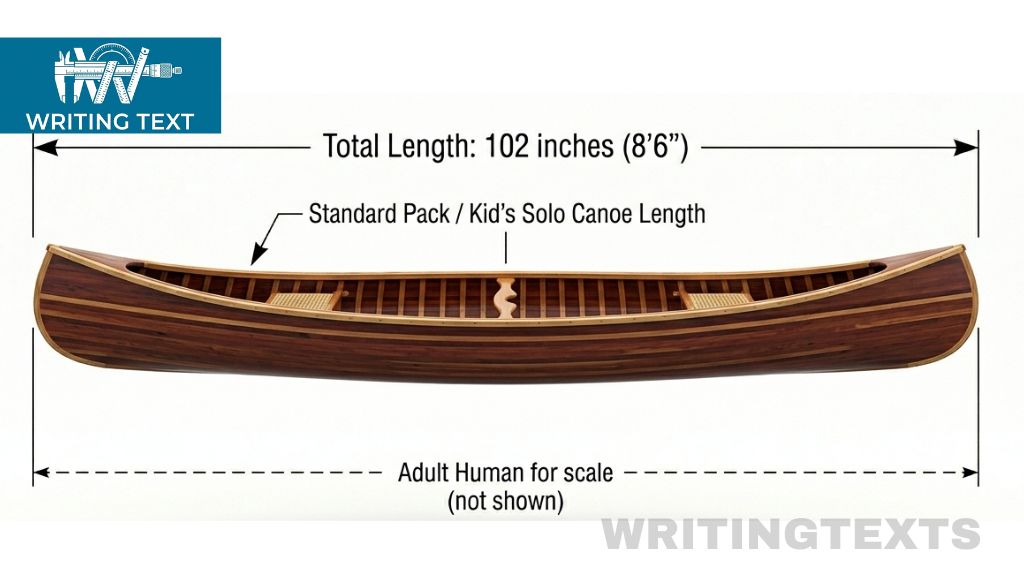
A pack canoe — designed to be light, portable, and easy for one person to carry — is typically built at exactly 8 feet 6 inches (102 inches). It tracks well in flat water and is short enough that one adult can manage it solo without help.
The question most buyers ask is: will it fit in the truck? A short-bed pickup runs about 72 to 96 inches of bed length. A 102-inch canoe won’t lie flat — you’d need it slightly angled or use an extended rack. Knowing this before buying saves you from an awkward moment in the parking lot.
6. The Beam of a Trailerable Sailboat (Like the Catalina 22)
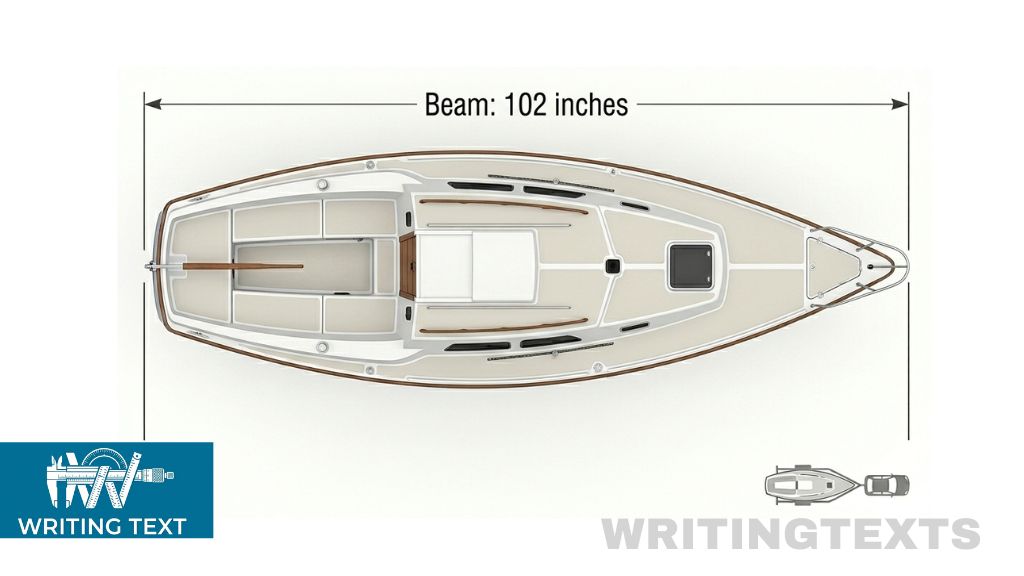
The “beam” is the widest point of a boat. On the Catalina 22 — one of the most popular small trailerable sailboats — the beam measures exactly 102 inches.
That number isn’t random. In the US, 102 inches is the maximum legal trailer width you can tow on public highways without triggering oversize permits, special lighting, or pilot car requirements. Boat designers who want to keep their vessels road-legal without bureaucratic hassle build right to that edge.
If you own or plan to buy a similar boat, confirming the beam against this number tells you exactly whether your weekend sail stays simple or becomes a logistics project.
7. Two Standard Plywood Sheets Side by Side
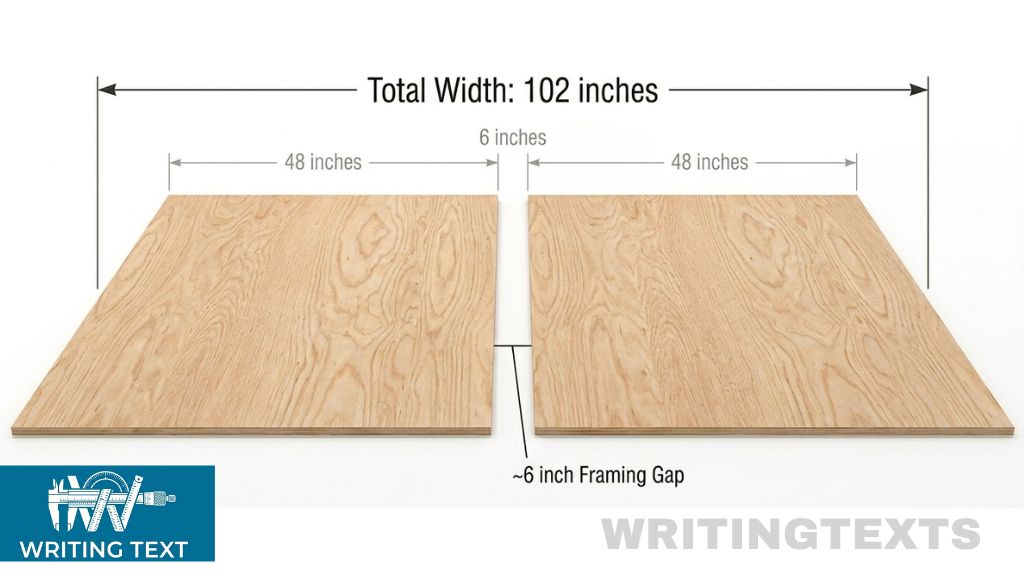
A sheet of plywood is 48 inches wide and 96 inches long — the classic 4×8 sheet that lives in every hardware store. Lay two sheets side by side along their length: that’s 96 inches of board, plus a few inches of framing gap or overlap, and you’re right at 102 inches.
For anyone building a shed wall, a workbench base, or a large platform bed frame, this is a useful mental anchor. The footprint of two sheets of plywood — roughly 102 inches across — is also close to the floor space a king-size bed frame occupies in your bedroom.
8. A Large 3-Seat “Grand” Sofa
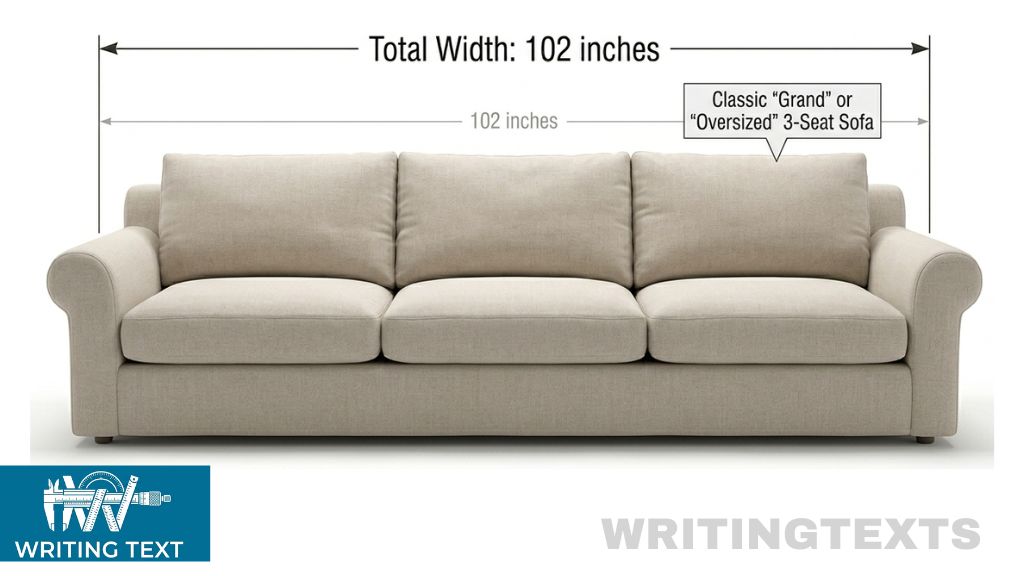
Walk into any furniture showroom and look for the largest three-seat sofas. The ones labeled “grand” or “oversized” commonly measure around 102 inches from one outer armrest to the other.
Most people buy sofas by looking at them in the store, then measure their wall at home and realize they underestimated. A 102-inch sofa on a standard 12-foot (144-inch) wall leaves only 21 inches on each side — tight once you add side tables or a floor lamp. This is the sofa that fits a room but commands it. Make sure your wall and your layout can handle both the size and the visual weight.
9. An Extra-Long Picnic Table
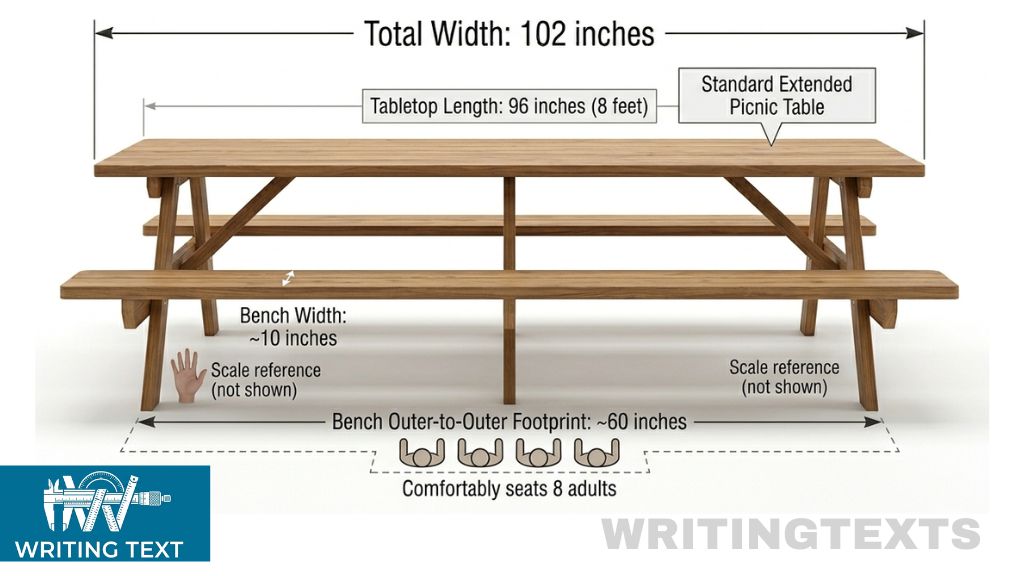
Standard picnic tables run 72 inches. The extended version — common at parks, campgrounds, and backyard entertaining setups — stretches to 102 inches (8.5 feet). That extra length exists for one reason: more people.
At this length, four adults can sit comfortably per side without elbowing each other. Event planners and families hosting larger gatherings use this length to plan how many tables to rent and how much outdoor space to set aside. If you’re placing one on a patio or deck, remember the benches extend beyond the table width — account for total footprint, not just table length.
10. A Professional Ping Pong Table
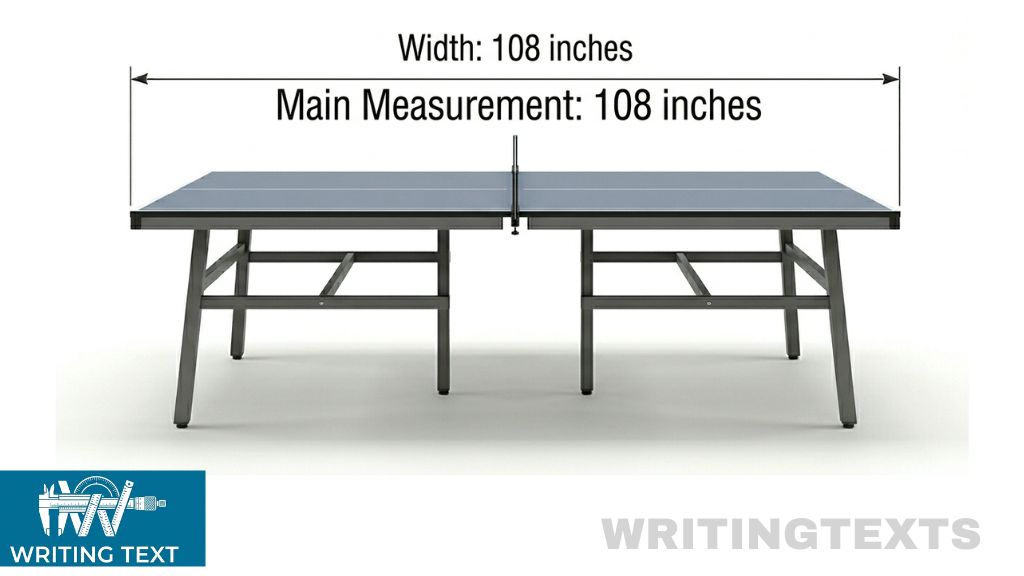
An official, full-size ping pong table measures 108 inches long. The 102-inch mark falls just inside that — representing most of the playing surface before the final outer edge.
The reason this matters: people shop for ping pong tables without thinking about the room they actually need around the table. You need roughly 5 feet of clear space on each end for comfortable play. That turns a 9-foot table into a 19-foot room requirement. A basement or garage that looks big enough often isn’t once the table is open and two people are holding paddles.
11. A Full-Size Backyard Trampoline (8.5 ft Frame)
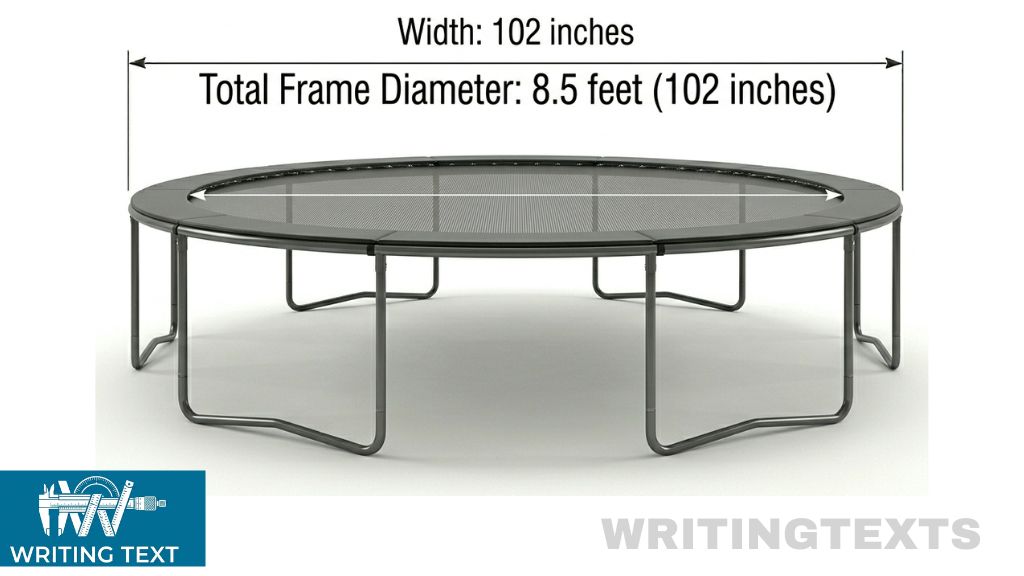
The smallest full-size backyard trampoline — the kind marketed for children and family use — commonly has a total frame diameter of 102 inches. The jumping surface inside is smaller, but the outer frame itself stretches to 8.5 feet.
This is the measurement parents often forget. The product description says “8-foot trampoline,” but that refers to the jump mat, not the frame. The full structure takes up more room. Before ordering, measure the gap between your fence, garden beds, or HVAC unit. A lawnmower needs room to pass, and most safety guidelines recommend several feet of clearance on all sides.
12. A Full-Size Soccer Goal (Total Structural Height)
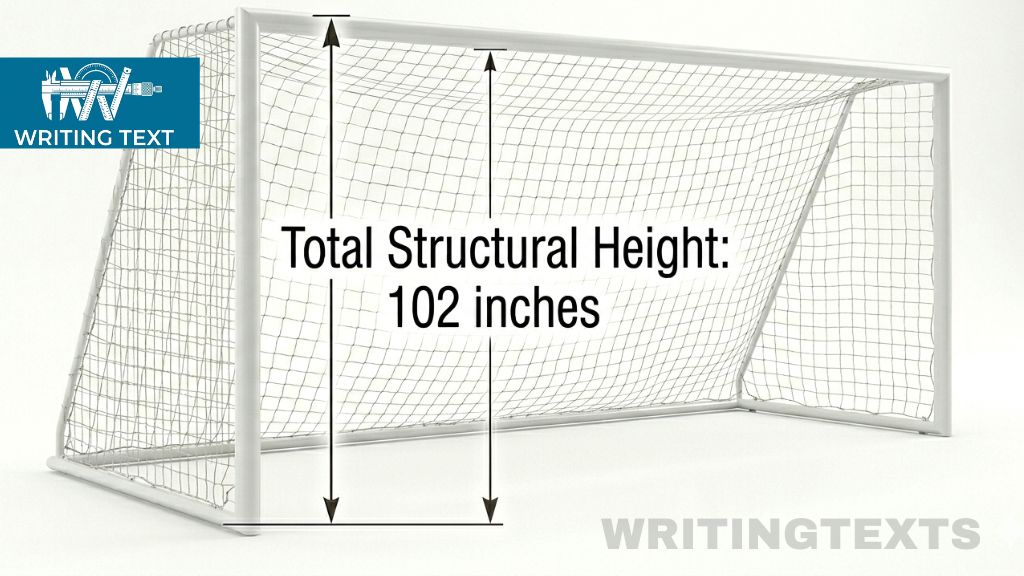
The crossbar of a professional soccer goal sits at exactly 96 inches (8 feet) off the ground. But the total structural height — including the frame, top bar housing, and grounding supports — typically reaches around 102 inches.
Most people have stood near a full-size soccer goal at some point. If you couldn’t reach the crossbar with a jump, you were looking at something just over 8 feet. That mental picture — the height of a pro goal’s crossbar plus a few inches — gives you an honest sense of what 102 inches looks like vertically in open space.
13. A Professional Trestle Dining Table
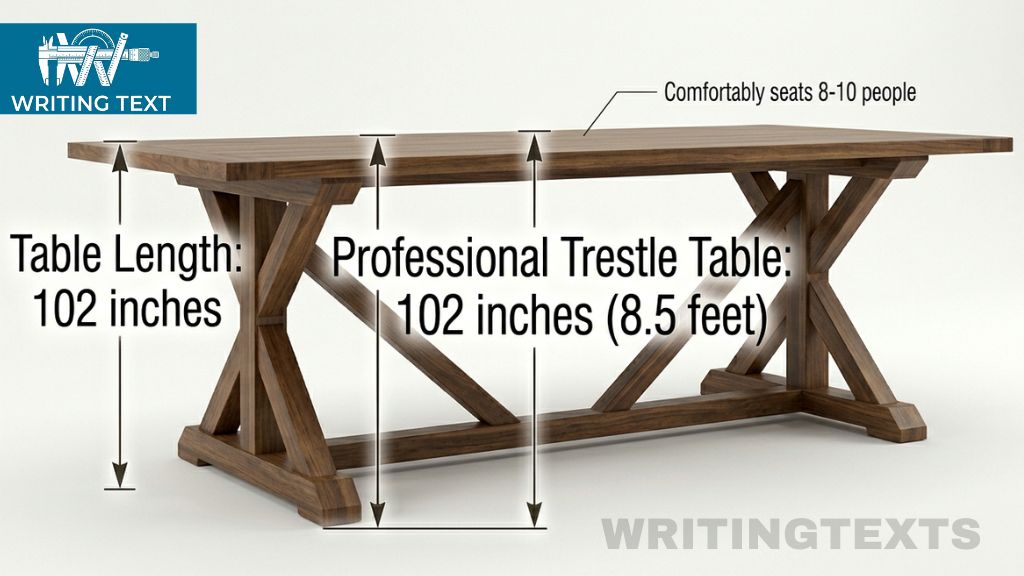
Long trestle dining tables — the kind built for large family dinners or farmhouse-style dining rooms — are commonly made at 102 inches. Interior designers and furniture makers settled on this length because it comfortably seats 8 to 10 people and anchors a proper dining room without overwhelming it.
When placing one of these tables, the rug underneath typically needs to be 10 to 12 feet long so chairs can pull back without catching the edge. Knowing the table is 102 inches helps you shop for the rug, measure doorway clearance for delivery, and plan the spacing to the nearest wall or sideboard.
More Post: 16 Daily-Use Things That Measure 7 Inches Long – 2026
When Does 102 Inches Actually Cause Problems?
Most measurement confusion doesn’t happen when people are paying close attention. It happens in three situations:
Online shopping — You read the dimensions, picture the item, and get it wrong anyway. The sofa arrives and your wall lost the argument.
Vehicle transport — Surfboards, kayaks, canoes, and sailboat trailers all bump up against this length in ways that become very real on the highway or in a parking garage.
Room planning — Ceilings, dining tables, sofas, and trampolines all share this footprint. When more than one of them is in the same space, the math gets tight fast.
In each of these cases, one of the 13 objects above probably mirrors what you’re dealing with. Use the closest match as your reference point.
Visualizing 102 Inches Without a Tape Measure
If you don’t have a measuring tape nearby:
- Stand next to another person and extend both your arms out to the sides. The average adult arm span is close to their height. Two average adults standing arms-length apart, fingertip to fingertip, cover roughly 108 to 120 inches. Shorten that slightly and you’re near 102.
- Lie flat on the floor. The average adult is 66 to 70 inches. Add the length of your arm stretched above your head (roughly 30 inches) and you’re just past 96 inches — one more large step gets you to 102.
- Think of a standard hollow-core interior door: 80 inches tall. Add about two and a half extra ruler lengths (12 inches each) on top. That visual — door plus a bit — is close to 102 inches.
FAQ’s About 102 Inches
How long is 102 inches in feet?
102 inches is 8 feet 6 inches, or 8.5 feet exactly.
How long is 102 inches in centimeters?
102 inches equals 259.08 centimeters.
Can 102-inch curtains work for standard windows?
102-inch curtains are floor-length for rooms with 8- to 9-foot ceilings and are often used in living rooms or bedrooms where the curtain rod is mounted close to the ceiling. For a standard 8-foot ceiling, 102-inch curtains will pool slightly on the floor, which is a deliberate style choice in some room designs.
Is 102 inches wider than a standard US lane?
A standard US highway lane is 144 inches wide. A 102-inch trailer beam fits within a single lane, which is exactly why it’s the legal maximum width without a permit.
What’s the difference between 96 inches and 102 inches?
Six inches — about the width of your hand. In furniture, that’s the gap between a sofa that fits comfortably and one that doesn’t. In ceiling height, it’s the difference between a lamp fitting and scraping the fixture.
Leaving You With Three Clear Images
When 102 inches comes up again, reach for one of these three:
A longboard surfboard that won’t fit in your car but handles beautifully on a roof rack. A large sofa that seats three adults and fills most of a living room wall. A ceiling in an older home — just above a standard door, not quite as tall as a modern open-plan room.
Any of those three will give your brain an honest picture — and that picture is worth more than any conversion table.

I’m Karan Singh. I write about measurements, dimensions, and everyday size comparisons. I focus on making numbers easy to understand — no confusing terms, just clear and simple explanations. I use real-life examples so anyone can picture the size in their head. My goal is to help people find quick, accurate answers without any guesswork.