
You’re standing in a furniture store, staring at a floor lamp. The tag says 72 inches. You pull out your phone, do the math — six feet — and then stand there wondering if that’s actually going to fit in your living room. You know the ceiling is eight feet. You think the shelf near the window is somewhere around five feet. But none of that math is landing in your head as a real picture.
That’s the problem with measurements on paper. Numbers don’t take up space. Objects do.
How Tall is 72 Inches?
Seventy-two inches is exactly 6 feet, or roughly 182.88 centimeters (about 1.83 meters, or just over 2 yards). It’s the height of a tall adult man. It’s the length of a surfboard. It’s the distance from the floor to the top of your kitchen cabinets in a standard home. Once you tie it to something familiar, it stops being abstract.
Below are eight real objects — things you’ve seen, touched, or lived around — that all sit right at or near 72 inches. Each one exists at this size for a specific reason, and understanding that reason is what turns a number into something you can actually use.
Quick Measurements
| Unit | Value |
| Feet | 6 feet |
| Centimeters | 182.88 cm |
| Meters | 1.83 m |
| Yards | 2 yards |
| Inches | 72 inches |
8 Common Things of 72 Inches Tall
| Object | Measurement |
| Professional floor lamp | ~72 in tall |
| Two king pillows end-to-end | 72 in total length |
| Room divider / folding screen | ~72 in tall |
| Vertical blinds (slat length) | 72 in long |
| Adult male ostrich | 72–84 in tall |
| Folding hand truck (folded) | ~72 in tall |
| Long yoga mat (XL) | 72 in long |
| Counter-depth refrigerator | 70–72 in tall |
Industrial Standards: Built to Fit a Space
1. Vertical Blinds (Individual Slat Length)
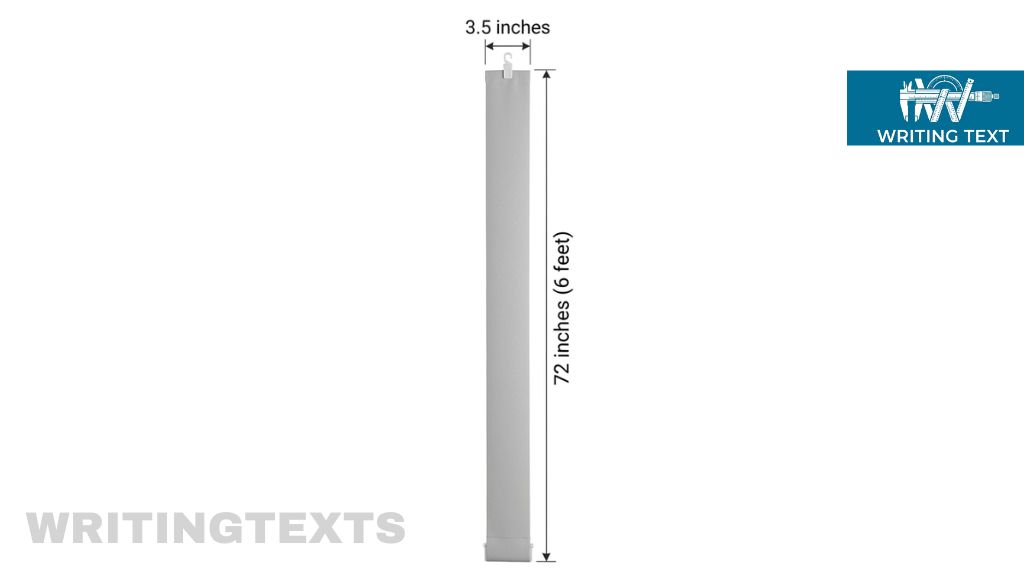
Walk into any apartment with sliding glass doors and you’ll almost certainly find vertical blinds. The individual slats hang down exactly 72 inches — a stock size you’ll find on shelves at any hardware store. This isn’t a coincidence. Standard residential sliding patio doors are built to 6 feet tall, and the blinds are cut to match that drop precisely.
This matters most when a single slat breaks. You don’t need to measure anything. You just know: the replacement slat is 72 inches. If you’re a renter trying to swap out a cracked panel before moving out, that standardized length is what saves you from buying a whole new set. It also tells you that a 72-inch-tall window covering will clear the floor without bunching — no trimming, no guessing.
2. Standard Refrigerator (Counter-Depth Models)
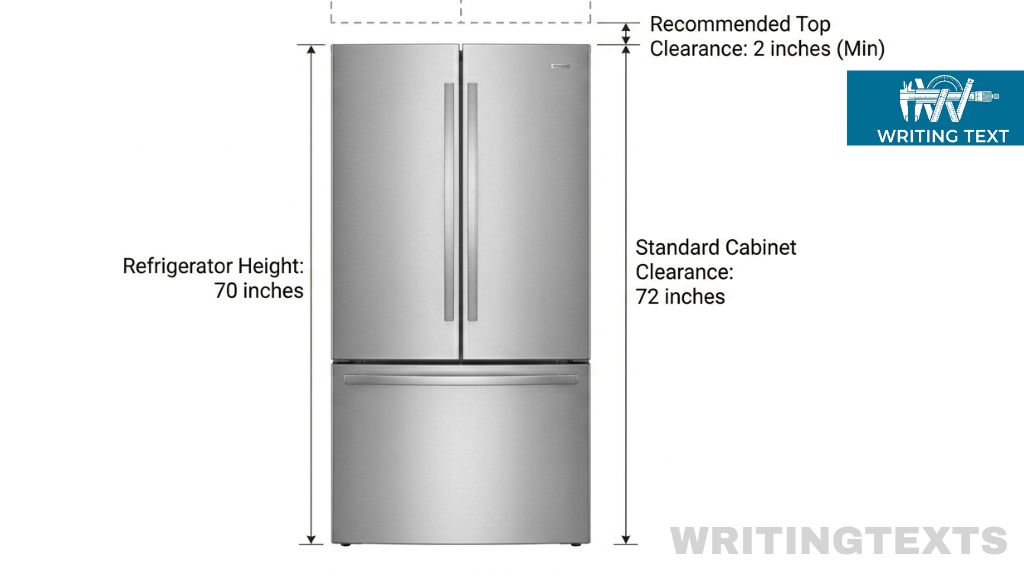
Counter-depth refrigerators — the kind with French doors and a flush-fit design — typically stand between 70 and 72 inches tall. That range exists for one very deliberate reason: standard overhead kitchen cabinetry in modern homes is installed at 72 inches from the floor. The fridge is designed to slide underneath without blocking the cabinet doors above it.
Here’s the part most people miss: “fits under 72-inch cabinets” doesn’t mean you should buy a 72-inch fridge. A refrigerator needs 1 to 2 inches of air clearance above it for the compressor to breathe. So if your cabinets sit at 72 inches, your fridge should be no taller than 70 or 71 inches. Measure your cabinet height before you order. The difference of one inch can mean either a clean install or a very expensive return trip.
3. Room Divider / Folding Privacy Screen
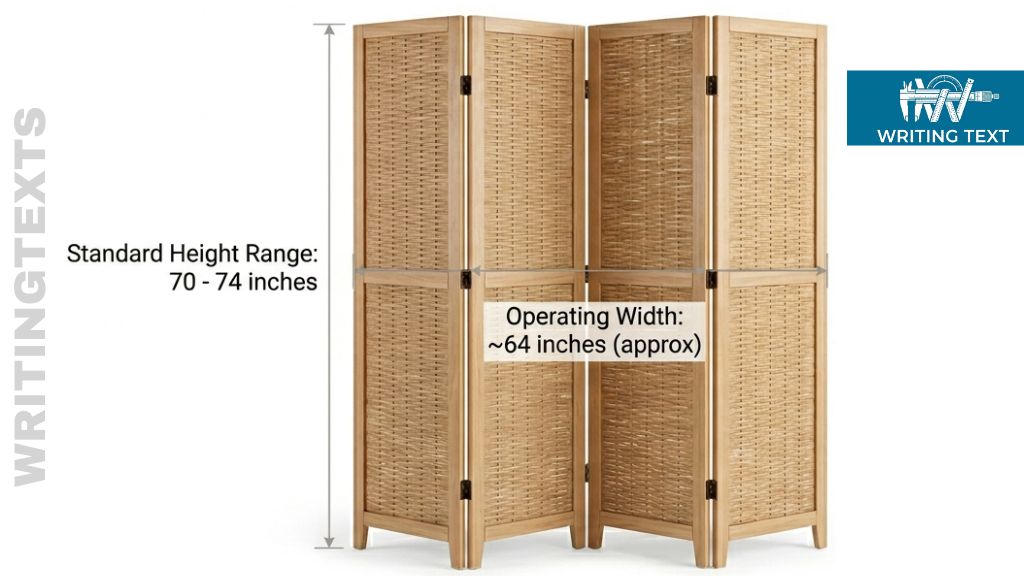
A standard 3- or 4-panel folding privacy screen stands approximately 72 inches tall — a range that typically runs from 70 to 74 inches depending on the manufacturer. That height is not arbitrary. It clears the eyeline of a standing adult (average around 5 feet 9 inches) by a comfortable margin, which means it blocks sightlines whether you’re seated at a desk or walking past.
The real design logic here is ceiling clearance. An 8-foot ceiling sits at 96 inches. A 72-inch divider leaves 24 inches of space above it — enough to avoid that cramped, wall-to-ceiling look while still providing genuine visual privacy. If you’re setting up a home office corner in a studio apartment, a 72-inch screen is essentially the shortest height that actually works as a privacy tool. Anything shorter starts to feel like a decorative suggestion rather than a real partition.
Household Basics: Sized Around Daily Life
4. Professional Floor Lamp (Torchiere or Arc Style)
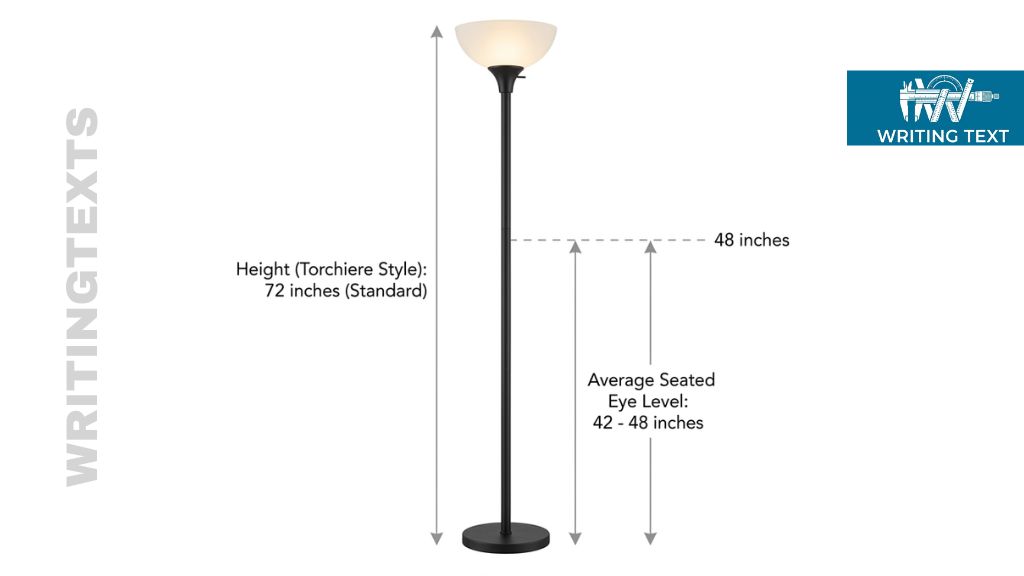
Most floor lamps — the tall, upright kind designed to light a reading chair or sofa corner — fall right around 68 to 74 inches, with 72 inches being the most common standard height for torchiere and arc models. The reason comes down to light placement. When you’re seated, your eye level is roughly 42 to 48 inches off the ground. A lamp at 72 inches positions the shade well above your head, which means light comes down over your shoulder rather than directly into your eyes.
The practical concern most people overlook is ceiling fan clearance. A typical ceiling fan hangs about 7 to 8 feet from the floor, and its blades sweep outward. A 72-inch lamp sitting near a sofa can come dangerously close to those blades if the fan is on a lower setting. Before you position a floor lamp, check not just vertical clearance but the arc of any fan above. Six feet of lamp needs at least 6 feet of open vertical column — and a little more if anything is spinning above it.
5. Two King Pillows Laid End-to-End
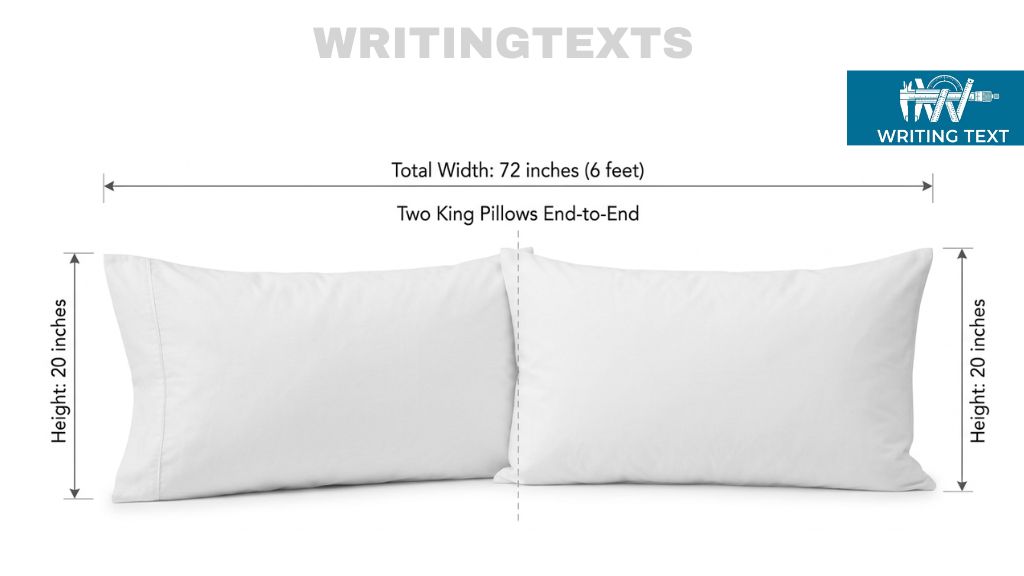
Here’s the bedroom version of a tape measure. A standard king-size pillow measures exactly 36 inches × 20 inches — an ISO-standardized dimension across virtually every bedding brand. Place two of them end-to-end lengthwise and you get exactly 72 inches: a perfect 6-foot ruler sitting right on your mattress.
This sizing is intentional. A king mattress is 76 inches wide. Two king pillows span 72 inches of that width, leaving about 2 inches of mattress showing on each side — just enough for the fitted sheet to tuck cleanly at the edges without the pillows hanging off. If you ever need to eyeball 6 feet in a bedroom — whether you’re checking if a piece of furniture fits along a wall or estimating a gap — two king pillows laid flat is one of the most accurate human-scale rulers you’ll find.
Natural and Sport Anchors: Scale in Motion
6. Long Yoga Mat (Professional XL)
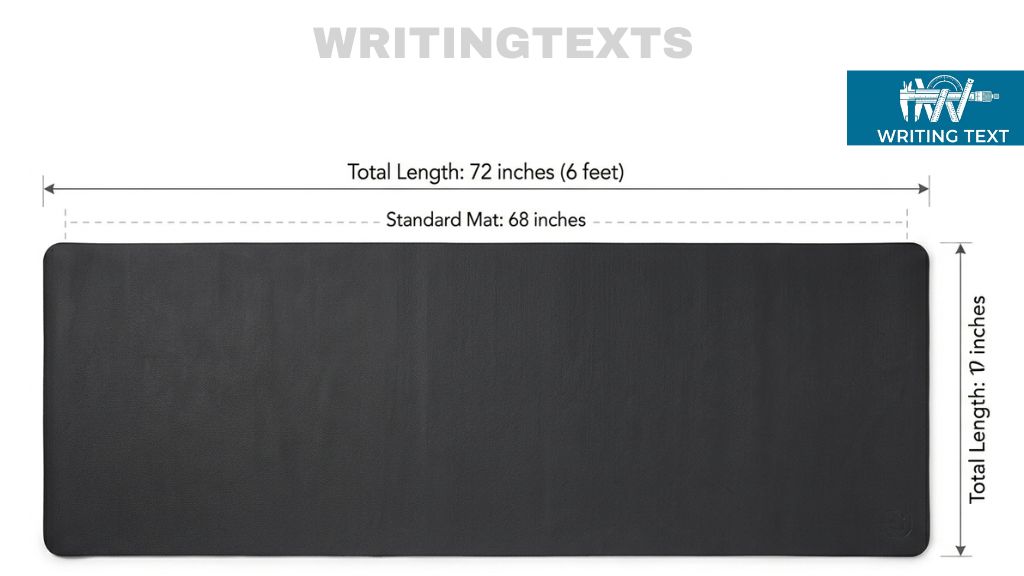
The standard yoga mat is 68 inches long — and it consistently fails taller practitioners. That’s why the 72-inch “Extra Long” mat exists as a distinct, widely sold product. It’s an exact size, not an approximation. The logic is purely functional: in Savasana (the flat, full-body rest pose at the end of class), your entire body needs to be on the mat — head, heels, and everything between.
For anyone close to or over 6 feet tall, those extra 4 inches are the difference between a proper practice surface and a mat where your feet dangle onto cold hardwood. Beyond yoga, knowing that a 72-inch mat occupies 6 feet of floor space is useful for planning a home gym. That single mat, laid out, tells you exactly how much clear floor you need for any floor-based exercise — stretching, Pilates, bodyweight work. If two people practice in the same room, you’re looking at 12 feet of mat length alone, not counting side-to-side spacing.
7. Folding Hand Truck (When Folded Flat)
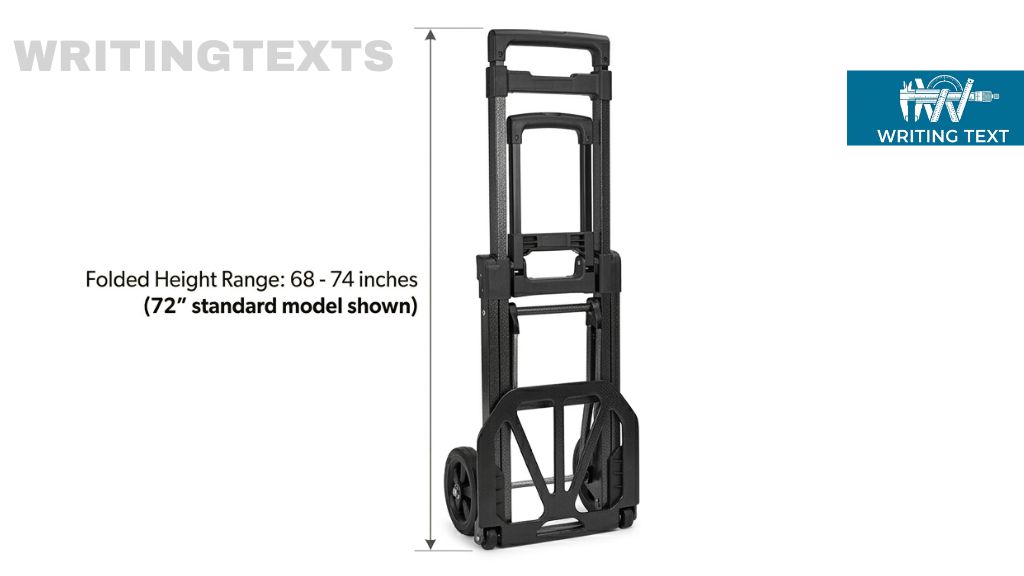
A heavy-duty 2-wheel folding hand truck — the kind used for moving boxes, appliances, and equipment — folds down to roughly 68 to 74 inches, with 72 inches being the common nominal height for standard models. When upright and in use, this height is engineered so the handles rest near waist level for the average adult, giving you leverage without bending. When folded, that same height becomes a storage challenge.
This is where the measurement gets practically useful. Most standard closets are between 80 and 84 inches tall inside. A folded hand truck at 72 inches will stand upright in a coat closet — barely, but it fits. A garage wall, a truck bed with the gate up, a utility room corner: all of these become viable storage spots once you know the folded height. If you’re buying a hand truck for an apartment without a garage, this dimension is more important than the weight capacity. A dolly you can’t store becomes a piece of furniture you trip over.
8. Adult Male Ostrich (Minimum Height)
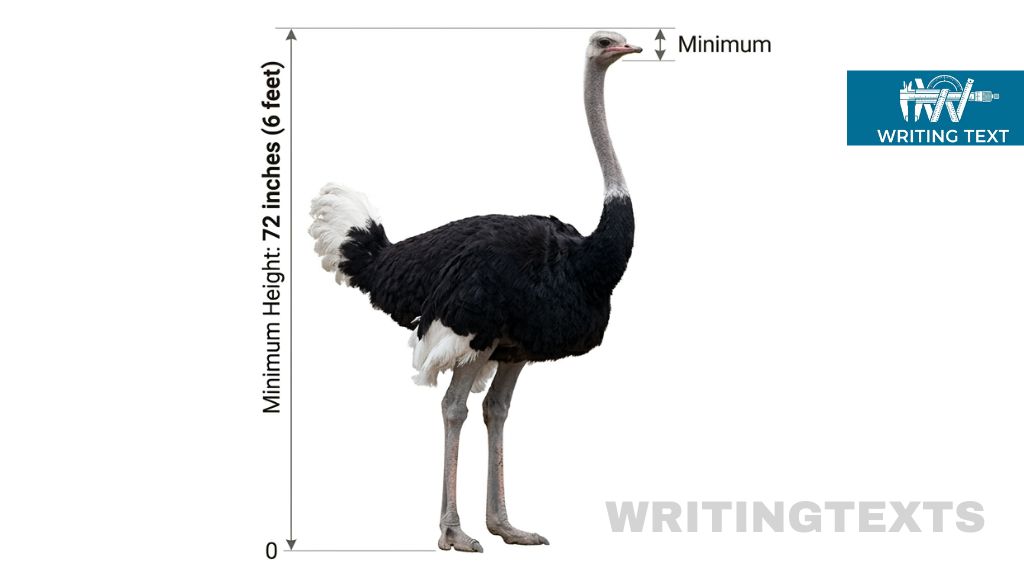
This one earns its place here precisely because it’s unexpected. An adult male ostrich stands between 72 and 84 inches tall — and 72 inches is the low end of that range, meaning a “small” male ostrich is exactly as tall as a 6-foot person. The animal reached this height through evolutionary pressure, not design. On open African savanna, tall grass runs 3 to 4 feet high. An ostrich at 6 feet can see clearly over that grass while running at speeds exceeding 40 miles per hour — the fastest land speed of any bird.
For most readers, this serves as a vivid mental anchor. If you’ve ever stood next to an ostrich at a zoo or farm, you know it doesn’t feel like a bird — it feels like a very large, fast, and slightly threatening colleague. That memory of standing eye-to-eye with one is exactly 72 inches of lived reference. When you need to picture 6 feet quickly and no furniture is nearby, the mental image of an ostrich looking you directly in the face is surprisingly effective.
When Does 72 Inches Actually Matter?
The honest answer: more often than you’d think, and usually at the worst time — when you’re mid-purchase, mid-move, or mid-install and a tape measure isn’t close.
Ceiling clearance is the most common problem. Standard 8-foot ceilings give you 96 inches of vertical space. A 72-inch lamp, divider, or fridge leaves 24 inches of clearance — enough for most situations, but not if a ceiling fan is in the way or overhead cabinets extend lower than expected. Always check what’s above, not just beside.
The second issue is door height. Standard interior doors are 80 inches tall. A 72-inch object — a folded hand truck, a tall privacy screen, a floor lamp — will pass through any standard doorway without tilting. That’s useful to know when moving furniture between rooms.
And for the bedroom specifically: if you know that two king pillows equal 6 feet, and a standard yoga mat is 6 feet, you can mentally test distances against your own body height without pulling out a ruler.
FAQ’s About 72 Inches
Is 72 inches the same as 6 feet?
Yes. Exactly. 12 inches per foot × 6 = 72 inches.
How long is 72 inches in cm?
72 inches equals 182.88 centimeters, or approximately 1.83 meters.
How big is 72 inches for a TV?
A 72-inch TV measurement refers to the diagonal screen size — corner to corner — not the height or width. The actual width of a 72-inch TV is roughly 62–63 inches, and the height is about 35–36 inches (for a 16:9 screen).
Is 72 inches tall for a person?
Yes. A person who is 72 inches tall stands exactly 6 feet. In the U.S., that puts them in roughly the 85th–90th percentile for adult male height and well above average for women.
What does 72 × 72 inches look like?
A 72 × 72-inch square is 6 feet on every side — roughly the size of a standard queen mattress laid flat (60 × 80 inches) with a little extra room on two sides. It’s also close to the floor area of a small bathroom.
Closing
Next time someone mentions 72 inches, you don’t need to pause and convert. Picture your refrigerator sliding under the kitchen cabinet with a narrow gap at the top. Picture a yoga mat stretched across your living room floor from the TV stand to the couch. Picture two king pillows side by side across a bed.
Any one of those images puts 6 feet in your head — precisely, immediately, and without a calculator.

I’m Karan Singh. I write about measurements, dimensions, and everyday size comparisons. I focus on making numbers easy to understand — no confusing terms, just clear and simple explanations. I use real-life examples so anyone can picture the size in their head. My goal is to help people find quick, accurate answers without any guesswork.