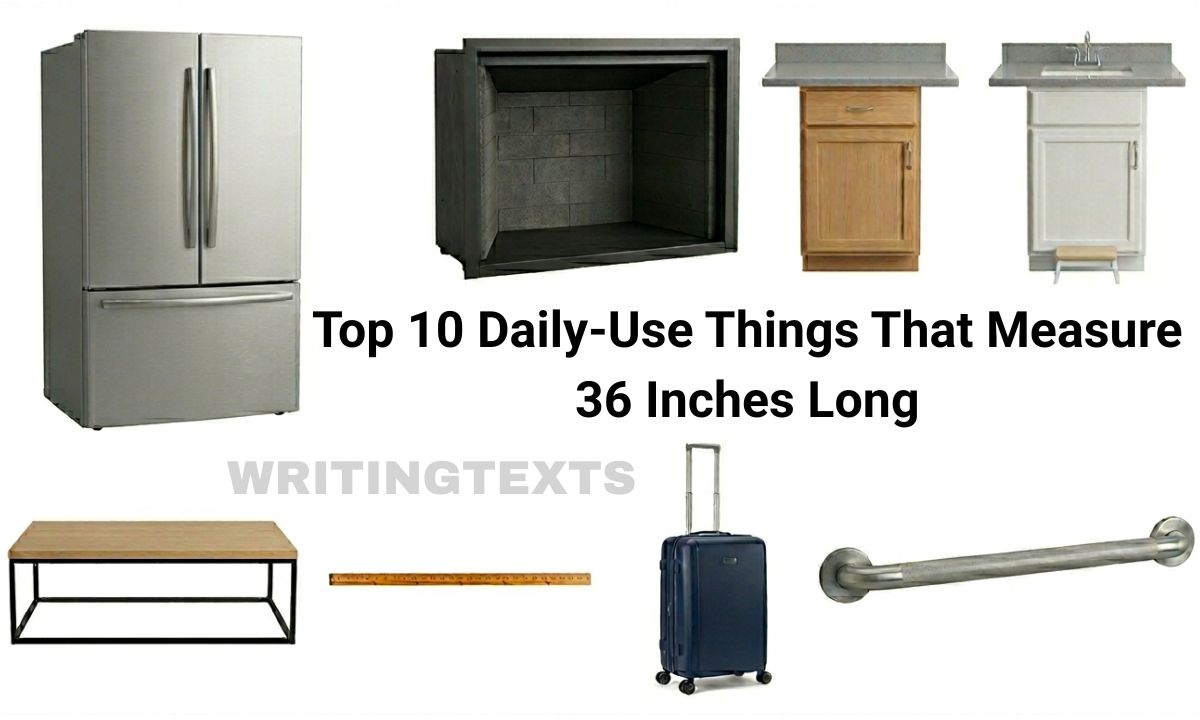
You’re standing in a home improvement store staring at a refrigerator tag that reads “36-inch width.” You pull out your phone, do the math, confirm it’s three feet — and still feel nothing. The number makes sense on paper. It just doesn’t land in your head.
That gap is what this is for.
How Long Is 36 Inches? Here’s What It Actually Looks Like Quick Measurements
| Measurement | Value |
| 36 inches in feet | 3 feet exactly |
| 36 inches in cm | 91.44 cm |
| 36 inches in meters | 0.914 m |
| Body comparison | Hip height on an average adult |
| Child height reference | Average height of a 3-year-old |
10 Common Things That Are 36 Inches Long
| Object | Measurement |
| Kitchen counter | 36 in exactly |
| Bathroom vanity | 34–36 in |
| Fireplace opening | 36 in exactly |
| ADA shower grab bar | 36 in exactly |
| Refrigerator | 35.75–36 in |
| Coffee table | ~36 in |
| Yardstick | 36 in exactly |
| Baseball bat | 34–36 in |
| Large suitcase + handle | ~36 in |
| 3 × Subway Footlong | ~36 in |
1. Kitchen Counter Height
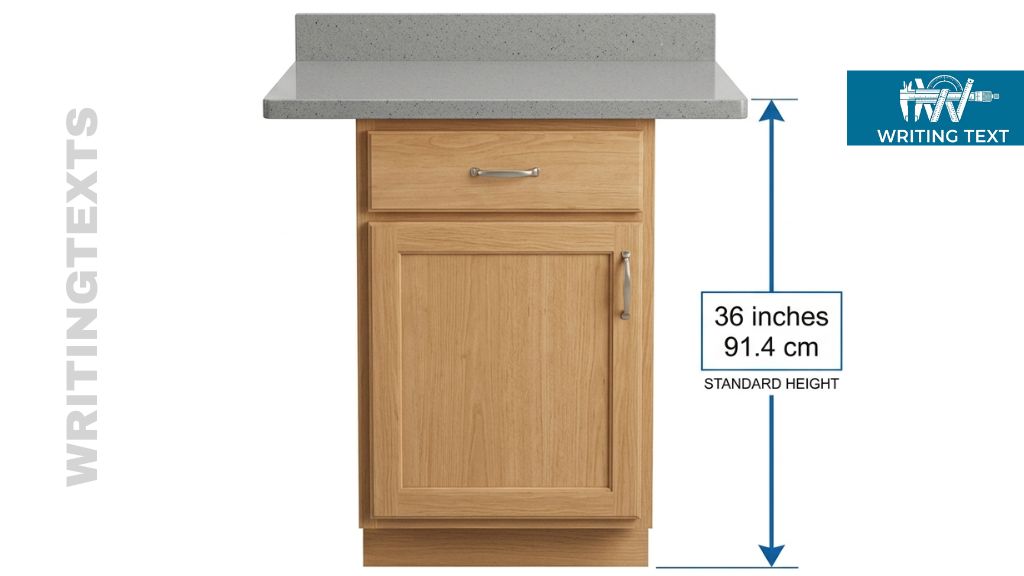
Every kitchen counter in a North American home sits at exactly 36 inches from floor to surface. This is a locked industry standard — not a builder preference, not an approximation.
The reasoning is ergonomic. When you stand relaxed, your bent elbow is roughly 40 inches off the ground. Counters sit 4 inches below that so your arms can push downward with force while chopping or kneading — without hunching your spine or torquing your wrists. Any lower and you bend. Any higher and your forearms tire quickly.
This number cascades into other purchases. Counter-height bar stools have a seat at 24 to 26 inches — that gap is engineered for a 36-inch surface. If you’re buying a kitchen island, a rolling prep cart, or even a dishwasher, 36 inches is the height everything else is built to meet.
2. Bathroom Vanity Height
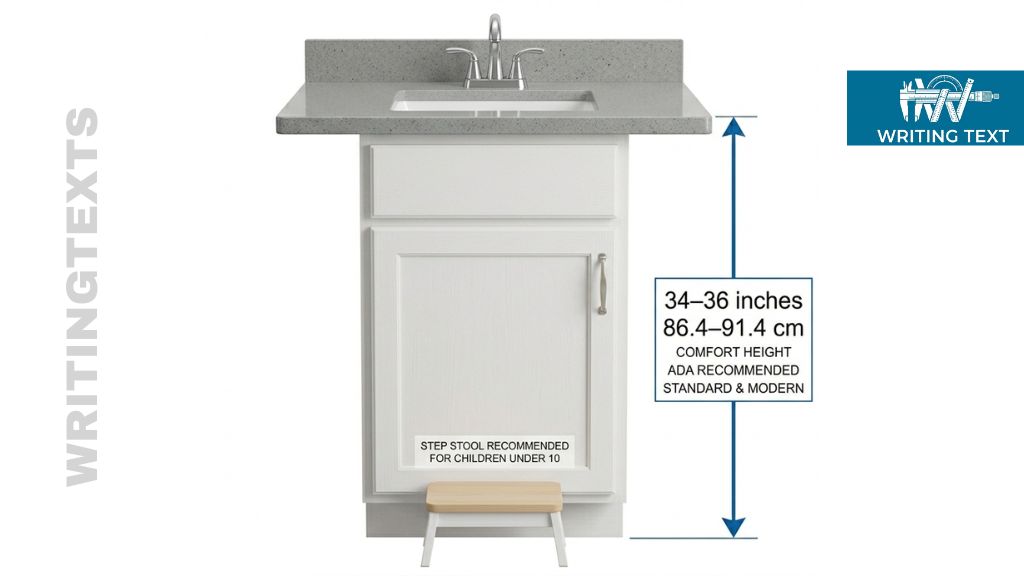
Standard comfort-height vanities run 34 to 36 inches tall — floor to countertop. Older homes often have 32-inch vanities that force adults to lean forward slightly every time they wash their hands. The industry shift toward 36 inches happened because that height aligns with standing adult hip position, removing that chronic low-grade lean.
The ADA recommends the same 34–36-inch range for accessible bathroom design. What this means practically: a 36-inch vanity works well for most adults but will be too tall for children under 10 without a step stool. If you’re remodeling a family bathroom, that’s a decision worth making deliberately rather than discovering after installation.
3. Fireplace Opening Width
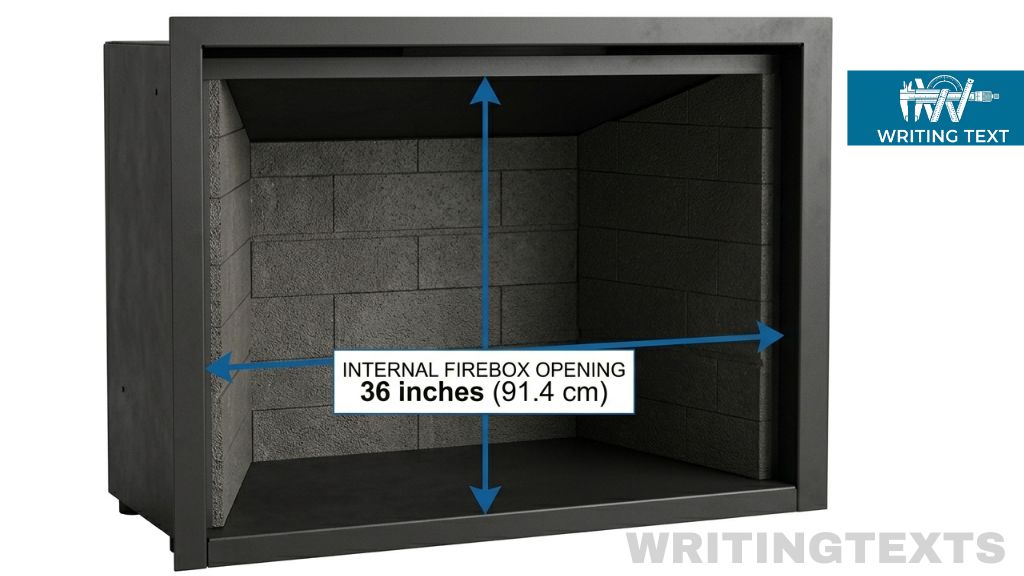
The standard masonry or prefabricated firebox opening is exactly 36 inches wide — measured inside the firebox, side to side, not including the decorative surround.
This width isn’t aesthetic. A 36-inch opening is sized to radiate heat efficiently into a room between roughly 150 and 250 square feet. Wider openings lose more heat up the flue. Narrower ones can’t sustain a multi-log burn long enough to matter. Because prefab fireboxes are manufactured at this width as a standard unit, every accessory built around them — log grates, glass doors, fireplace screens, and insert units — is also made to fit a 36-inch opening.
The practical mistake people make: measuring the decorative surround instead of the firebox opening when shopping for a replacement screen or insert. Those two dimensions are different. The opening is what matters.
4. ADA Shower Grab Bar
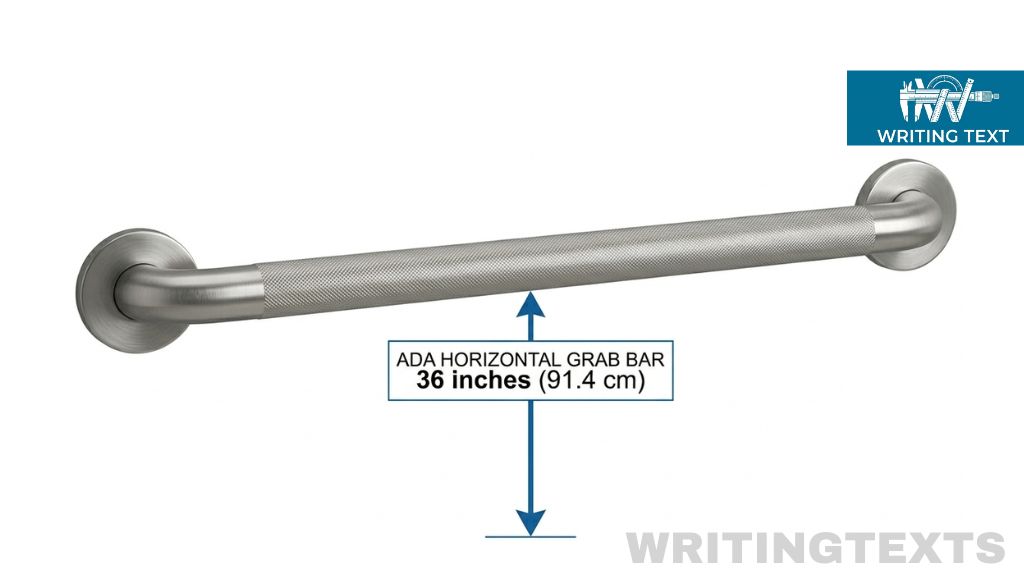
A standard ADA-compliant horizontal grab bar is exactly 36 inches long. This length is specified in the Americans with Disabilities Act accessibility guidelines — not suggested, specified.
The length exists to serve movement, not just a static grip. When someone steps into a tub or catches their balance mid-shower, they need to brace across a span — shifting grip as their body moves. A 36-inch bar supports that motion. It’s also long enough to span two or three wall studs in a standard 16-inch stud layout, which is what makes a secure anchor possible.
Shorter bars often land between studs and rely on toggle bolts — a weaker and potentially dangerous installation in a wet environment where full body weight may be applied suddenly.
5. Standard Refrigerator Width
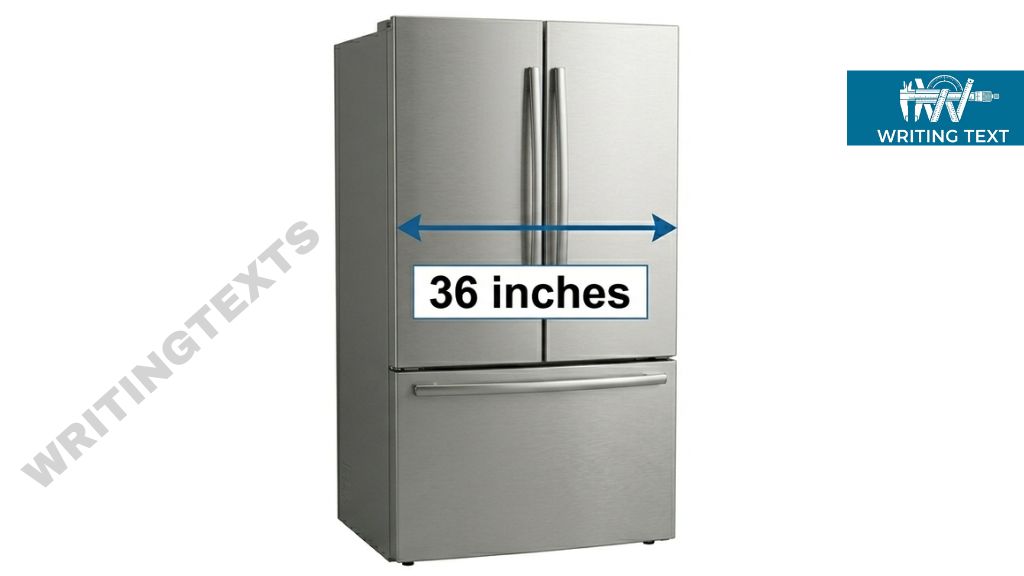
A “36-inch refrigerator” measures approximately 35.75 to 36 inches wide — this is the largest standard size in the US modular kitchen system, which organizes cabinet openings in 30, 33, and 36-inch increments so appliances slot into pre-built spaces without custom carpentry.
The margin for error here is nearly zero. A 36-inch fridge needs a full 36 inches of unobstructed clearance. If your opening measures 35.5 inches because of a slightly bowed cabinet wall, the appliance won’t sit flush — and that quarter-inch gap becomes a permanent irritant. Before buying, measure your opening in three places: top, middle, and bottom. Walls are rarely perfectly plumb.
6. Coffee Table Length
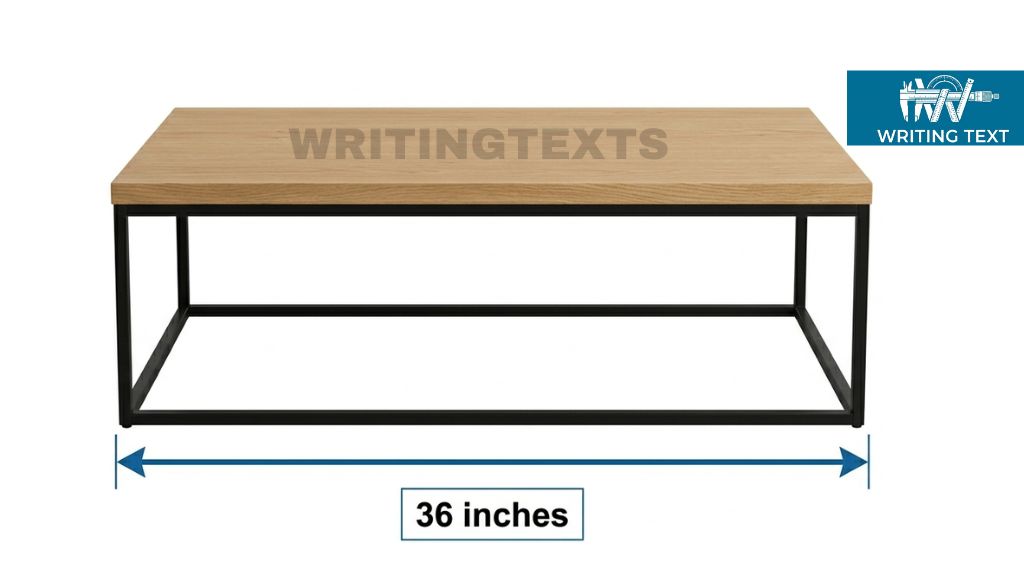
A small-to-medium rectangular coffee table is commonly around 36 inches long — sized to match the sitting span of two people on a standard sofa section. At that length, both people can set down a drink without reaching, and the table doesn’t crowd the room visually.
Interior designers often use a rough half-sofa rule: the coffee table should be about half the sofa’s total length. A 72-inch sofa pairs naturally with a 36-inch table. The other measurement that matters is clearance — there should be 12 to 18 inches between the table edge and the sofa front. If your room only allows a 36-inch table with less than 12 inches of walking space, the layout will feel tight every time someone gets up.
7. Traditional Yardstick
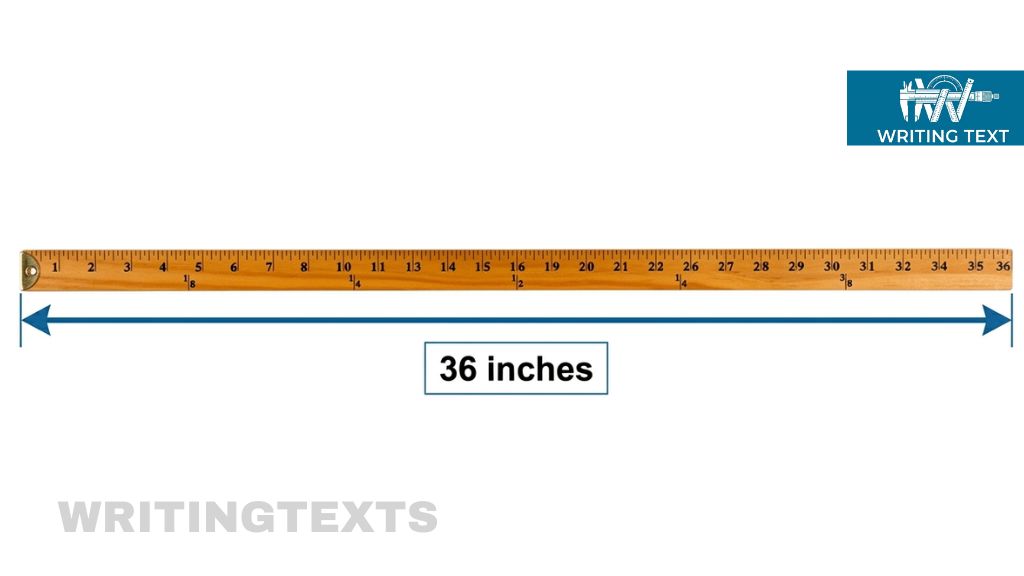
A yardstick is exactly 36 inches — not approximately, not nominally. A yard is 36 inches by definition, and a yardstick is the physical form of that unit. Every yardstick in a classroom or hardware store is manufactured to this length.
Historical accounts credit Henry I of England with standardizing the yard as the distance from the tip of his nose to his outstretched thumb — whether accurate or legend, the unit stuck and was eventually codified in the US Customary system.
What makes the yardstick practically useful today: it’s the fastest single-placement check for any 36-inch space. One yardstick across a cabinet opening, a fireplace, or a countertop gap tells you instantly whether a 36-inch object fits — no tape measure needed.
8. Standard Baseball Bat
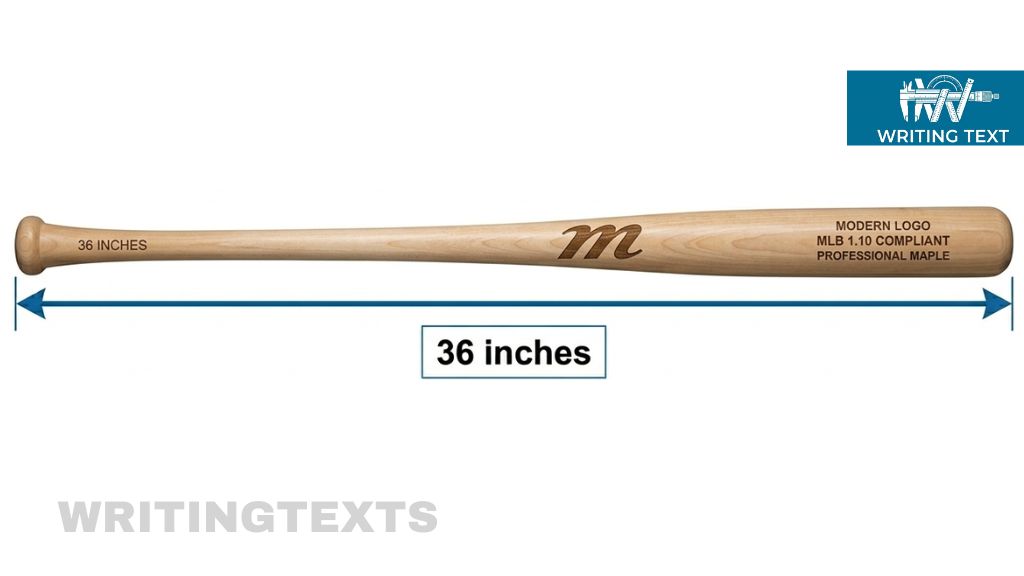
Under MLB Rule 1.10, a wood baseball bat cannot exceed 36 inches in length — measured from the knob at the handle’s base to the end cap at the barrel top. Most professional hitters use 33- to 34-inch bats, but the 36-inch maximum sets the legal ceiling for adult amateur and recreational leagues.
The cap exists because of swing physics. A longer bat offers more reach and theoretical power, but it becomes harder to control in the fraction of a second between a pitch leaving the mound and arriving at the plate.
At 36 inches, there’s already a meaningful speed penalty compared to a 33-inch bat. Beyond that, consistent contact becomes difficult for most hitters regardless of strength. If you’re buying a bat for adult recreational play, 36 inches is the longest you can legally use in most organized leagues.
9. Large Suitcase with Extended Handle
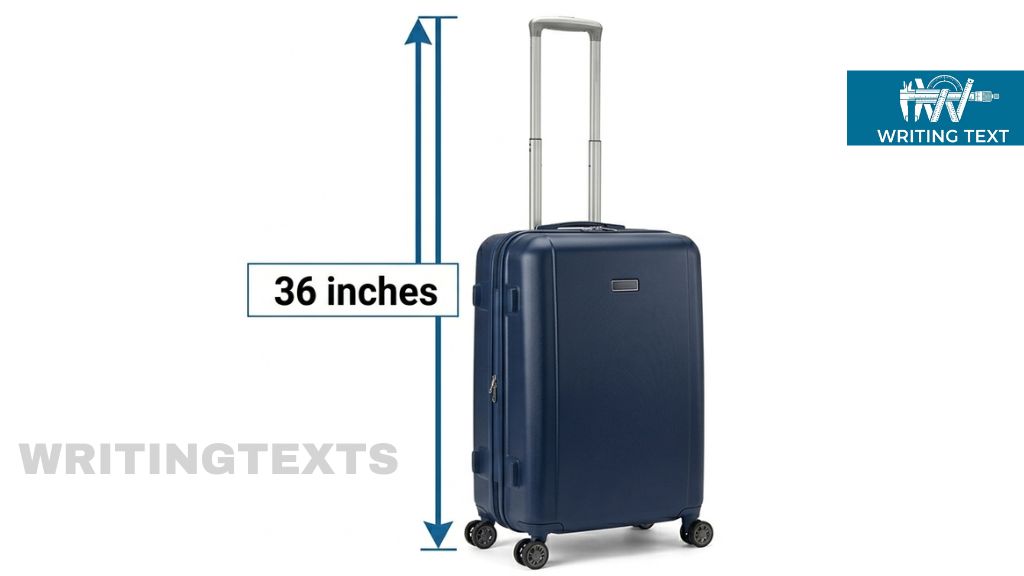
A standard 28- to 30-inch checked suitcase, standing upright with its telescoping handle fully extended, reaches approximately 36 inches from wheels to grip. Handle heights in luggage are engineered to align with average adult hip level so the pulling arm hangs at a natural angle — reducing shoulder and wrist fatigue on long airport walks.
For adults taller than 6 feet, this can be a problem. A 28-inch bag with a handle extended to 36 inches sits slightly low for taller travelers, causing the wrist to angle downward while rolling.
Premium luggage often advertises longer handle extensions — some reaching 38 to 40 inches — specifically for this reason. It’s worth checking the extended handle height before buying rather than discovering it at baggage claim.
10. Three Subway Footlong Sandwiches End to End
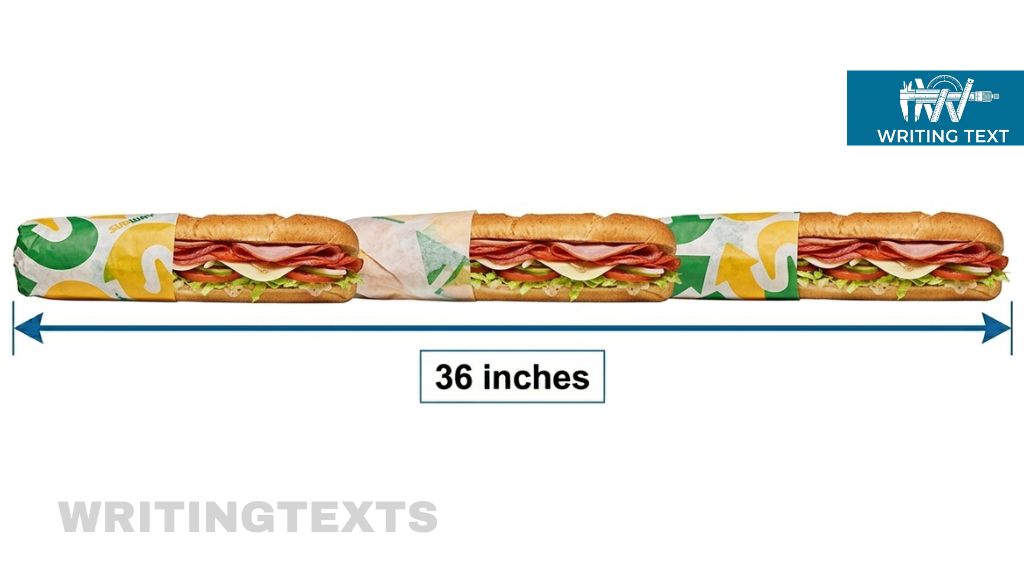
Three Subway Footlong sandwiches placed end to end span approximately 36 inches. Each is marketed as 12 inches — one foot — so three in a row make a yard. In practice, individual sandwiches measure between 11.5 and 12 inches depending on the day, so three together land at 34.5 to 36 inches.
This works as a visual anchor because almost everyone has held a footlong and has a reliable sense of its length. Triple that image and you have 36 inches without any math.
It also has a practical catering use: if you’re ordering for a group and need to estimate counter space, three footlongs laid side by side take up roughly 36 inches of linear surface — exactly the depth of a standard kitchen counter.
When Does 59 Inches Actually Matter?
The measurement comes up most often in three situations:
Before buying furniture, 59 inches is the width that separates “fits in my space” from “close but not quite.” A 59-inch console table slides between most hallway obstacles. A 59-inch vanity clears most 60-inch shelving runs. But if your space is already 59 inches and the furniture is too, you’re not fitting — you’re wedging.
Before buying bath fixtures and accessories, the 59-inch compact tub interior is the size you need to match. A liner, a mat, a built-in shelf: all of these are sold in sizes that assume you know the interior basin length.
Before packing or storing sporting equipment, the rolled yoga mat and the garden rake both live near 59 inches. These are the dimensions that determine whether something fits upright, lies flat, or has to be crammed at an angle.
A Simple Way to Estimate 59 Inches Without a Tape Measure
If you need a quick visual check in the field, try this: the average adult arm span — fingertip to fingertip with arms spread wide — is roughly equal to that person’s height. For someone around 5 feet tall, one full arm span gets you close to 59 to 60 inches.
It’s not a precise method, but it works well enough to tell you whether a piece of furniture is going to clear a doorway or whether a rake will fit upright in a shed corner.
Alternatively, a standard interior door is 80 inches tall. Three-quarters of that height lands at exactly 60 inches. Hold a mental mark at about three-quarters of a door’s height, subtract a finger’s width, and you have 59 inches.
FAQ’s About 36 Inches Long
How tall is 36 inches on a child?
It’s the average height of a child between 2.5 and 3.5 years old. Most pediatric growth charts mark 36 inches as a standard milestone around age 3.
How does 36 inches compare to an adult body?
For most adults between 5’4″ and 5’10”, 36 inches falls at hip height — which is why counters, vanities, and luggage handles are all designed near this number.
What is 36 inches in cm?
Exactly 91.44 centimeters.
Is a 36-inch waist large?
In clothing, a 36-inch waist refers to the circumference of the body, not a linear length. In men’s pants, it sits in the medium-large range.
How long is 36 inches of hair?
Hair measured at 36 inches reaches from the top of the head to roughly the hip — well past the lower back on most adults.
Closing
The kitchen counter you cook on, the bat leaning against the dugout fence, the suitcase handle at your hip — they’re all 36 inches, arrived at through completely different reasoning. Once you can picture any one of them clearly, the number isn’t abstract anymore.
That’s the point.

I’m Karan Singh. I write about measurements, dimensions, and everyday size comparisons. I focus on making numbers easy to understand — no confusing terms, just clear and simple explanations. I use real-life examples so anyone can picture the size in their head. My goal is to help people find quick, accurate answers without any guesswork.