You’re standing in a furniture store trying to decide if a chair will fit under your desk. Or maybe you’re ordering a cutting board online and wondering if it’ll actually clear your sink basin. The measurement says 20 inches, and your brain goes blank. Twenty inches is oddly specific. It’s not two feet. It’s not a foot and a half. It sits right in between, and most people can’t picture it without help.
That’s exactly what this is for.
How Long Is 20 Inches, Really?
20 inches = 50.8 centimeters = roughly 1.67 feet.
To put it on a ruler: if you had a standard 12-inch ruler, you’d need it plus two-thirds of another one. It’s a little more than half a meter, and noticeably shorter than two feet. On your own body, 20 inches is roughly the distance from your elbow to your fingertip — though this varies person to person.
Here’s a quick reference:
| Unit | Value |
| Inches | 20 in |
| Centimeters | 50.8 cm |
| Feet | 1.67 ft |
| Millimeters | 508 mm |
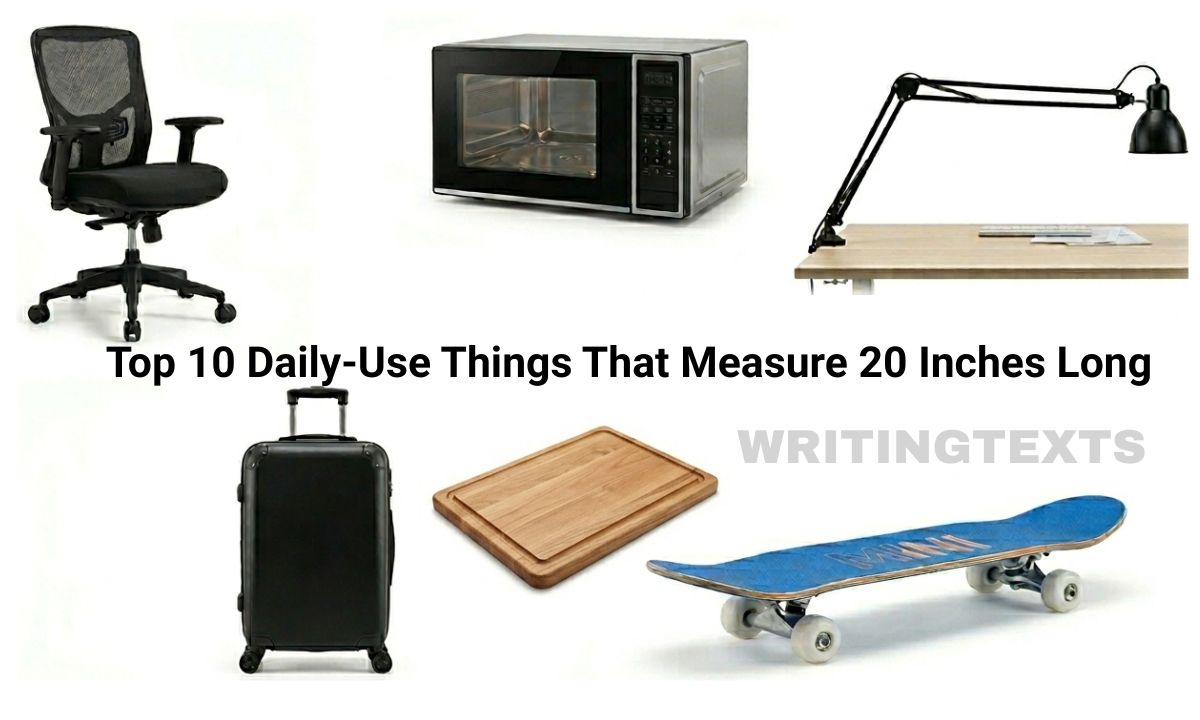
10 Common Things That Are 20 Inches Long
| Object | Measurement |
| Bed pillow (standard / twin) | Short side, laid flat — 20 inches wide |
| Kitchen cutting board | Medium / large family size — 20 inches long |
| Office chair seat height | Floor to cushion top, mid-range — 20 inches tall |
| Countertop microwave | 0.9–1.2 cu ft model — 20 inches wide |
| Carry-on suitcase | Upright, including wheels — 20 inches tall |
| Computer monitor (22″ class) | 16:9 ratio, bezel to bezel — ~20 inches wide |
| Laptop bag (15–16″ sleeve) | External short dimension — 20 inches tall |
| Tenkeyless keyboard | No numpad, left to right edge — ~20 inches wide |
| Swing-arm desk lamp | Fully extended horizontal reach — ~20 inches reach |
| Mini / child’s skateboard | Deck, nose to tail — 20 inches long |
1. Bed Pillow

Pick up any standard twin pillow and measure across the shorter side. It’s exactly 20 inches wide — every time, without exception. The length runs longer at 26 to 28 inches, but that short width? That’s the 20-inch edge.
This isn’t accidental. A full or queen mattress runs 40 to 60 inches wide. Two standard pillows placed side-by-side fill that width without overlapping or leaving empty space. The 20-inch width is a deliberate design decision, not an industry guess.
It’s also why pillowcase shopping feels oddly simple — a “standard” case fits this width precisely. So if you’re ever measuring a pillowcase, a pillow storage shelf, or figuring out how many pillows will sit across a bed, start with 20 inches in your mind and work from there.
2. Kitchen Cutting Board
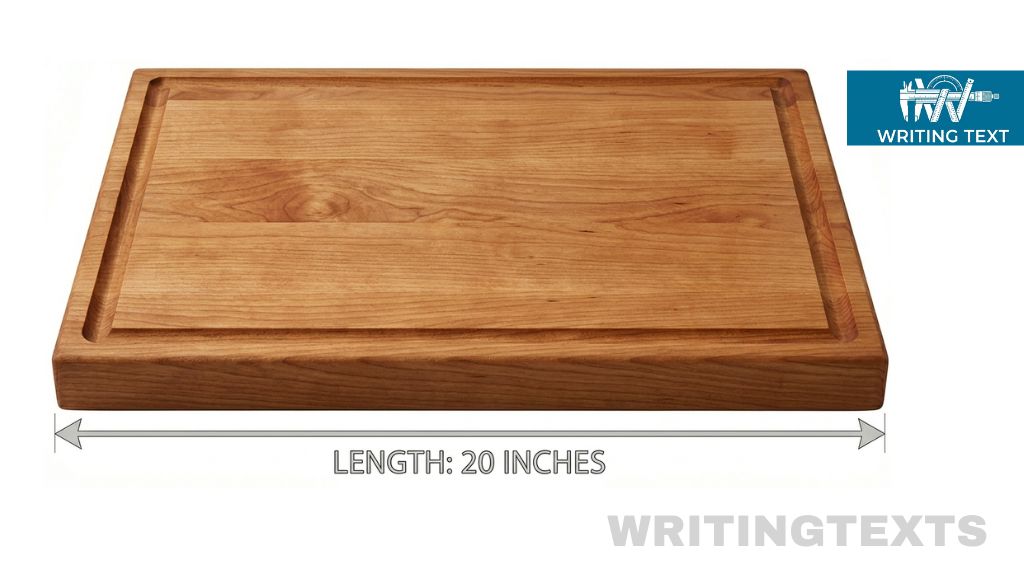
The cutting board sitting in most family kitchens measures 20 inches along its longer side. Not the small boards used for quick snacks, but the kind used for breaking down a whole chicken or slicing a large watermelon half.
This length exists for a very practical reason: it fits inside a standard 24-inch deep base kitchen cabinet when stored vertically, and it slips diagonally across most double-basin sinks without tipping. It’s long enough to handle large produce and proteins without your knife running off the edge.
If you’re buying a cutting board for a real cooking setup — not just a small prep corner — this 20-inch length is the useful minimum. Measure your cabinet or sink diagonal before ordering and you’ll know immediately whether it fits.
3. Office Chair
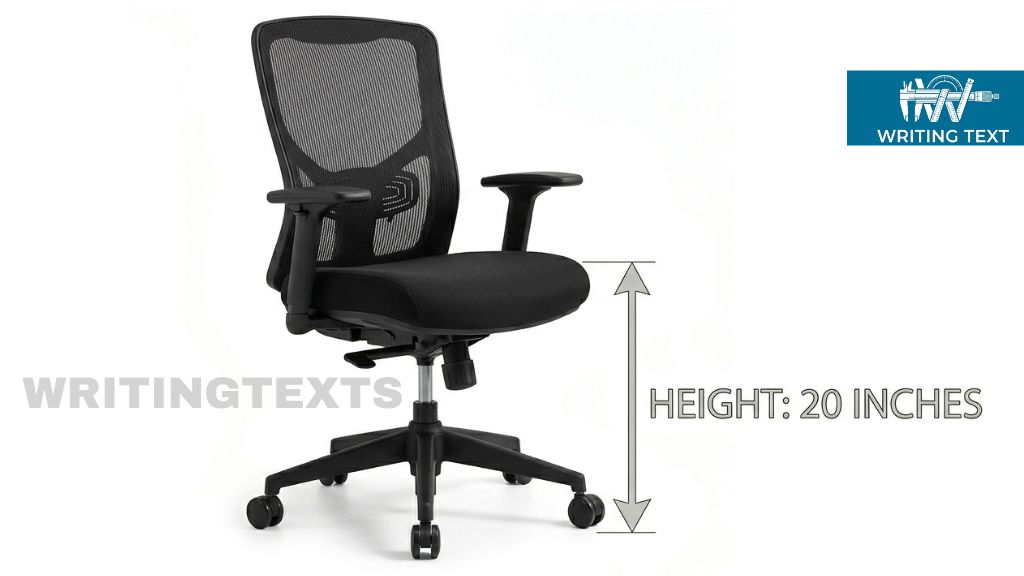
Set a standard pneumatic office chair to its mid-range height. The cushion will sit 20 inches above the floor. Not at the lowest or highest setting, but right in the middle of its adjustment range.
This measurement solves a specific ergonomic problem. For most adults — roughly 5’8″ to 5’10” — a 20-inch seat height places the thighs parallel to the floor when feet are flat. That alignment reduces pressure behind the knees and keeps the lower back in a neutral curve.
The matching piece is your desk: if your chair sits at 20 inches, your desk should be around 29 inches high for comfortable typing. If your desk is fixed at 28 or 30 inches and your chair doesn’t reach 20 inches of height, that’s where the back pain starts. Knowing this number helps you shop smarter.
4. Microwave (Width — Medium Countertop Model)
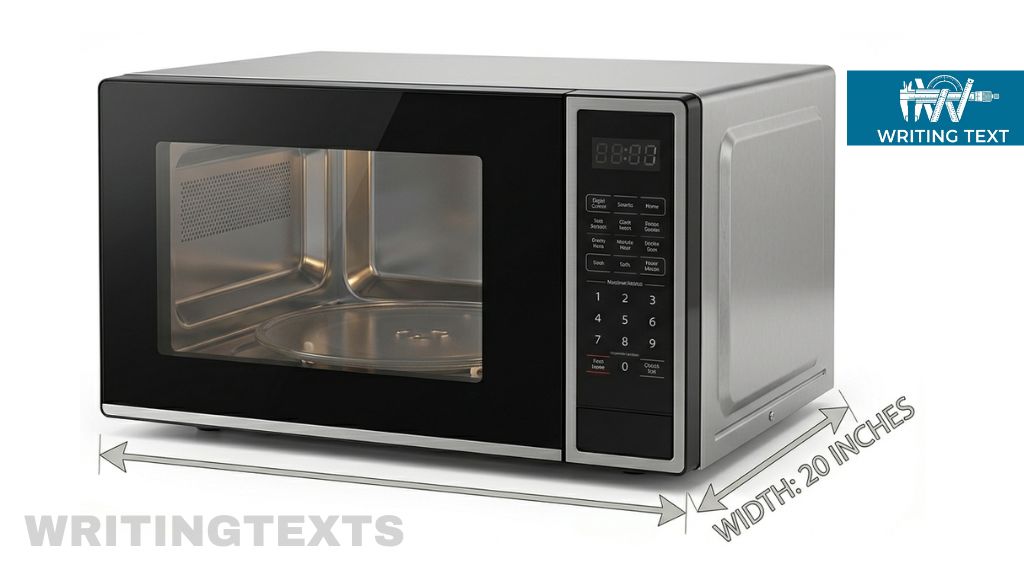
A standard 0.9 to 1.2 cubic foot countertop microwave measures 20 inches wide across its front face. This is the size you find in most apartments, smaller kitchens, and dorm rooms — not the large over-range units, but the standalone kind that sits on a counter.
The 20-inch width works because it fits comfortably under a standard 24-inch kitchen cabinet while leaving about 2 inches of clearance on each side for airflow. This ventilation gap isn’t just a suggestion — it’s required to prevent heat buildup.
If you’re placing a microwave inside a cabinet nook or on a cart with rails, that 20-inch width tells you the minimum internal space you need. Add at least 2 inches on each side and you’re safe. Squeeze it tight and you risk both the appliance and the cabinet above it.
5. Carry-On Suitcase
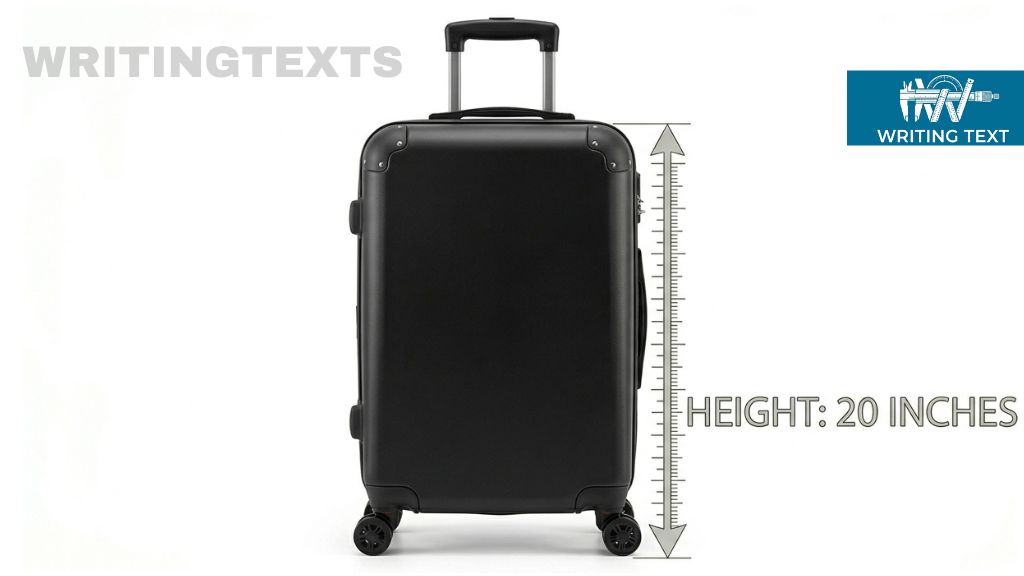
Stand a standard domestic carry-on suitcase upright. From the bottom of the wheel housing to the top edge, it measures 20 inches tall. This is one of those measurements that’s directly tied to a rule — specifically, the overhead bin dimensions set by the FAA and enforced by major US carriers like Delta, United, and American Airlines.
The 20-inch height allows the bag to slide into an overhead bin sideways and still let the bin door close. Taller than that, and gate agents start handing out checked baggage tags.
This is why luggage brands publish “carry-on compliant” specs so prominently, and why the overhead sizer at airport gates exists. Before your next trip, measure your bag. If it clears 20 inches or sits right at it, you’re in the safe zone for most domestic flights.
6. Computer Monitor
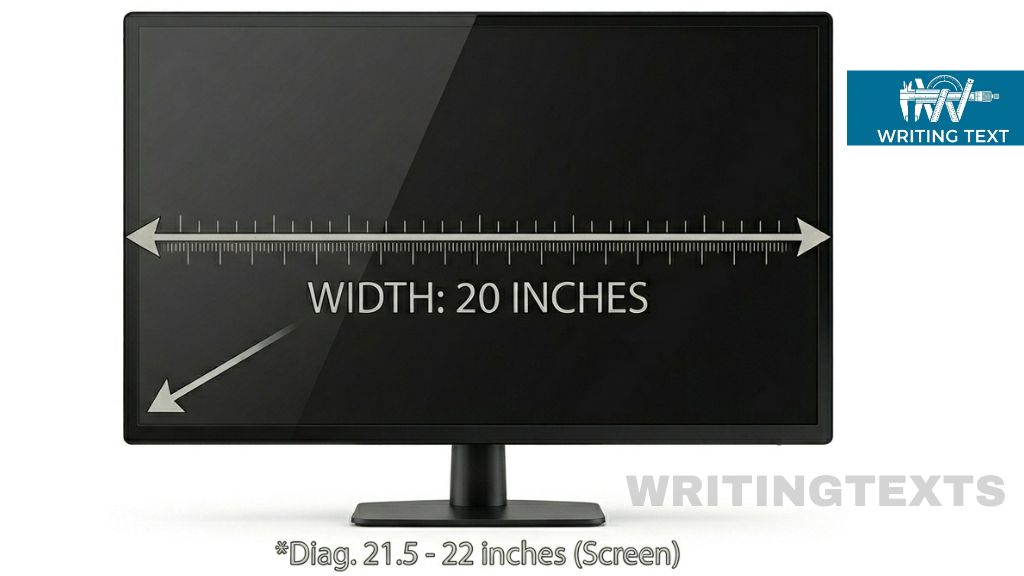
When you buy a “22-inch class” monitor, you’re buying a screen measured diagonally. But the actual horizontal width from bezel to bezel is approximately 20 inches. This comes directly from the 16:9 aspect ratio standard: a 21.5 to 22-inch diagonal in that ratio produces roughly 19.5 to 20 inches of horizontal screen space.
That number matters most when you’re setting up a dual-monitor workspace. Two 20-inch-wide monitors placed side by side need at least 40 inches of desk width — ideally more like 44 to 48 inches to allow for bezel gaps and comfortable sightlines.
A standard desk runs 48 to 55 inches wide, so two 22-inch class monitors fit, but barely on the smaller end. If you’re working on a compact desk, checking the actual width — not just the diagonal — prevents a frustrating setup day.
7. Computer Keyboard
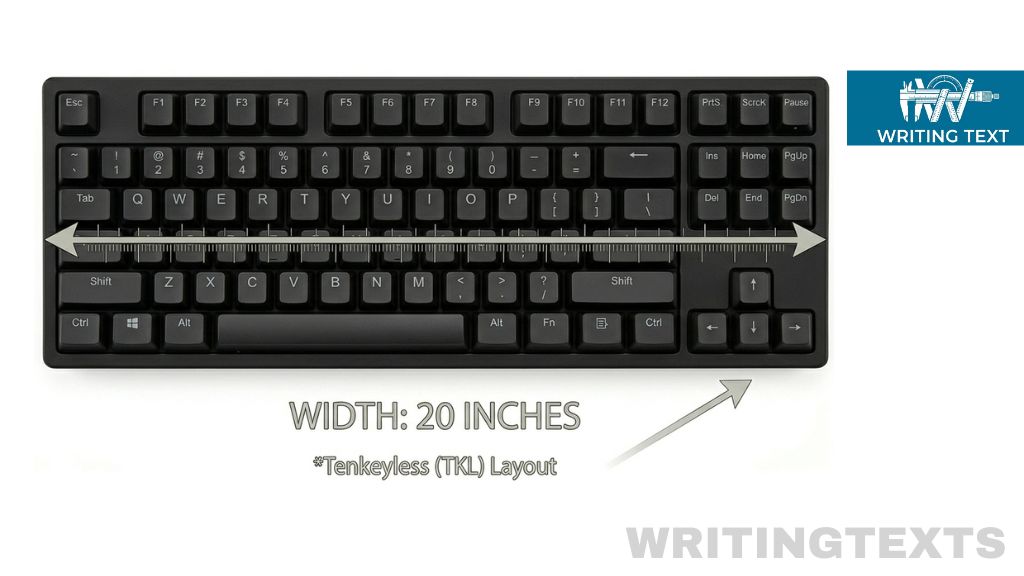
A tenkeyless keyboard — the kind without a number pad on the right — measures approximately 20 inches wide from left edge to right edge. This layout includes the full QWERTY rows plus the arrow and navigation cluster, but drops the numpad to save desk space.
The sizing logic is simple: the letter keys and function row span about 18 inches for most adults to touch-type comfortably, and the outer casing adds an inch on each side. The result is a keyboard that fits most keyboard trays, under-desk drawers, and laptop bag exterior pockets.
If you’re setting up a desk with a slide-out tray and wondering which keyboards will actually fit, a tenkeyless board at around 20 inches is your clearest reference. Full-size keyboards with numpads run about 17 to 17.5 inches, so surprisingly, the tenkeyless is wider than you’d expect in comparison.
8. Laptop Bag
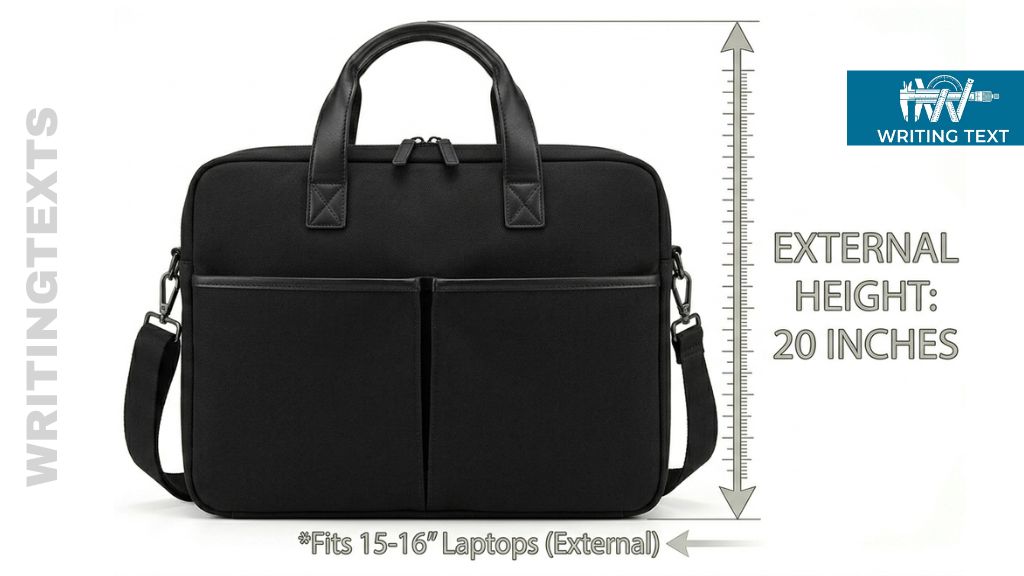
A padded laptop briefcase or sleeve designed for a 15 to 16-inch laptop typically stands 20 inches tall when measured along its shorter external dimension. The bag is wider than it is tall, but the 20-inch height is the measurement that matters for fit.
Here’s why: a 15.6-inch laptop’s screen diagonal translates to an actual chassis height of about 10 to 11 inches. Add internal padding, a document slip pocket, and a top handle, and you’re at 20 inches. This height determines whether the bag fits under an airplane seat (most require bags under 18 inches) or slides into a larger backpack’s laptop compartment.
When sizing a laptop bag, people focus on the diagonal screen number — but checking the external height can save you from a bag that technically “fits” a 15-inch laptop but won’t actually go under your seat.
9. Desk Lamp
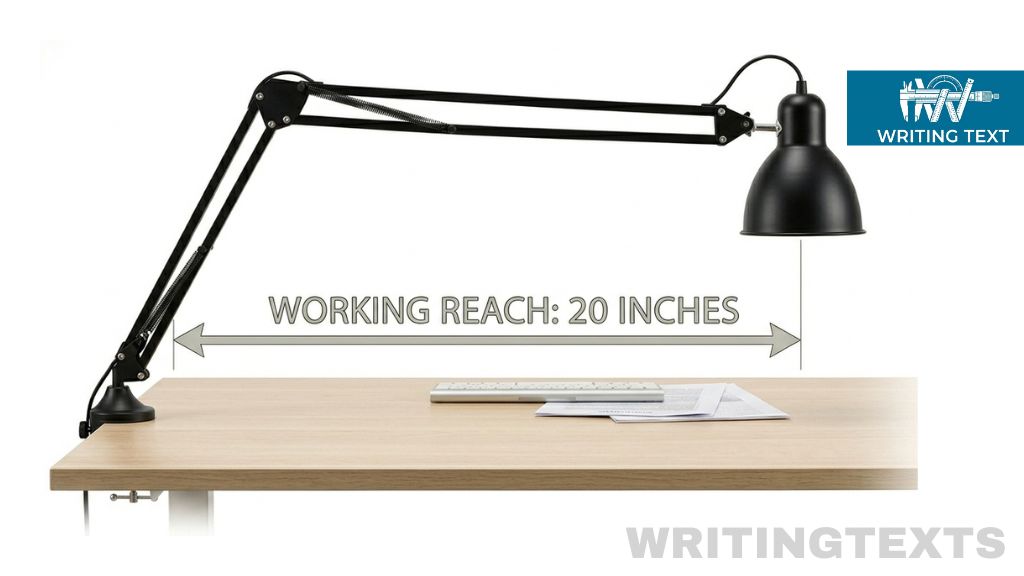
An architect-style or swing-arm desk lamp, fully extended, reaches approximately 20 inches horizontally from the base pivot to the center of the shade. This is the working reach — the distance the light actually covers across your desk surface.
A standard desk is 24 inches deep. The lamp typically mounts near the back wall edge, and 20 inches of reach puts the light source right over the front work zone where your keyboard and papers sit. The base is weighted to prevent tipping at this extension, and the arm locks at angles to keep light where you aim it.
The practical check: if your lamp doesn’t reach 20 inches, it’ll light your monitor face rather than your work surface, creating glare without useful illumination. This is why extension reach, not just height, matters when shopping for task lighting.
10. Mini/Child’s Skateboard
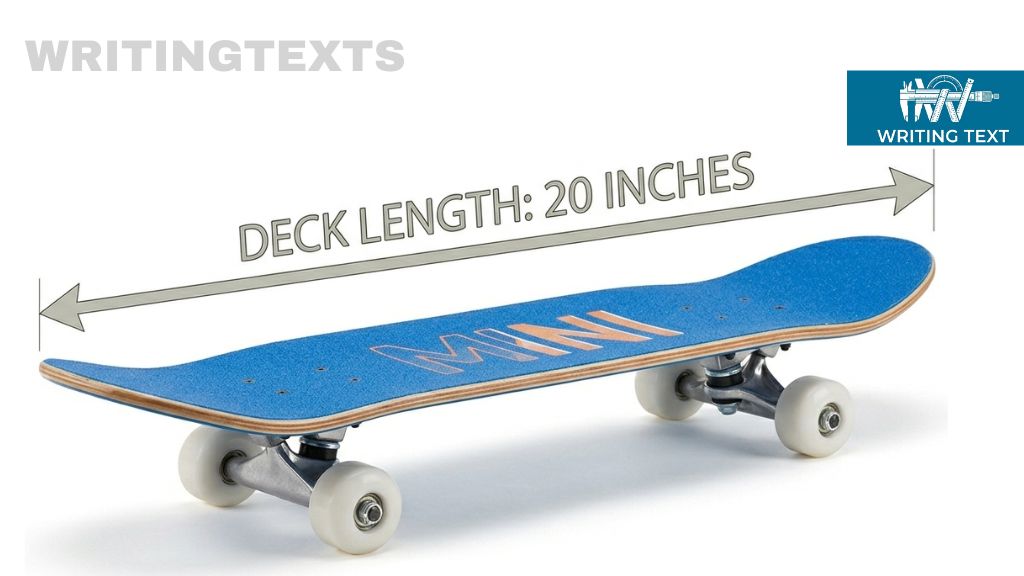
A child’s skateboard or mini cruiser deck measures 20 inches from nose to tail. This is the full-sized kids’ entry board, not a toy — a real board with real trucks and wheels, just scaled to fit younger riders.
Full-size adult decks run 31 to 32 inches long. At 20 inches, a mini deck is short enough for a child between roughly 6 and 10 years old to control with their feet, carry under one arm, and stop without being overwhelmed. It still provides enough wheelbase stability at low speeds to learn balance. For parents, this 20-inch length is a useful shopping anchor.
If a board is sold as “mini” or “youth” and measures around 20 inches, it’s designed for learning — anything shorter is closer to a toy, and anything significantly longer is an adult board that can be hard for smaller riders to manage.
When 20 Inches Actually Changes a Decision
Most measurement confusion happens at purchase time, not during use. Here’s where 20 inches causes real friction:
Buying a carry-on suitcase without knowing the bin height limit often leads to gate-checked bags and checked bag fees. A 20-inch height is the cutoff to remember for domestic US travel.
Setting up a home office without knowing your chair’s seat height means your desk and chair heights could be mismatched from day one, leading to posture problems that take months to notice. A 20-inch seat height pairs with a 29-inch desk — both numbers matter together.
Buying a microwave for a specific cabinet nook without checking the width first is a common and frustrating mistake. A 20-inch face width plus 4 inches of total clearance means you need at least a 24-inch-wide opening.
Visualizing 20 Inches Without a Tape Measure
If you don’t have a ruler nearby, use your body as a rough guide. For most adults, the distance from your elbow crease to your fingertip is somewhere between 17 and 21 inches depending on arm length. That’s close enough to get a mental sense of the scale.
Another simple trick: a standard sheet of copy paper is 11 inches long. Two sheets of paper placed end-to-end get you to 22 inches — just slightly over 20 inches, close enough to visualize the width of a pillow, a monitor, or a microwave face.
FAQ’s About 20 Inches
How long is 20 inches in cm?
20 inches equals 50.8 centimeters exactly.
How long is 20 inches in feet?
20 inches is 1 foot and 8 inches, or approximately 1.67 feet.
Is 20 inches a common size for household items?
Yes — it’s particularly common in kitchen, office, and tech products. It sits at a sweet spot between the 18-inch and 24-inch marks that dominate kitchen cabinet and desk ergonomic standards, which is why so many daily objects cluster around this length.
How big is 20 inches compared to a human?
On most adults, 20 inches is roughly the length of the forearm from elbow to fingertip. It’s also about the width of an average adult’s shoulder — wide enough to feel substantial but not large.
What does 20 inches look like on a ruler?
On a standard 12-inch ruler, you’d measure 12 inches to the end, then continue from the beginning of a second ruler to the 8-inch mark. Total: 20 inches.
Closing
Next time you read “20 inches” in a product spec, you don’t need to guess. It’s your standard pillow’s short side, the reach of your desk lamp, the face of your countertop microwave, or the height of your rolling carry-on. Each of those objects was built to exactly this size for a reason — and now when the number shows up on a product page, you’ve got a real anchor in your head instead of an abstract measurement.
That’s what makes the difference between buying with confidence and buying and hoping.

I’m Karan Singh. I write about measurements, dimensions, and everyday size comparisons. I focus on making numbers easy to understand — no confusing terms, just clear and simple explanations. I use real-life examples so anyone can picture the size in their head. My goal is to help people find quick, accurate answers without any guesswork.