
You’re standing in a furniture store, staring at a sofa tag that says 100 inches. Or maybe you just bought a roll of outdoor string lights and the box says the wire runs 100 inches. You pull out your phone, type the number into a converter, and it spits back 254 centimeters or 8.33 feet — and somehow that still doesn’t help. Numbers don’t tell you what something feels like in a room, on a wall, or parked in a garage.
That’s the gap this article fills.
How Long Is 100 Inches, Really?
Before anything else, here’s the plain math — kept short so we can get to the useful part.
| Unit | Value |
| Feet | 8 feet 4 inches |
| Centimeters | 254 cm |
| Millimeters | 2,540 mm |
| Meters | 2.54 m |
| Yards | 2.78 yards |
So 100 inches is two inches past the 8-foot mark. It’s taller than almost every residential doorway in North America. It’s longer than a queen bed. And it’s short enough that a minivan would laugh at it. That range — from “longer than a bed” to “nowhere close to a car” — tells you a lot. The objects below will fill in the rest.
Quick Reference: 10 Things That Are 100 Inches Long
| Object | Dimension |
| Queen Mattress (length) | 80 in. length + 20 in. extension = ~100 in. |
| Standard Interior Door (height) | 80 in. tall + 20 in. above = 100 in. |
| Standard Parking Space (width) | 108 in. wide — 8 in. narrower at 100 in. |
| Residential Hallway (length segment) | ~96–108 in. long; 100 in. is a common span |
| King-Size Bed (frame length) | 80 in. mattress + ~20 in. frame overhang = 100 in. |
| 8-Foot Step Ladder (open height) | 96 in. open — within 4 in. of 100 in. |
| Full-Height School Locker | 72–78 in. standard; 100 in. is 22–28 in. taller |
| Giraffe Calf (~6 months old) | ~100 in. tall at roughly 6 months of age |
| Bowling Lane Approach Area | ~100 in. of usable player approach length |
| Minivan (half its length) | 205 in. total; 100 in. reaches only to the windshield |
More Post: 13 Daily-Use Things That Measure 5 Inches Long
A Queen Mattress
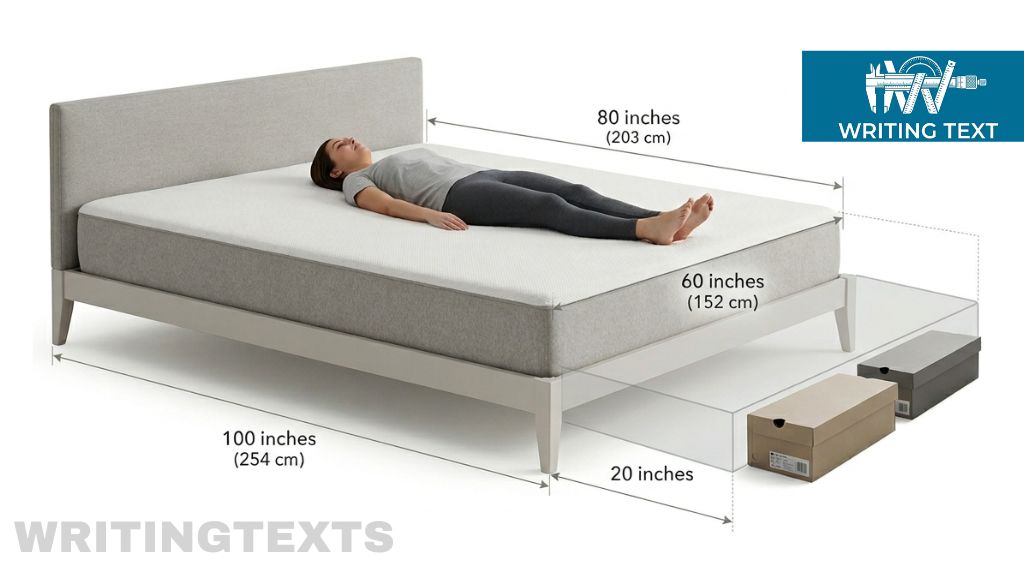
A standard queen mattress is 80 inches long. That size wasn’t chosen randomly. It fits two adults comfortably while still clearing standard bedroom doorways and fitting across rooms without blocking traffic paths on both sides.
Now picture lying on that queen bed. When your head touches the headboard, your feet land somewhere around the 80-inch mark. One hundred inches extends 20 inches past your feet — that’s roughly two shoe boxes placed end-to-end beyond the foot of the mattress. It’s almost exactly one full adult stride past the edge.
Why does this matter? If you’re measuring a room for furniture placement or ordering a custom rug, 100 inches is the length of the bed plus the bench at the foot of it. That mental image is more useful than any conversion chart.
A Standard Interior Door
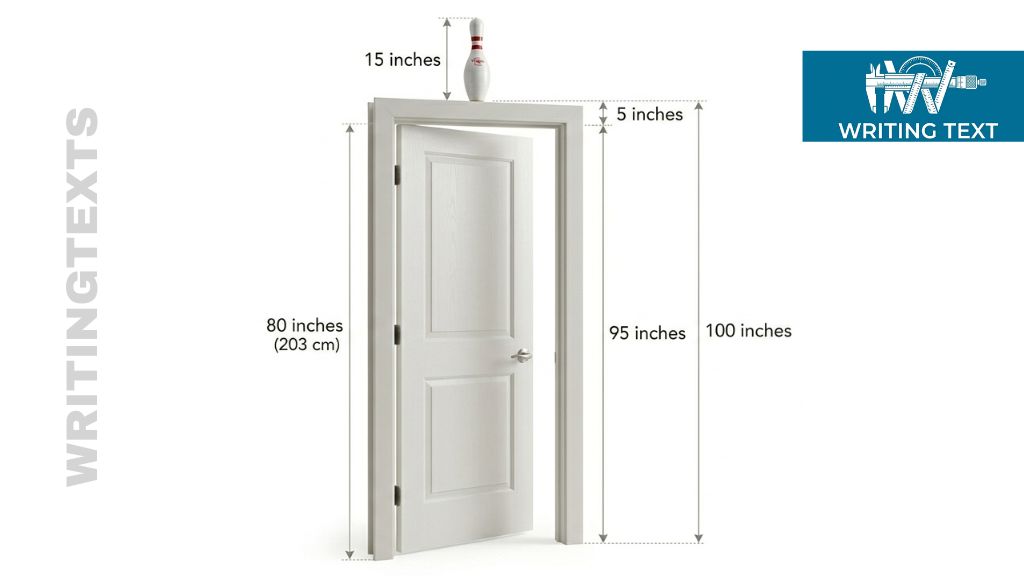
Residential interior doors in the US are 80 inches tall (that’s 6 feet 8 inches). This became a standard because it comfortably clears most adults — even someone over 6 feet — while keeping door material, hinge hardware, and frame costs reasonable.
One hundred inches is 20 inches taller than that door. If you stood your standard bowling pin (which is 15 inches tall) on top of the door frame, you’d be within 5 inches of 100 inches total.
Here’s the practical side of this: if you’re shopping for a tall bookcase, wardrobe, or entertainment unit listed at 100 inches, it will not fit through a standard doorway standing upright. You’ll need to tilt it, disassemble it, or bring it through a wider opening. A 100-inch object clears the door frame by a foot and a half — enough that it becomes a moving-day problem, not just a measuring-tape curiosity.
A Standard Parking Space
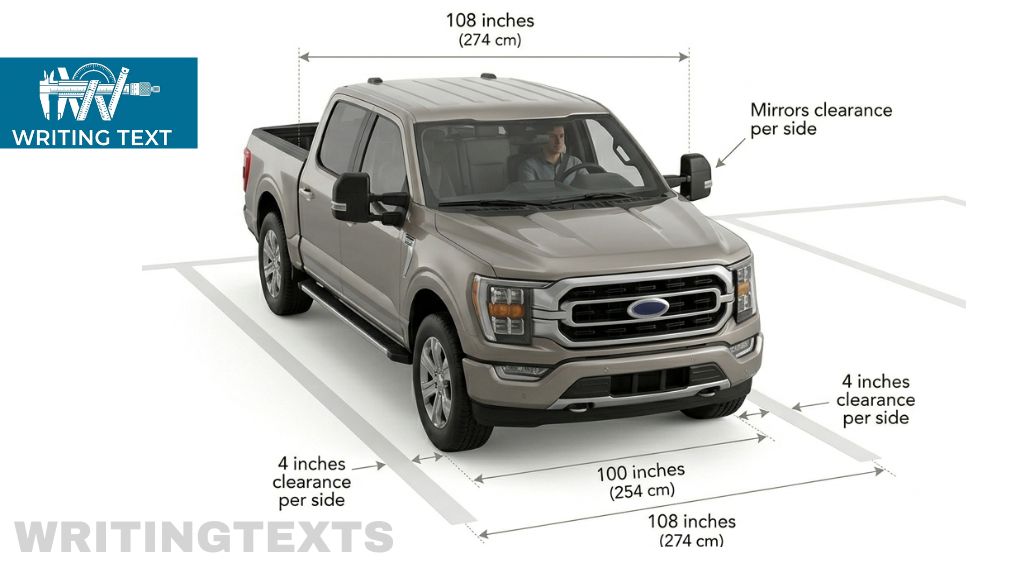
US parking stalls are typically 108 inches wide (9 feet). This width was designed to fit most full-size vehicles while leaving enough margin for a driver to open the door without immediately hitting the adjacent car. Eight inches of that buffer comes from regulation, not comfort.
One hundred inches falls 8 inches short of a standard stall width. Picture a standard brick laid lengthwise — about 8 inches. Remove that from one side of a parking space and you’ve got 100 inches.
For drivers of full-size pickup trucks or SUVs with mirrors extended outward, this matters. A vehicle that’s 100 inches wide at the mirrors fits in a standard space, but only with about 4 inches of clearance per side. That’s less than the width of your palm. If you’re estimating whether your truck, camper, or trailer will squeeze between painted lines, 100 inches is tight but legal — just barely.
A Hallway
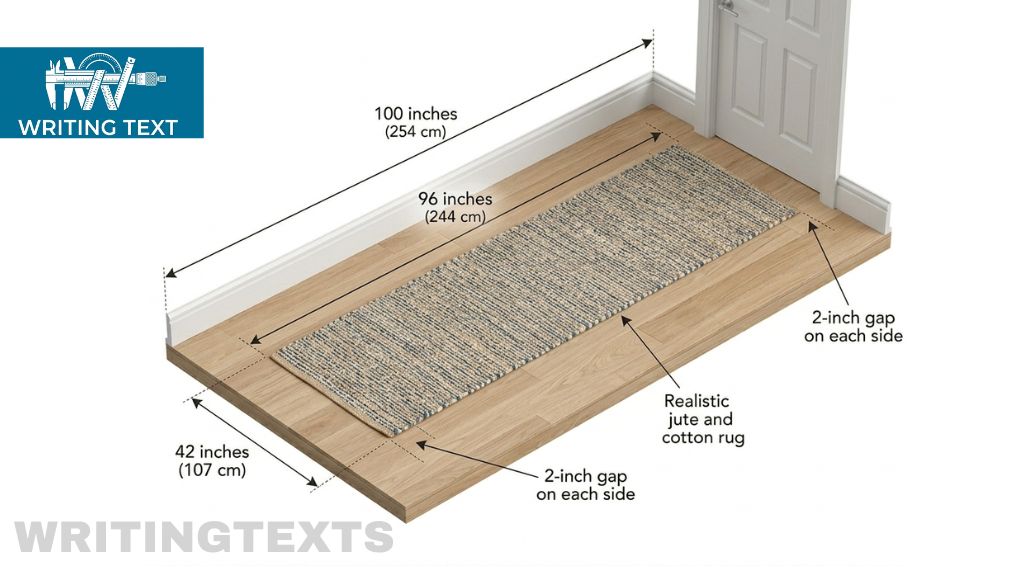
Here’s a common confusion: people hear “100 inches” and try to picture it across a hallway. That’s the wrong direction. A residential hallway is only 36 to 42 inches wide — nowhere near 100. But measured along the length of the hallway, 100 inches is a very familiar segment. Most short hallways connecting two bedrooms run between 96 and 108 inches long.
So 100 inches is roughly that stretch of hallway between your bedroom door and your bathroom door. You walk it without thinking every morning.
Why does this matter practically? If you’re laying a runner rug in a hallway section that’s 100 inches long, an 8-foot rug (96 inches) leaves a 4-inch gap at the end. You’d want to either size up to a 9-foot runner or center the rug and accept the 2-inch gap on each side. That small insight can save a return trip to the store.
A King-Size Bed
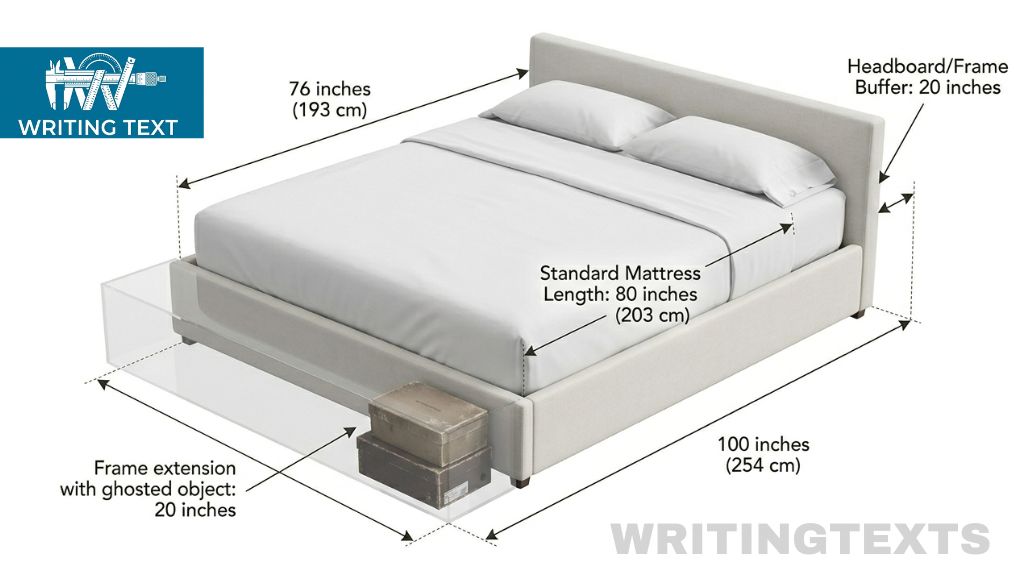
A standard king mattress is 80 inches long — the same length as a queen, just wider. That surprises most people. The king’s extra size is all in the width (76 inches versus 60 inches for a queen), not in the length.
One hundred inches of bed length would be a different product entirely. It would accommodate someone 7 feet tall lying flat with room to spare. Professional athletes and exceptionally tall individuals sometimes need custom mattresses, and 100 inches is the length where that conversation starts.
For most people, this comparison answers a simpler question: when a bed frame is listed at 100 inches long (including headboard and footboard hardware), the sleeping surface itself is still 80 inches. Those extra 20 inches are frame overhang, decorative elements, and structural support. A 100-inch bed frame does not mean a longer sleeping surface.
A Full-Height Step Ladder
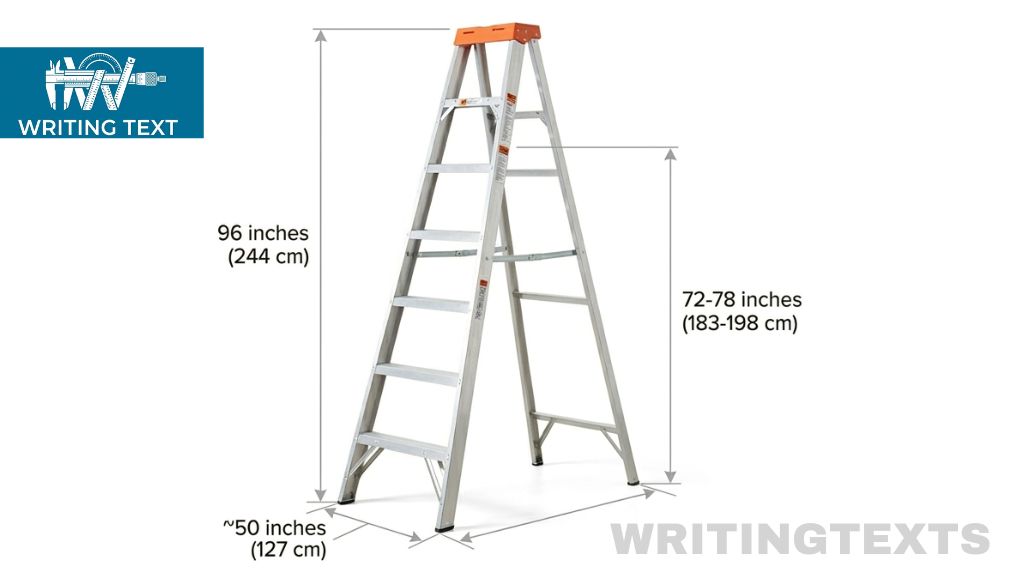
A professional-grade 8-foot step ladder, when fully opened, stands approximately 96 inches tall from floor to top cap. That’s within 4 inches of 100 inches — close enough that this is arguably the most useful single-object comparison on this list.
Ladder heights are engineered around ceiling heights. A standard residential ceiling is 8 to 9 feet (96 to 108 inches). An 8-foot step ladder lets you safely reach 9-foot ceilings without standing on the top cap. The safe standing platform on that ladder is typically at 72 to 78 inches, leaving your arms free to work above your head.
If you’re choosing a ladder for a home with 10-foot ceilings, a 6-foot ladder (72 inches open) isn’t enough — you’d be dangerously overreaching. An 8-foot ladder at 96 to 100 inches open height is the right choice. That 4-inch difference between 96 and 100 inches is small on paper but significant in safety.
A School Locker
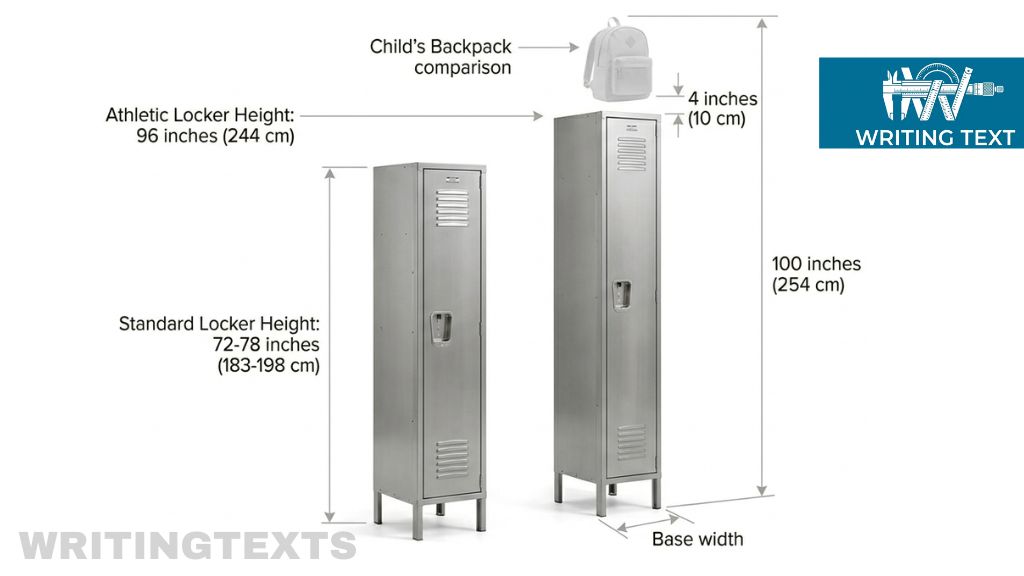
Standard full-height school lockers are 72 to 78 inches tall. Athletic lockers in gyms sometimes reach 96 inches. At 100 inches, you’d be 4 inches above even the tallest gym locker — and roughly 22 to 28 inches above what most students see every day.
Lockers are sized the way they are because they’re designed to fit a standing student’s full coat and bag without the bag dragging on the floor. Anything above eye level — roughly 65 to 68 inches for a teenager — is dead storage space. Engineers gave lockers a little extra height margin, not a lot.
So if someone describes a storage cabinet or industrial shelving unit as “100 inches tall,” picture a school gym locker and then imagine stacking a child’s backpack vertically on top. That’s roughly the visual. It’s not a normal household height — it’s commercial or institutional scale.
A Six-Month-Old Giraffe
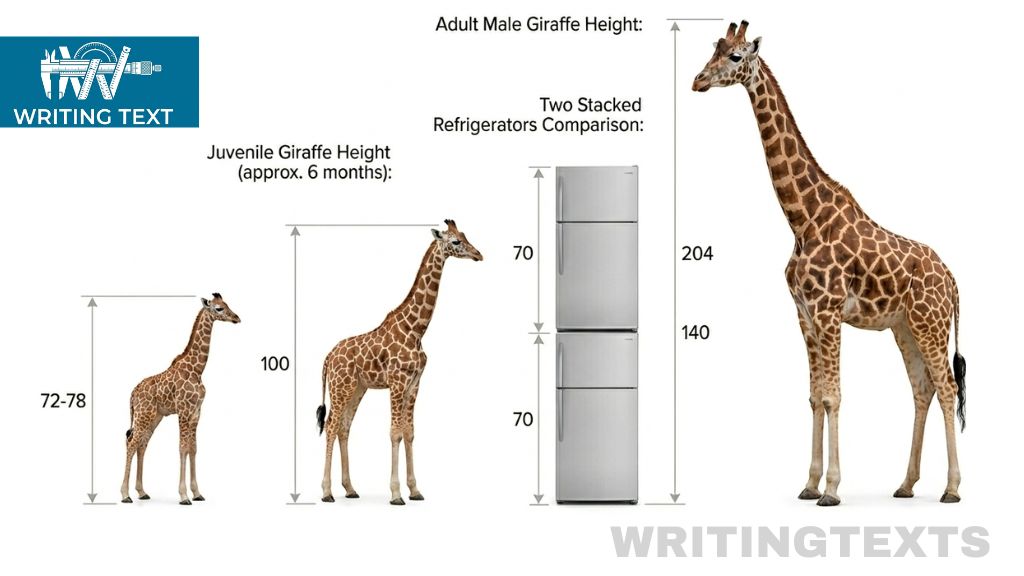
A newborn giraffe drops into the world at around 72 to 78 inches tall — already over 6 feet, which always surprises people. That height is a survival mechanism: calves need to stand within hours of birth to nurse and flee predators.
By the six-month mark, a juvenile giraffe reaches approximately 100 inches (8 feet 4 inches). This is still years from adulthood — adult male giraffes can reach 204 inches (17 feet). But 100 inches is that awkward adolescent stage where the animal is unmistakably large but still following its mother closely.
At a zoo or wildlife sanctuary, if you see a giraffe that comes up to roughly the same height as two stacked refrigerators, you’re looking at a juvenile — not a newborn, not a grown adult. That’s a detail that changes how you understand giraffe growth in real time.
The Bowling Lane
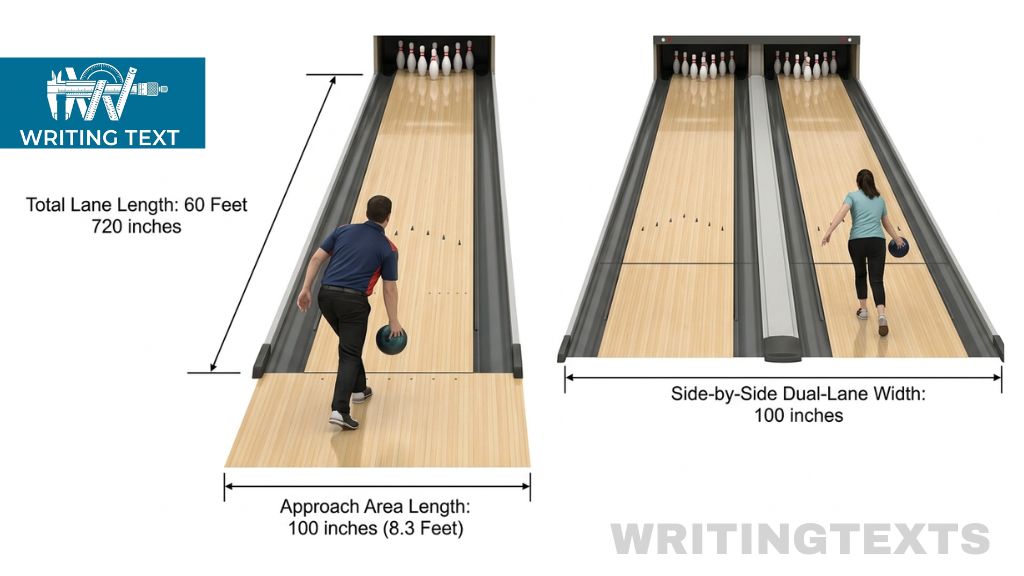
A standard tenpin bowling lane is 41.5 to 42 inches wide — less than half of 100 inches. This matters because many people use “bowling lane” as a mental width reference, and it simply doesn’t apply here.
However, 100 inches does align with a useful bowling measurement: the approach area before the foul line. The approach is where bowlers stand, step, and release the ball. At 8 feet 4 inches (100 inches), the approach feels short — most full approaches run 12 to 15 feet — but it’s the meaningful part of the lane for the player.
For anyone designing a home game room with a bowling simulator or planning alley dimensions, knowing that 100 inches is about two lane widths side-by-side helps with layout math. You won’t fit a real lane in 100 inches of width, but you can fit a dual-lane setup in 100 inches with some planning.
More Post: 16 Daily-Use Things That Measure 7 Inches Long – 2026
The Minivan
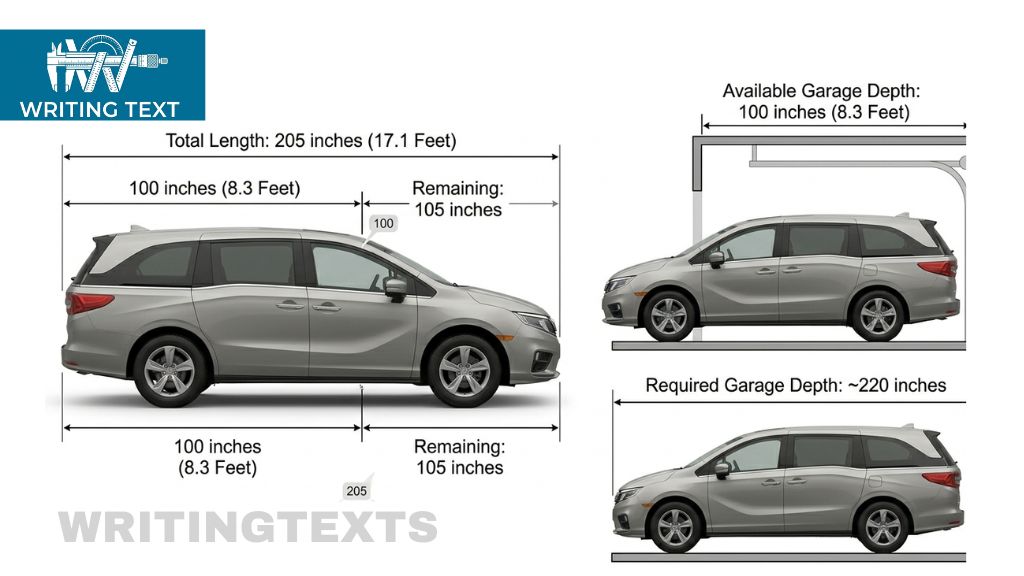
A Honda Odyssey or Toyota Sienna runs approximately 205 inches from bumper to bumper. That’s almost exactly double 100 inches. Standing at the rear bumper and measuring forward, 100 inches gets you to roughly where the windshield meets the hood — engine, dashboard, and the entire front end are still ahead of that mark.
This comparison is useful in one very specific situation: garage planning. If your garage is 100 inches deep (just over 8 feet), a minivan won’t come close to fitting. You need nearly 220 inches of clear depth to park one with the door closed behind it. People often overestimate how a short garage depth translates to a car’s length. One hundred inches feels like a lot — it’s over 8 feet — but it’s barely half a family van.
When 100 Inches Actually Comes Up in Real Decisions
Most people encounter 100 inches in one of four situations:
Furniture shopping. Sofas, sectionals, and entertainment units often hit the 96-to-108-inch range. A piece listed at 100 inches is standard for a large living room but will feel enormous in a small apartment. Check whether your longest wall — minus door and window clearance — can absorb it.
Flooring and rugs. A 100-inch rug runner is slightly shorter than a standard 9-foot rug (108 inches). If your hallway or kitchen run measures 100 inches, you have more rug size options than you might think.
Moving tall furniture. Anything at or above 100 inches will not pass through a standard interior doorway standing upright. Plan for hallway tilting or outdoor entry points.
Garage and storage depth. One hundred inches of depth sounds spacious until you realize it’s only 8 feet 4 inches — enough for a workbench and shelving, not enough for a vehicle.
FAQ’s About 100 Inches Long
How long is 100 inches in feet?
Exactly 8 feet 4 inches. If you’re visualizing it as a wall segment, think of a standard 8-foot ceiling with 4 inches of crown molding added.
How many centimeters are in 100 inches?
Exactly 254 centimeters. This is a useful number because 2.54 cm per inch is a fixed conversion — no rounding involved.
How many millimeters are in 100 inches?
2,540 millimeters. Useful in precision manufacturing or woodworking contexts.
How long is 100 inches in meters?
2.54 meters — just past the halfway point of a standard 5-meter room.
Is 100 inches a common TV size?
A 100-inch TV refers to the diagonal screen measurement — corner to corner. The actual width of a 100-inch TV screen is approximately 87 inches, and the height is roughly 49 inches (for a 16:9 display). These are large-format display sizes typically found in commercial settings or dedicated home theater rooms. The physical footprint is significant — you need a wall or stand that can handle nearly 7.5 feet of width.
Leaving You With Three Mental Images
When 100 inches comes up in your life — on a price tag, in a listing, on a spec sheet — pull up one of these:
A standard door, plus a bowling pin balanced on top. An 8-foot step ladder, nearly fully extended. A queen bed with a full adult stride tacked on at the foot.
Any of those three images gives you an honest, grounded feel for how long 100 inches actually is. Not tall enough to park under, not short enough to ignore in a small room — it’s a measurement that sits right at the edge of “fits fine” and “requires planning.” Now you know which side of that line you’re on.

I’m Karan Singh. I write about measurements, dimensions, and everyday size comparisons. I focus on making numbers easy to understand — no confusing terms, just clear and simple explanations. I use real-life examples so anyone can picture the size in their head. My goal is to help people find quick, accurate answers without any guesswork.