
You’re standing in a furniture store without a tape measure, trying to figure out whether that TV fits in your car. Or you’re ordering a towel bar online and the wall space looks about right — but not certainly right. Forty inches is one of those measurements that sounds simple until you’re standing there second-guessing yourself.
40 inches = 3 feet 4 inches = 101.6 centimeters. It’s taller than most toddlers, longer than your arm, and about two feet shorter than a standard doorway. Once you anchor it to something you’ve already seen, the number stops feeling abstract.
How Long is 40 Inches, Exactly?
| Unit | Value |
| Feet and inches | 3 ft 4 in |
| Centimeters | 101.6 cm |
| Meters | 1.016 m |
| Body comparison | Roughly hip-to-floor on an average adult |
10 Daily-Use Things That Are 40 Inches Big
| Object | Dimension |
| Meter stick | 39.37 inches long (rounds to 40 in) |
| 40-inch flat-screen TV | 40 in diagonal screen measurement |
| 40-inch curved ultrawide monitor | 40 in diagonal, ~37 in horizontal width |
| Short alcove bathtub | ~40 in interior soaking length |
| 40-inch towel bar | 40 in wide (standard retail size) |
| Barber pole glass cylinder | ~40 in vertical length |
| Average 4-year-old child | ~40 in tall |
| Walking cane (full extension) | ~40 in floor to handle |
| Baby crib rail (highest setting) | 36–40 in from floor |
| Child-sized compact broom | ~40 in total handle length |
Every object below is this size for a specific reason — ergonomic, industrial, or historical. Understanding that reason makes the measurement stay with you far better than any conversion chart.
A Meter Stick
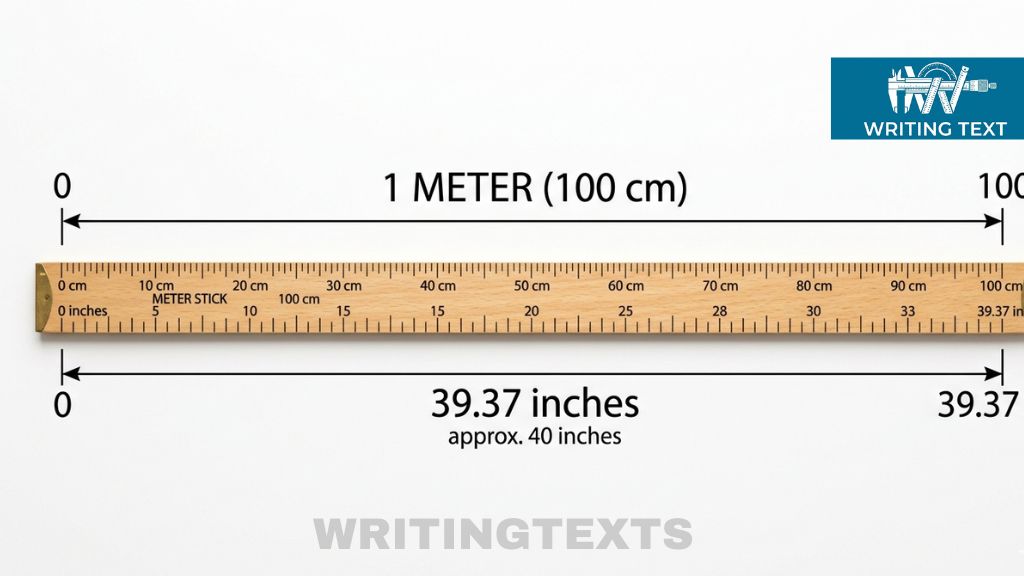
A meter stick is exactly 39.37 inches long — universally rounded to 40 inches in everyday use. The meter itself was defined in the 1790s as one ten-millionth of the distance from Earth’s equator to the North Pole. That origin is interesting, but what matters practically is this: almost every school supply closet, hardware store, and drafting table has one within reach, and nearly everyone has held one.
It’s longer than a school ruler, shorter than a door, and requires zero math to use as a mental anchor. When someone asks “what does 40 inches look like?” — this is the most universally accessible answer.
So what? Picture a meter stick lying flat on a table. That is your reference. No tape measure, no conversion needed.
A 40-Inch Flat-Screen TV
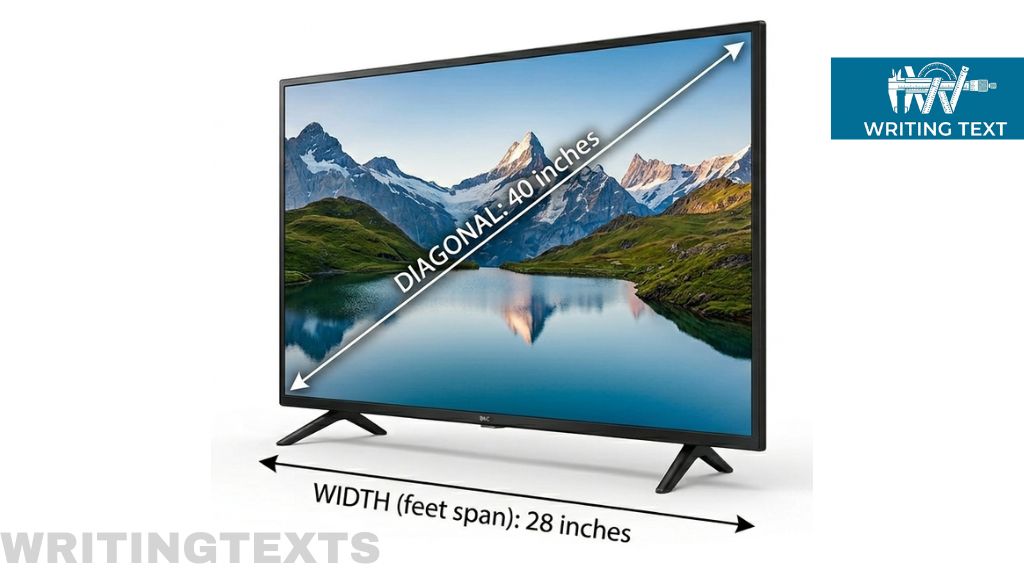
A 40-inch TV measures diagonally across the screen, not across its width. The actual horizontal width is roughly 35 inches, and the shipping box is typically about 38 inches wide. That box dimension is deliberate — it’s the largest TV size that fits in the backseat of most sedans without turning sideways, which is why this became a dominant retail size for bedrooms, dorms, and apartments.
The “40-inch class” label used by Samsung, LG, and TCL means the actual diagonal falls between 39.5 and 40.5 inches. For comfortable viewing, manufacturers recommend sitting 5 to 6 feet away from a screen this size.
So what? Measure your entertainment unit’s interior opening — not the diagonal spec. A 36-inch-wide shelf technically fits a 35-inch-wide screen, but the stand’s feet may not. That gap is where most people get surprised after carrying it home.
Curved Ultrawide Monitor
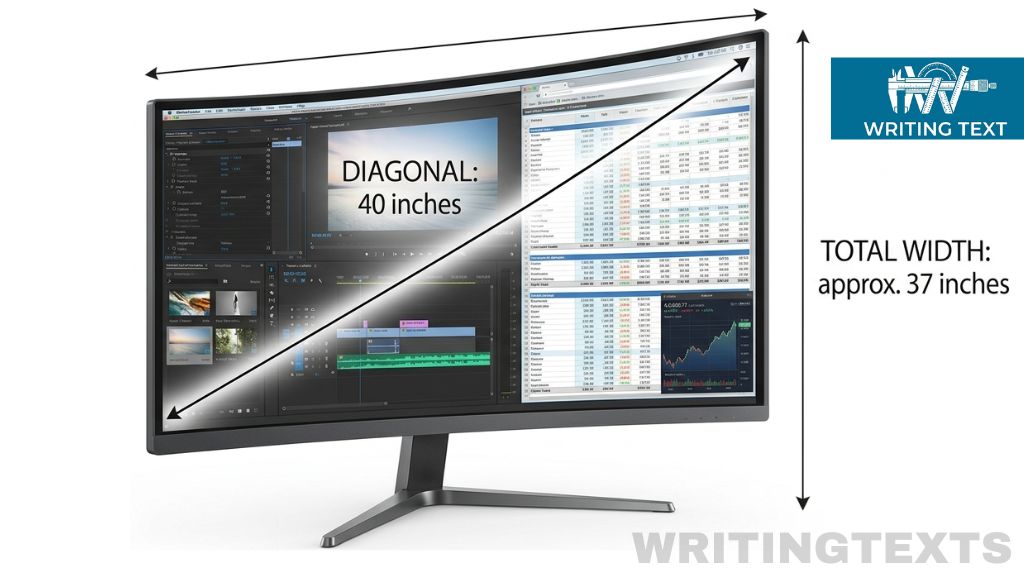
A 40-inch curved ultrawide uses a 21:9 aspect ratio, which gives it a horizontal span of roughly 37 inches — wide enough to replace two 24-inch monitors side by side, with no center bezel splitting your view. The curve is calibrated for desk use, keeping both edges within comfortable peripheral vision at a distance of 24 to 36 inches.
This diagonal exists because of desk geometry: a standard 30-inch-deep desk can hold a 40-inch ultrawide without the edges pushing past your arm reach. That made it practical for video editors, financial analysts, and simulator setups where screen real estate matters more than portability.
So what? A 37-inch horizontal footprint fills a desk quickly. If your setup includes speaker stands, a lamp arm, or a webcam mount, measure usable desk width before ordering — not just total desk length.
Short Alcove Bathtub
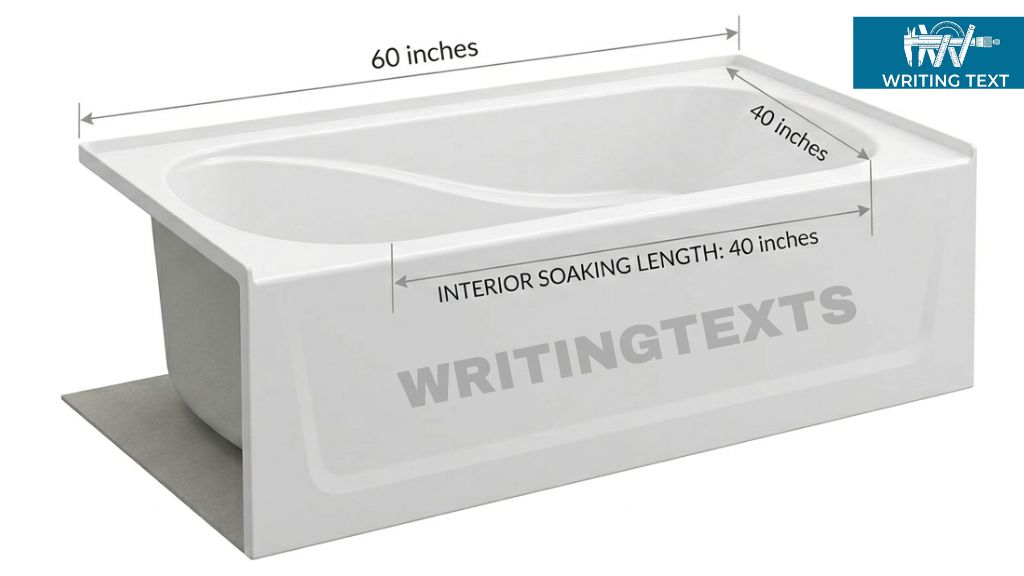
Most people picture a bathtub as something they can fully stretch out in. A space-saving alcove tub, designed for bathrooms around 5 by 8 feet, has an interior soaking length of roughly 40 inches. That constraint exists because a 5-by-8 bathroom must also fit a toilet and a sink — the tub gets what’s left.
For a child or petite adult, 40 inches of interior length works fine. For an average adult at 5’9″ or taller, your knees stay bent throughout. Neither outcome is a design flaw — it’s a deliberate trade-off between soaking space and bathroom footprint.
So what? When a listing describes a tub as a “compact soaker” or “space-saver,” this interior length is what you’re getting. If you’re designing a small bathroom from scratch, knowing that 40 inches of tub fits alongside a toilet and sink in that footprint is the number that makes the layout work.
40-Inch Towel Bar
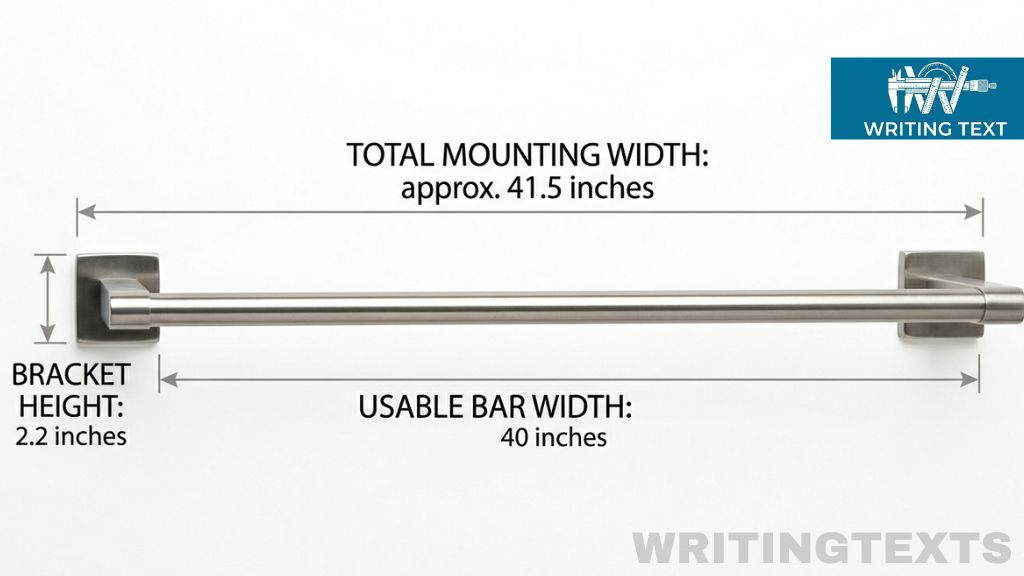
A standard bath towel, folded lengthwise and hung, occupies about 20 to 22 inches of bar width. Two towels side by side without overlapping require 40 to 44 inches of bar. A 40-inch towel bar is therefore the practical minimum for a double-hang setup — a size that appears as a standard retail option precisely because of that math.
What most people don’t think about until they’re holding a drill: wall studs sit 16 inches apart. A 40-inch bar spans two and a half stud spacings, meaning at least one bracket will hit drywall rather than solid wood. That’s manageable with proper anchors — but worth knowing before you start.
So what? Measure usable wall space from edge to obstruction before ordering. If you have 42 inches between a door frame and a mirror, you can fit a 40-inch bar. At 39 inches, you cannot — the mounting hardware needs clearance beyond the bar ends.
Barber Pole
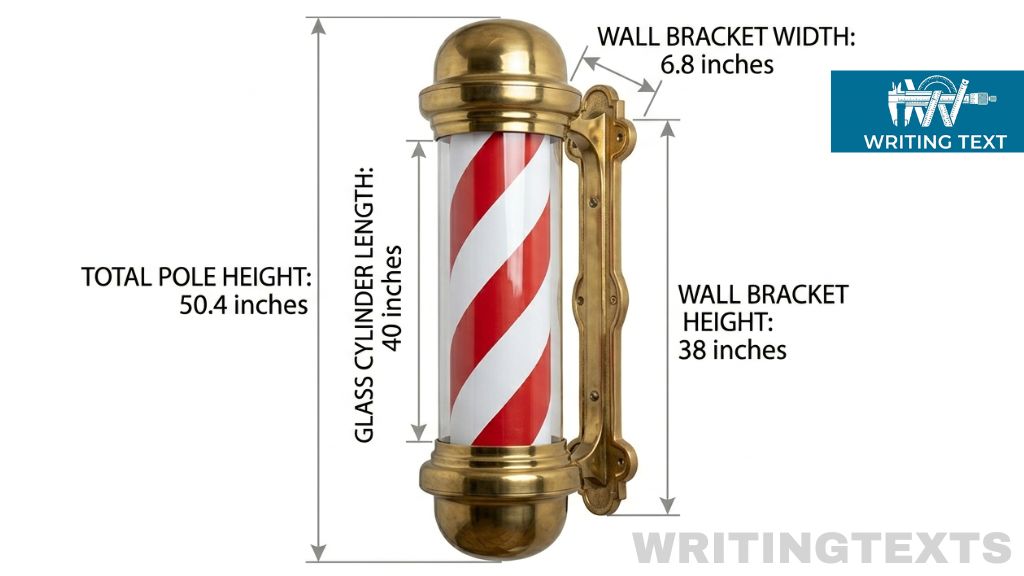
The glass cylinder on a traditional wall-mounted barber pole is typically 36 to 42 inches long. A 40-inch cylinder became the recognized commercial standard because the red-and-white spiral needed to be visible from the sidewalk in 19th-century street lighting — short poles simply didn’t carry far enough. That original visibility requirement has shaped reproduction and commercial units ever since.
At 40 inches, a wall-mounted pole also clears a standard 7-foot interior ceiling comfortably when mounted slightly above floor level, which is why this length stuck in commercial shop fittings.
So what? If you’re buying a barber pole for a shop or home bar, a 40-inch cylinder reads as the genuine article at street scale. Shorter poles look decorative. This length does not.
A Tall Preschooler
An average 2-year-old stands 33 to 35 inches tall. A child who reaches 40 inches is typically a tall 3-year-old or an average 4-year-old. This height is an actual safety threshold — most convertible car seats max out around 43 inches, and many amusement park rides list 40 inches as the minimum height to ride unaccompanied. Both cutoffs reflect skeletal and muscular development, not arbitrary policy.
So what? When you need to visualize 40 inches next to a person, picture a child just reaching the top of your hip. That image is more reliable in the moment than any number — and useful at parks or fairs when a measuring tape isn’t within reach.
A Walking Cane
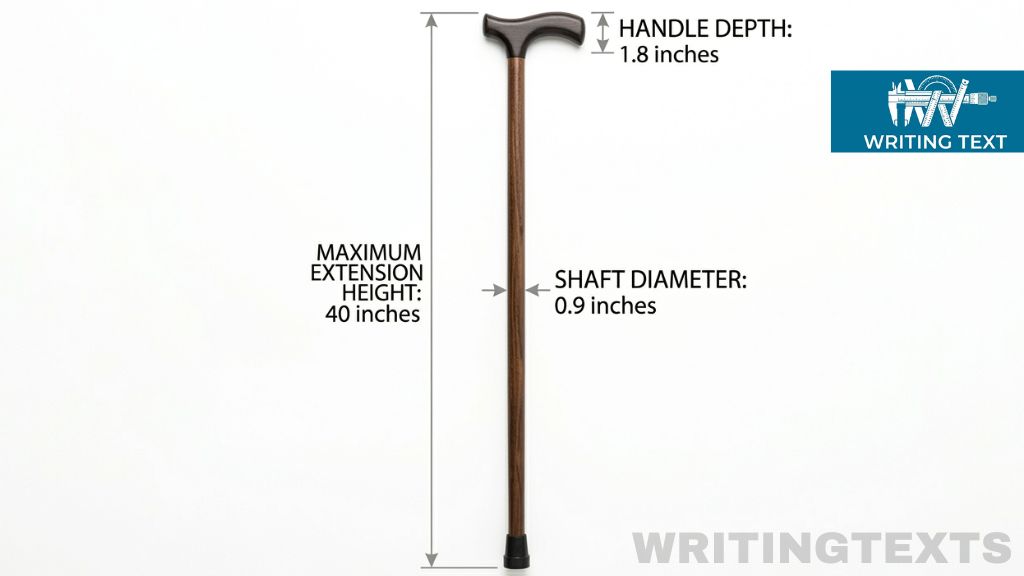
A standard adjustable cane, extended to its maximum setting, reaches about 40 inches from floor to handle. The sizing rule is ergonomic: the handle should meet the crease of your wrist when your arm hangs naturally at your side. For someone approximately 6 feet 5 inches tall, that distance is around 40 inches — which is why most drugstore canes top out exactly there.
So what? If you’re buying a cane for a tall person without them present, check the maximum extension listed on the package. A cane that tops out at 38 inches won’t work for someone over 6’2″. Two inches is the difference between a useful mobility aid and a return trip.
Baby Crib Rail
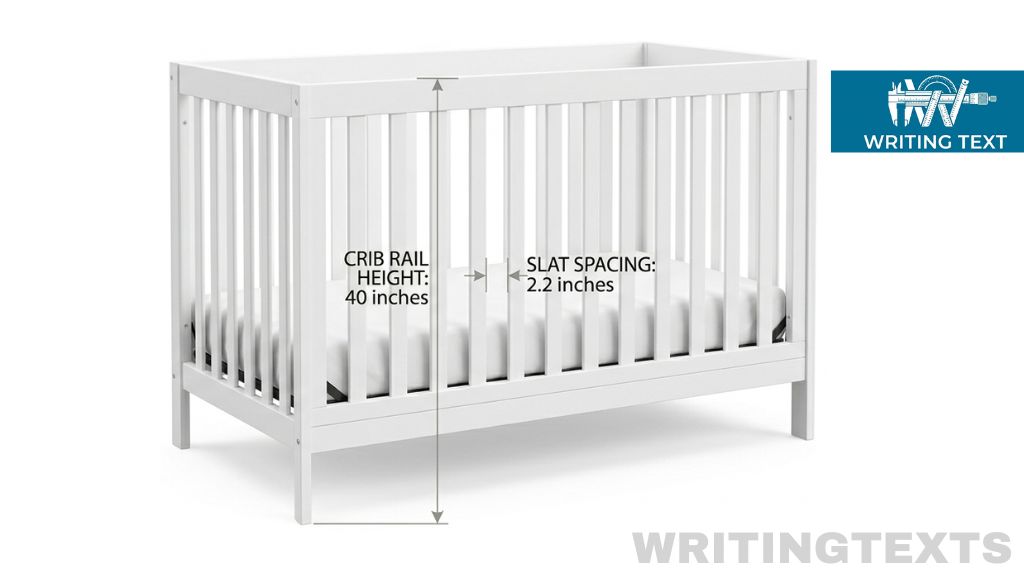
In older-style or convertible cribs with the mattress platform in the highest “newborn” position, the top of the side rail stands roughly 36 to 40 inches from the floor. That height prevents a toddler from swinging a leg over and climbing out, while staying low enough that an adult can lift a sleeping baby without straining their back — a deliberate ergonomic balance.
This rail height matters for room placement, not just safety. A 40-inch rail sits close to the height of many window sills (which typically start between 36 and 44 inches). A crib placed too near a window at this height brings a child within reach of glass and blind cords.
So what? When positioning a crib, measure from the floor to the bottom of nearby windows and wall shelves — not just the floor footprint. Two inches of clearance between a 40-inch rail and a 42-inch shelf sounds fine until you’re reaching past it daily.
A Child-Sized or Compact Broom

A full-size household broom runs 48 to 54 inches long. A 40-inch broom — sold as a child’s broom, an RV broom, or a short-handle utility broom — is sized so the handle reaches the sternum of someone around 5 feet 4 inches tall. That proportion allows light sweeping with a slightly bent elbow, which is easier on the lower back than a full-size broom for shorter users or low-clearance tasks.
This is the broom that fits in a coat closet without the handle catching on the shelf above. It works under low-clearance decks, inside campers, and in laundry rooms where a full-size broom’s length creates more problems than it solves.
So what? If you regularly pull out a broom that knocks things off the closet shelf, a 40-inch handle is the fix — not a compromise, but the correctly sized tool for that space.
Estimating 40 Inches Without a Tape Measure
Stand straight and extend one arm to your side. The distance from the center of your chest to your fingertips is roughly 30 to 33 inches for most adults. Add one forearm length — about 7 to 10 inches — and you’re in the range of 40 inches. It’s not precise, but it settles a quick question.
Alternatively: 40 inches lands approximately at hip level on an average-height adult. When you picture an object standing upright at that height, or lying flat at slightly longer than a standard doorway’s width, you have a reliable mental picture of this measurement.
FAQ’s About 40 Inches Long
How do I convert 40 inches to feet?
40 inches is exactly 3 feet 4 inches, or 3.33 feet in decimal form.
How do I convert 40 inches to centimeters?
Multiply by 2.54: 40 × 2.54 = 101.6 cm, just over one meter.
What is the right viewing distance for a 40-inch TV?
Between 5 and 6 feet. Closer than 5 feet and the pixels become visible; farther than 6 feet and fine detail starts to blur.
Is a 40-inch towel bar wide enough for two bath towels?
Yes — it’s the minimum length for two standard towels hung without overlap, which is why it’s a standard retail size.
What’s the actual width of a 40-inch TV screen?
Approximately 35 inches horizontal width. The 40-inch figure is the diagonal.
Three objects tend to anchor this measurement most reliably: a meter stick (the simplest classroom reference), a 40-inch TV box (something most people have carried), and a preschooler standing at your hip. If one of those three images is already in your memory, you already know what 40 inches looks like — you just hadn’t connected the number to it yet.

I’m Karan Singh. I write about measurements, dimensions, and everyday size comparisons. I focus on making numbers easy to understand — no confusing terms, just clear and simple explanations. I use real-life examples so anyone can picture the size in their head. My goal is to help people find quick, accurate answers without any guesswork.