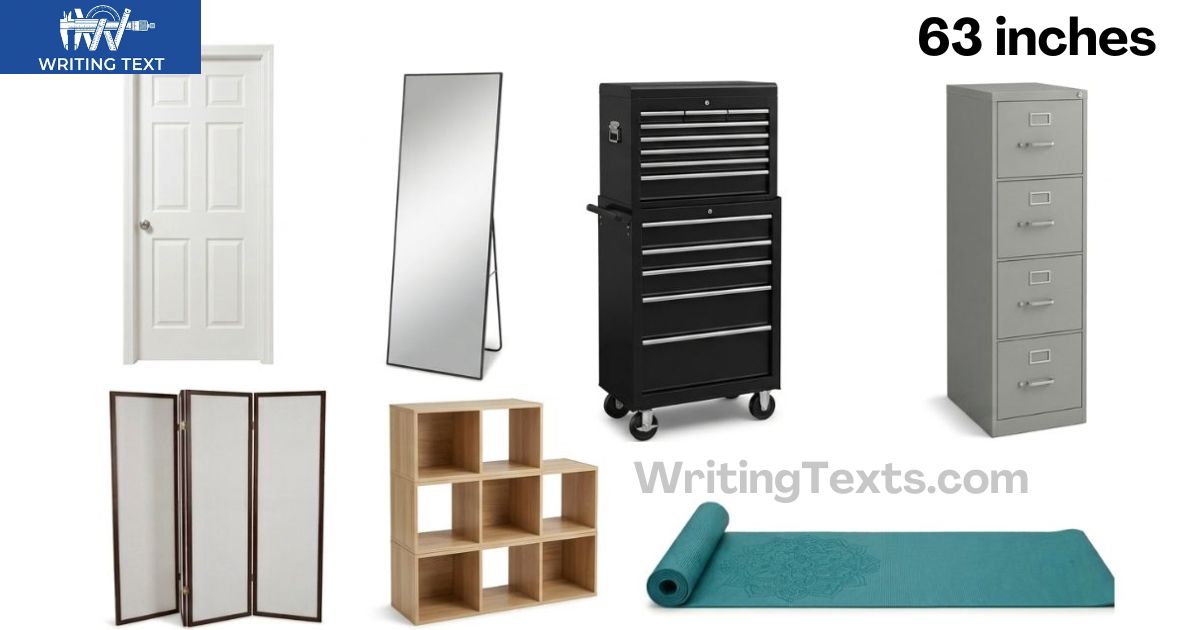
Ordering furniture online, checking clearance for a room divider, or confirming that a vending machine fits a specific wall space all demand a fast, accurate mental image. Knowing how tall is 63 inches—not as a number, but as a physical object in a real room—prevents expensive returns and fit miscalculations. This guide delivers 15 concrete, everyday references so you can visualize 160 centimeters without pulling out a tape measure.
How Tall Is 63 Inches?
63 inches equals 5 feet 3 inches, or 160.02 centimeters—a height that matches the average standing height of an adult woman in the United States. As a fractional value, 63 inches is exactly 1.75 yards, or approximately 1.6 meters.
Quick Conversions Chart
| Unit | Value |
| Inches | 63 in |
| Centimeters | 160.02 cm |
| Millimeters | 1,600.2 mm |
| Feet | 5.25 ft |
| Yards | 1.75 yd |
| Meters | 1.6002 m |
15 Common Things That Are 63 Inches Long
| Object | Category | Portion Measured | Accuracy |
| Tall Rolling Tool Cabinet | Workshop Equipment | Floor to top surface | Approximate |
| Travel Yoga Mat (Short) | Fitness Gear | Full unrolled length | Approximate |
| Standard Interior Door (USA) | Architecture | Non-standard closet door height | Approximate |
| Three-Panel Room Divider | Home Décor | Fully extended panel height | Approximate |
| Men’s Snowboard | Winter Sports | Full board length | Approximate |
| Average Height, 12–13-Year-Old Girl | Human Development | Standing height | Approximate |
| Compact Standing Snack Vending Machine | Commercial Equipment | Cabinet height | Approximate |
| Queen Mattress Width | Bedding | Outer edge including pillow-top | Approximate |
| Full-Length Dressing Mirror | Furniture | Reflective panel height | Approximate |
| Adjustable Youth Basketball Hoop | Sports Equipment | Floor to rim at minimum setting | Approximate |
| Alcove Bathtub | Bathroom Fixtures | Exterior shell length | Approximate |
| Five-Drawer Vertical Filing Cabinet | Office Equipment | Total cabinet height | Approximate |
| Short Apartment Christmas Tree | Seasonal Décor | Base to topmost branch | Approximate |
| Late-1980s Upright Arcade Cabinet | Vintage Electronics | Cabinet body height | Approximate |
| Arm Span of a 5’3″ Person | Human Anatomy | Fingertip to fingertip | Approximate |
Related: How Tall Is 52 Inches? 15 Things That Are 52 Inches Long
1. Tall Rolling Tool Cabinet
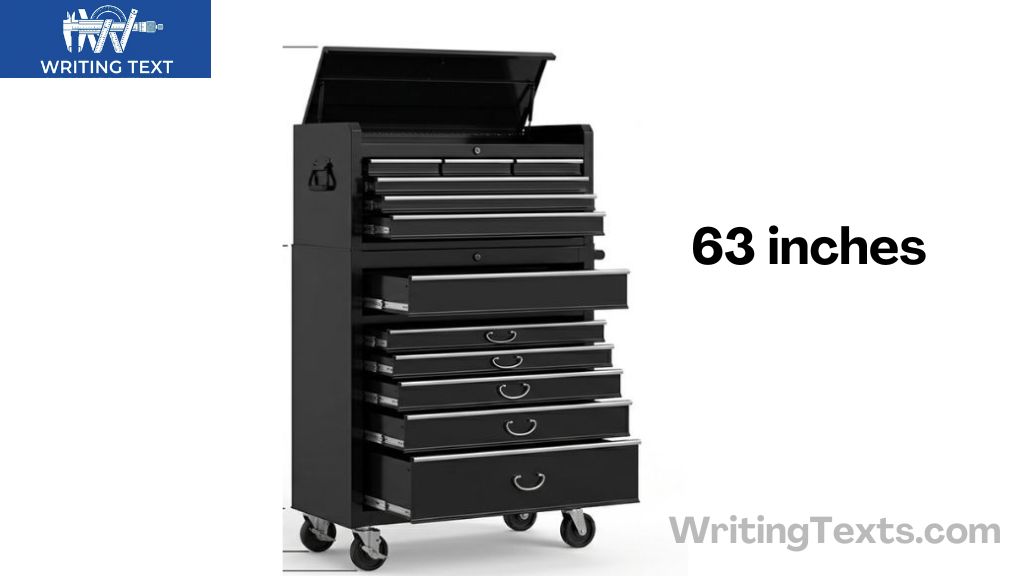
A professional-grade tall rolling tool cabinet commonly measures around 63 inches from the floor to the top work surface, excluding any pegboard hutch or upper storage extension.
This height reflects the combined stack of a lower rolling base unit and an upper chest body—the standard two-piece configuration sold across automotive and industrial retail. Because technicians frequently work from a standing position or elevated stool, these cabinets intentionally exceed the OSHA-recommended countertop ergonomic range of 34 to 38 inches, prioritizing drawer count over strict surface-height compliance.
Against a standard 8-foot garage wall, a 63-inch cabinet leaves roughly 33 inches of clearance above it—enough vertical space for wall-mounted lighting tracks or overhead storage rails without interference.
2. Travel Yoga Mat

Short-format travel yoga mats are commonly manufactured at 63 inches in unrolled length, specifically engineered for practitioners at or below 5 feet 3 inches in standing height.
Full-length studio mats run 68 to 72 inches, but the compressed travel version deliberately sacrifices a few inches of toe coverage to reduce rolled diameter and bring carry weight under 2 pounds.
Airline carry-on length restrictions—which cap most overhead items at approximately 22 inches in any single rolled dimension—drive this size decision more than user preference does. At 63 inches, the mat folds twice to fit inside a standard backpack frame without the top edge protruding above the shoulder straps.
3. Interior Door

A non-standard short interior door—common in older homes, storage closets, and basement utility entries—is frequently manufactured at 63 inches in panel height.
The International Residential Code sets the minimum clear opening height for habitable rooms at 80 inches, which is why 63-inch doors are code-restricted to non-primary applications: attic hatches, under-stair closets, and pre-1950s residential construction where original framing was never updated.
This height forces most adults to duck at entry, making it an immediate physical cue that distinguishes it clearly from any compliant passage door. In renovation permit applications, specifying a 63-inch door height in a living space triggers an automatic code review flag in most municipal jurisdictions.
4. Three-Panel Room Divider Screen

A mid-range residential three-panel room divider typically stands around 63 inches tall—the most commercially dominant height tier between the compact 59-inch and large-format 71-inch options.
Manufacturers standardized around this height because it blocks standing and seated sightlines without requiring ceiling clearance accommodations in rooms built to the dominant U.S. residential standard of 8-foot ceilings. At 63 inches, the top panel sits roughly 15 inches above the eye level of a person seated in a standard 17-inch office chair—enough vertical coverage to create genuine visual privacy rather than just a partial screen.
When angled into a zigzag configuration, a three-panel unit at this height spans approximately 54 inches of lateral floor space, a figure that frequently appears in open-plan office layout calculations.
5. Men’s Snowboard
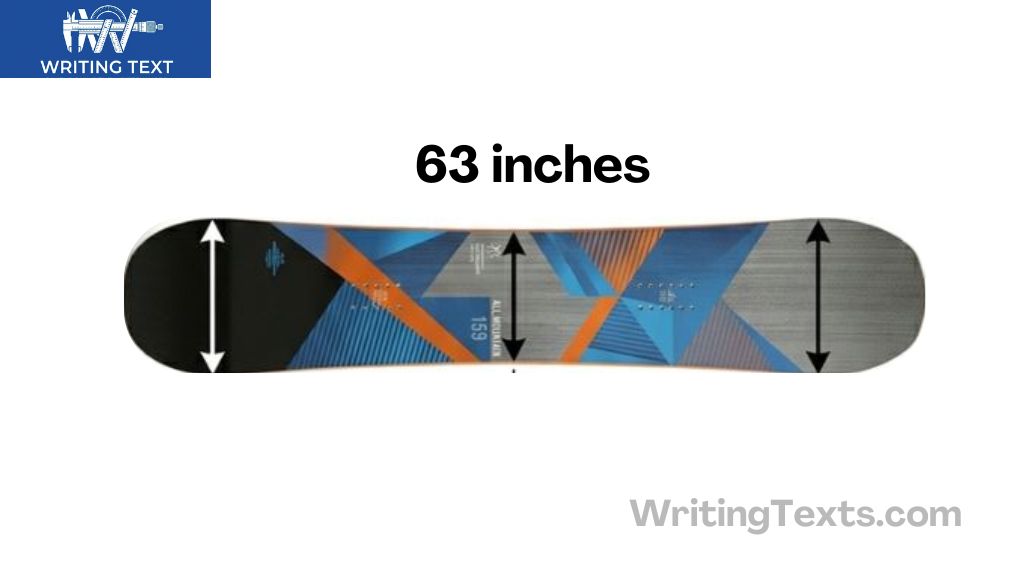
A men’s snowboard sized for a rider standing 5 feet 3 inches commonly measures around 63 inches in total board length, per the height-and-weight sizing charts used across major manufacturers.
Board length determines the effective snow-contact edge, with longer boards favoring high-speed stability and shorter boards prioritizing park maneuverability—a 63-inch board targets all-mountain freestyle riding for riders between 130 and 160 pounds.
This dimension sits within the range governed by international snowboard federation equipment standards, which inform how manufacturers calibrate flex patterns and edge geometry relative to board length. A board this size, stood upright on its tail beside its intended rider, reaches approximately chin height—a field-sizing technique taught in rental shop staff training as a quick visual check.
Read More: How Tall Is 42 Inches? 13 Common Things That Are 42 Inches Long
6. Average Height of a 12-to-13-Year-Old Girl
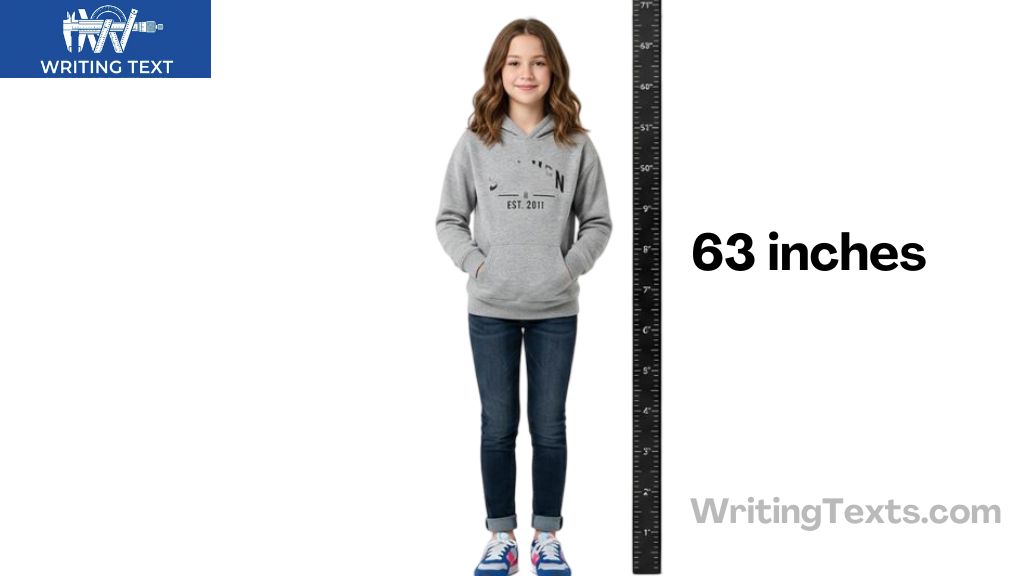
The average standing height of a 12-to-13-year-old girl in the United States reaches approximately 60 to 63 inches, with 63 inches representing the 75th percentile on CDC growth charts for this age bracket.
This percentile means roughly one in four girls this age meets or exceeds 63 inches at the close of the pre-teen growth window—before annual height gain slows from the peak rate of 2 to 3 inches per year to under an inch annually after age 14. Pediatric clinicians use this height tier as a developmental benchmark because it marks the typical transition point where girls begin approaching their projected adult height. A child at 63 inches stands at approximately shoulder level beside a 5-foot-10-inch adult, a proportional relationship used in clinical visual assessment.
7. Compact Standing Snack Vending Machine

A compact snack vending machine designed for hotel corridors, small offices, or break rooms typically measures around 63 inches in cabinet height, excluding required ventilation clearance above the unit.
ADA accessibility standards require vending machine product delivery slots and controls to remain reachable from a seated position—no higher than 48 inches from the floor—while the total cabinet height must still accommodate a stacked product column. The 63-inch cabinet height satisfies both constraints: it keeps controls within accessible reach while fitting comfortably under 7-foot-6-inch drop ceilings common in commercial interiors.
This height also allows these machines to travel upright in standard freight elevators rated for 8-foot interior clearance, a logistics requirement that shapes the entire compact vending category.
8. Queen Mattress

A queen-size mattress has a standardized core sleeping width of 60 inches, but pillow-top models add a foam overhang border of approximately 1.5 inches per side, bringing the total exterior width to around 63 inches.
The 60-inch core width has been the bedding industry standard since the 1950s, calibrated to fit two adults within the 12-to-13-foot bedroom widths typical of post-war American home construction. The pillow-top border is a manufacturing addition—not a sleeping surface—but it is the operative measurement in tight bedroom layouts where the mattress itself, not the bed frame, presses against a wall.
Knowing the outer dimension rather than the sleeping-surface dimension prevents the common renovation mistake of framing a mattress alcove too narrow by 2 to 3 inches.
9. Full-Length Dressing Mirror
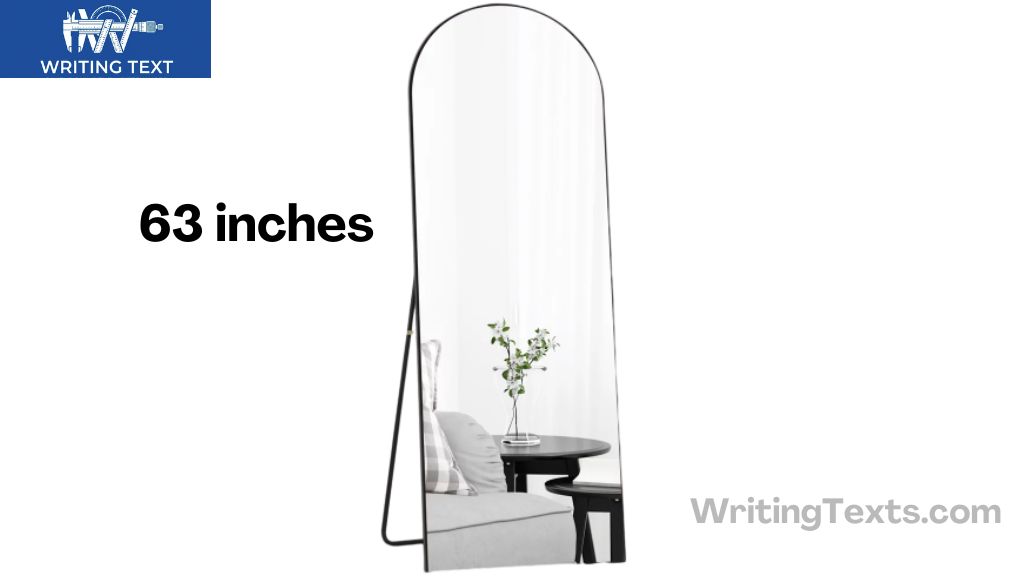
A full-length dressing mirror designed to reflect a complete standing image for a person up to 5 feet 3 inches typically has a reflective panel height of around 63 inches.
Optical geometry requires a mirror to be at least half the viewer’s height for a full standing reflection, but retail full-length mirrors substantially exceed this minimum to compensate for varied mounting heights and floor-leaning angles.
The 63-inch panel is the most widely produced size in this category because it fits door-mounted applications on standard 80-inch interior doors while leaving adequate margin at top and bottom. Leaned against a wall at the typical 5-degree resting angle, the top edge of a 63-inch mirror sits just below adult eye line for the average person—close enough for full-body viewing without requiring the mirror to be mounted flush.
10. Adjustable Youth Basketball Hoop
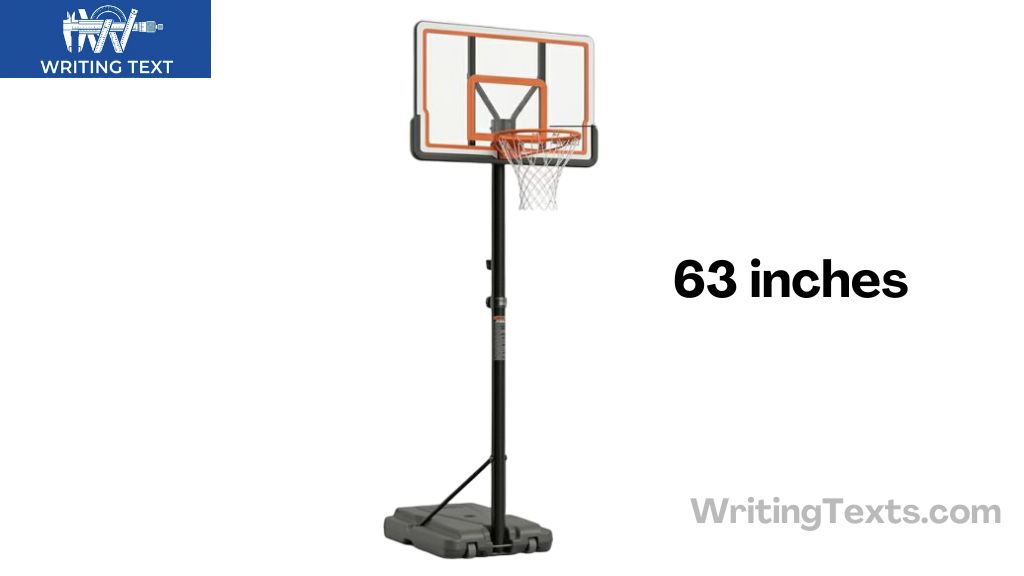
An adjustable youth basketball hoop at its lowest setting is commonly positioned at 63 inches—5 feet 3 inches—from the floor to the top of the rim, per developmental guidelines from USA Basketball.
FIBA youth development standards recommend this height specifically for players under age 8, because forcing young children to shoot toward a higher rim causes mechanical breakdowns in release angle and arc that become difficult to correct later.
At 63 inches, the rim sits low enough for a standing child to see directly over it rather than launching the ball blindly upward, which builds the proper trajectory habits coaches prioritize at the introductory level. This is the only height setting on most adjustable youth hoops where a child under 4 feet tall can attempt a legal overhead shot with correct form.
Related: How Tall Is 64 Inches? 17 Things That Are 64 Inches Long
11. Alcove Bathtub
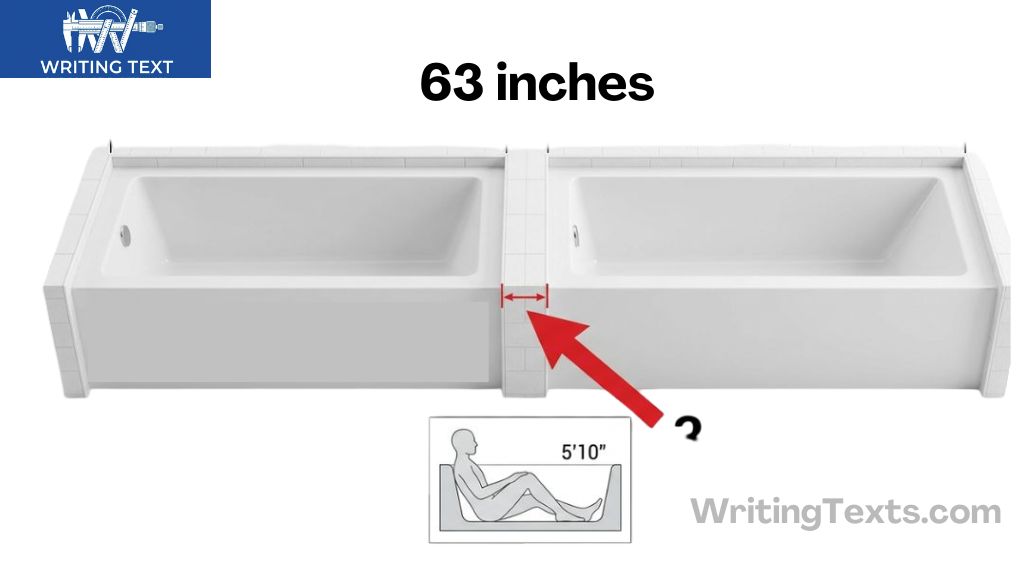
A standard alcove bathtub’s exterior shell—including the finished apron and deck flanges on both ends—commonly measures around 60 to 63 inches in total length, even when the interior soaking cavity runs shorter.
Tile setters and framers work from the exterior shell measurement, not the soaking length, because the flanges anchor into wall framing and determine rough-in spacing for adjacent fixtures. Most U.S. plumbing codes specify minimum tub width and drain-to-wall positioning but leave length to the manufacturer’s standard, which has defaulted to the 60-to-63-inch shell range as a near-universal contractor expectation since the postwar housing boom.
A tub alcove framed to 63 inches accommodates either a standard 60-inch shell with a finished tile threshold or a full 63-inch shell model designed for taller bathers—a specification choice that must be locked in before framing begins.
12. Five-Drawer Vertical Filing Cabinet
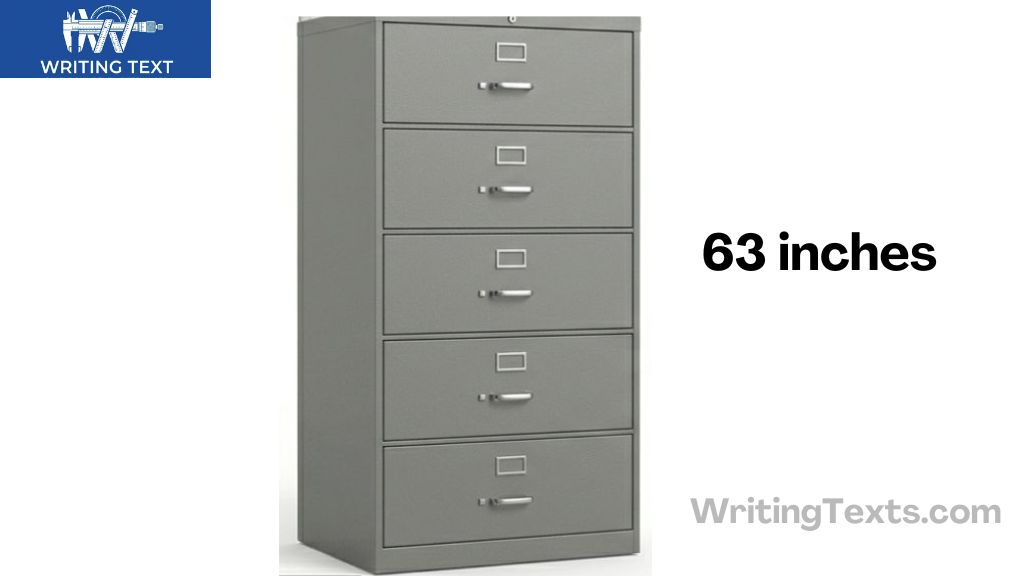
A five-drawer vertical filing cabinet in letter-size format commonly reaches a total height of 63 to 65 inches—the tallest configuration in the standard vertical file category.
Each drawer occupies approximately 12 inches of vertical space including the pull hardware and internal suspension frame, stacking five drawers to a height that places the top drawer slightly above comfortable reach for users under 5 feet 6 inches. BIFMA standards mandate anti-tip safety mechanisms on all vertical cabinets exceeding 48 inches, which is why every five-drawer model includes a sequential drawer lock preventing two drawers from opening simultaneously—a direct structural response to the cabinet’s above-average height creating forward tipping leverage.
This requirement distinguishes five-drawer units from all shorter configurations and is worth confirming when sourcing cabinets from international suppliers not bound by North American furniture safety standards.
13. Short Apartment Christmas Tree

An artificial slim or apartment-style Christmas tree sold in the 5-foot category typically measures around 60 to 63 inches from the base platform to the topmost branch tip, before any tree topper is installed.
This size was developed specifically for urban apartments with 8-foot ceilings, where a traditional 7-foot tree plus a 12-inch star topper would compress against the ceiling and destroy the intended visual proportion. A 63-inch tree with a standard 6-inch topper reaches approximately 69 inches total—clearing an 80-inch ceiling by 11 inches, which interior designers consistently identify as the minimum breathing room needed to preserve vertical proportion in a decorated room. The base spread of trees this height typically runs 36 to 42 inches in diameter, placing total floor footprint between 9 and 12 square feet in a corner position.
14. Arcade Game Cabinet

A late-1980s upright arcade cabinet commonly measured around 63 to 66 inches in body height—the main cabinet structure only, not including the marquee lightbox mounted above it.
Arcade operators required cabinets to pass through standard commercial doorways at 80 inches of clearance, which forced manufacturers to separate the cabinet body from the overhead marquee as two distinct structural components. The 63-inch body height was deliberately calibrated to position the monitor screen at 50 to 54 inches from the floor, placing it at a slight downward gaze angle for standing players of average height—a design choice that reduced eye strain during extended coin-operated sessions and increased per-unit daily revenue in operator data from the period.
Cabinet height specs from manufacturers including Wells-Gardner and Dynamo remain archived in restoration communities and confirm this dimension as the dominant standard for that era’s upright format.
15. Arm Span of a 5’3″ Person

The arm span of a person standing 5 feet 3 inches is commonly around 63 inches, reflecting the anthropometric principle that arm span and standing height track closely in most adults.
This relationship—documented formally in Leonardo da Vinci’s Vitruvian proportions and later validated in modern sports science—holds within plus or minus 2 inches across most adult populations, with deviations driven by genetic limb-to-torso ratio variation. Swimming, rowing, and rock climbing coaches use arm span as a field measurement precisely because it requires no equipment and delivers a reliable height proxy for performance modeling and equipment sizing.
A person at this height, arms extended horizontally, spans a distance nearly identical to the width of a standard queen bed frame—grounding an anatomical measurement in an immediately recognizable domestic space.
How to Estimate 63 Inches Without Tools
Two reliable zero-cost methods use items already present in most rooms. Standard ceramic floor tiles in North American homes and commercial spaces measure 12 inches per side. Counting five full tiles along a grout line plus one-quarter of a sixth tile produces a close approximation of 63 inches. The cumulative width of five grout joints—each typically 3/16 to 1/4 inch—introduces roughly 1 inch of total error, so this method suits rough spatial planning but not precision fitting.
The second method uses U.S. letter-size printer paper, which measures 11 inches along its long edge. Five sheets end to end cover 55 inches; laying a sixth sheet and folding it back approximately 3 inches produces a physical floor representation of 63 inches. Slight overlap between sheets and paper flex introduce a variance of about half an inch. Both methods work well for furniture placement checks and room-divider positioning, but neither replaces a tape measure for any application where a 1-inch error affects the outcome.
Read More: How Big is 8 Inches? 16 Common Things That Are 8 Inches Long
63 Inches Compared to Similar Sizes
| Measurement | In Feet | In CM | Context |
| 57 in | 4.75 ft | 144.78 cm | Typical kitchen countertop height plus a few inches |
| 60 in | 5.00 ft | 152.40 cm | Queen mattress core width; average U.S. adult woman |
| 63 in | 5.25 ft | 160.02 cm | Target measurement — see all 15 objects above |
| 66 in | 5.50 ft | 167.64 cm | U.S. adult male below-average height threshold |
| 69 in | 5.75 ft | 175.26 cm | Median standing height for U.S. adult men |
| 126 in | 10.50 ft | 320.04 cm | Exactly double 63 inches |
FAQs About 63 Inches
How many feet is 63 inches?
63 inches equals 5.25 feet, or 5 feet and 3 inches.
What is 63 inches in centimeters?
63 inches converts to 160.02 centimeters, calculated at the standard rate of 2.54 cm per inch.
Is 63 inches considered tall for an adult?
63 inches (5’3″) is average height for an adult woman in the U.S. and below average for an adult man, whose national median sits near 69 inches.
What is the difference between 63 inches and a standard interior door?
A standard U.S. interior door measures 80 inches tall. A 63-inch door falls 17 inches short and appears only in non-habitable applications such as closets, attic panels, and pre-code residential construction.
How does 63 inches relate to a yard measurement?
63 inches equals exactly 1.75 yards—one full yard of 36 inches plus 27 additional inches, or three-quarters of a second yard.
Can a person use their own body to approximate 63 inches?
Any adult standing at 5 feet 3 inches can extend both arms horizontally and use their arm span as a near-equivalent reference, since the two measurements align within 1 to 2 inches for most people at this height.
Is 63 inches a standard size for any bedding product?
The queen mattress exterior width—including a standard pillow-top foam border—commonly reaches 63 inches, though the regulated sleeping-surface width remains 60 inches across the industry.
The tall rolling tool cabinet and the five-drawer vertical filing cabinet are the two most structurally fixed references for understanding how tall is 63 inches—both are rigid, floor-standing, commercially manufactured objects with industry-documented height specifications that don’t vary by brand or model year. For anyone without either nearby, a short apartment Christmas tree at its listed 63-inch branch height provides an equally unambiguous physical anchor in seasonal contexts.
Discover More Measurement Articles:

I’m Karan Singh. I write about measurements, dimensions, and everyday size comparisons. I focus on making numbers easy to understand — no confusing terms, just clear and simple explanations. I use real-life examples so anyone can picture the size in their head. My goal is to help people find quick, accurate answers without any guesswork.